NFL · injury
Six Starters Down Before Week 3: How Backup QB Deployments Reshape Week 3 Prop Markets
A wave of early-season quarterback injuries forces teams into drastically different win-now calculus, and the backup situations create immediate opportunities in passing volume and efficiency props.
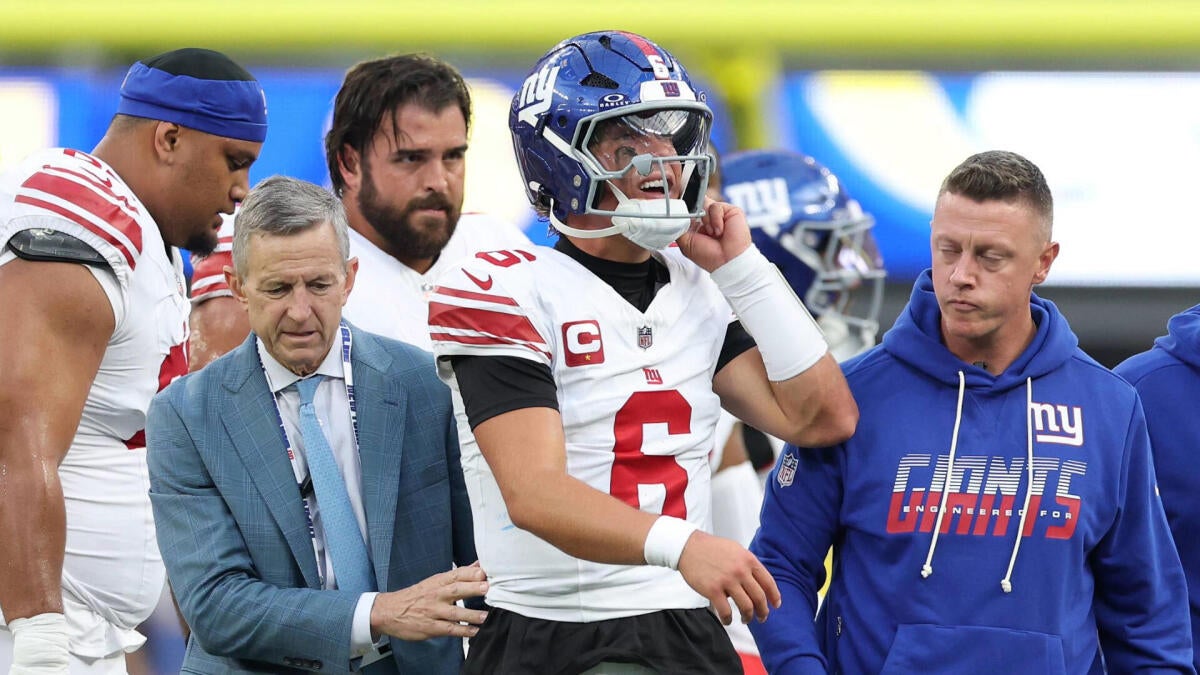
Six starting quarterbacks have exited the 2026 season in the first two weeks, forcing teams to pivot their offensive strategies with immediate effect. The New York Giants face the steepest drop-off: Jaxson Dart's knee injury, confirmed as more severe than initially diagnosed, has left them with Jameis Winston as their likely starter for the remainder of the season. The Giants, already 0-5 in games without Dart since his arrival as a first-round pick, are now pivoting toward draft-positioning rather than playoff contention. This shift matters because Winston's profile is fundamentally different—diminished arm strength, chronic turnover issues, and substantially reduced mobility compared to Dart. Those are not minor downgrade points; they're mechanical constraints that will compress both volume and efficiency across the entire Giants passing game.
The Chicago Bears and Washington Commanders face different timelines but similar near-term volatility. Caleb Williams' hamstring injury initially looked like a long-term absence but has evolved into a week-to-week designation; he could return as early as this coming Monday against Philadelphia, though that timeline would be aggressive for a soft-tissue injury. Meanwhile, the Commanders' Jayden Daniels, sidelined with a dislocated elbow, faces six consecutive games against elite defenses—the top three NFC West teams plus a divisional rematch against an Eagles squad that defeated them in Week 1. Marcus Mariota will likely pilot Washington through that gauntlet, and Mariota's career passing volume runs 15-20% below Daniels' early-season pace.
For prop bettors, these backups create a temporary inefficiency window. Backup quarterbacks rarely carry independent betting markets; instead, team totals and related passing props absorb the adjustment all at once. But backup QB deployments are heterogeneous. Winston's arm strength limitations mean Giants team totals should shift down, and his interception rate (historically 3%+ of attempts) will compress margin-of-error betting. Mariota's deep-ball limitations (career 7.2% of passing attempts targeted 20+ yards downfield versus Daniels' 12.8%) will reduce explosive-play variance. Case Keenum, if deployed by the Bears, runs a short-game offense that depresses both passing yards and touchdown probability on a per-game basis. The market typically overweights recent-game context when a backup enters; what it underweights is that backup's structural passing profile relative to his predecessor.
The Giants represent the clearest angle. Winston's arrival coincided with a 0-5 record—historical fact, not projection. Against a weak early schedule with backup production, Giants team totals at 20.5 or higher carry elevated overs risk for the next 4-6 weeks. Take unders on New York's team total while Winston is the starter; the underlying mechanics (arm talent, turnover volatility, mobility gaps) create a floor effect that the market prices as a temporary setback rather than a structural reset. For the Bears, the timeline matters: if Williams misses only Week 3 against Philadelphia, the early-season loss is recoverable. The Commanders face the steepest path—Mariota's limited arm and the schedule confluence suggest Washington overs are vulnerable for at least the next four weeks, independent of which backup holds the position.