The 2026 Breakout Blueprint: Dart, Tate, and the Players Built to Explode
By Ty Whitney ·
Fantasy sleepers aren't mysteries—they're archetypes. The players positioned to replicate last year's monster seasons share concrete structural similarities, and understanding the pattern is your edge.
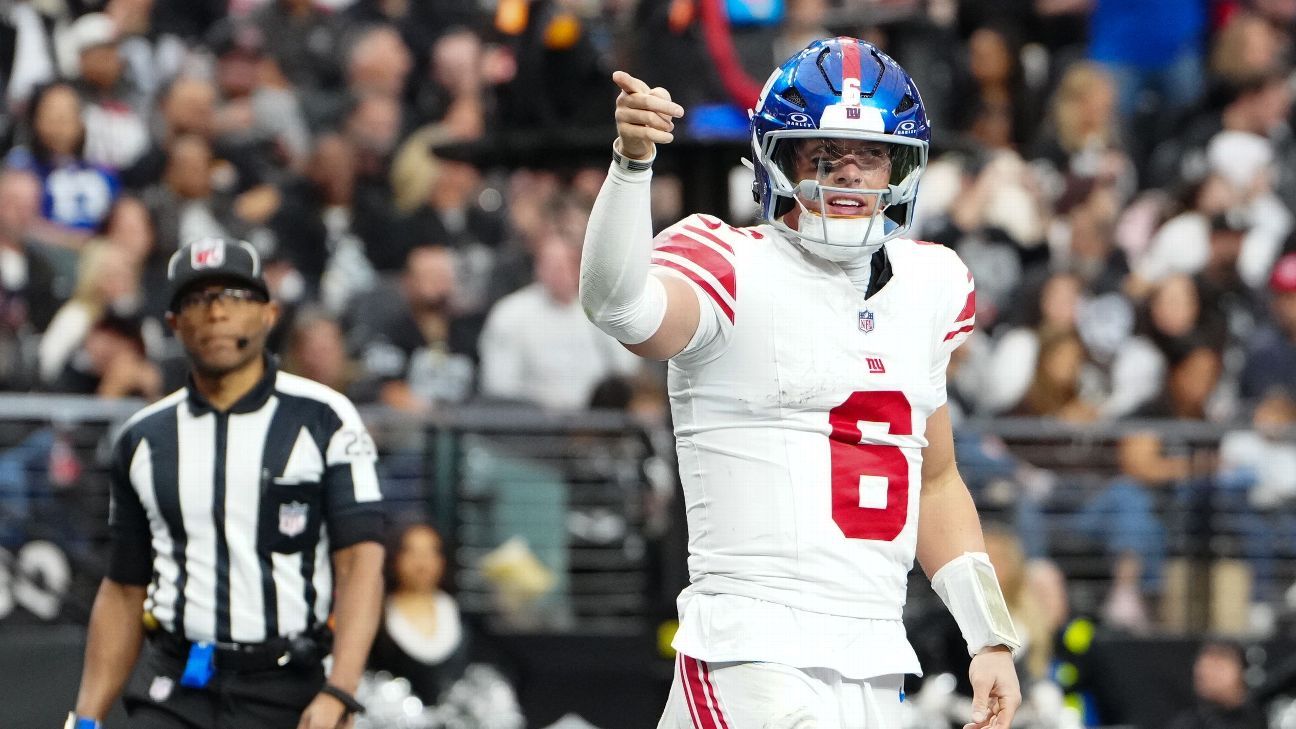
ESPN's fantasy analysis identified a cohort of 2025 breakout players and reverse-engineered their common traits to project this year's candidates. The exercise cuts past noise: top-five quarterback finishes don't happen by accident, and rookie receivers don't sustain WR2 production without specific contextual conditions. The pattern matters because it isolates repeatable variables—coaching upgrade, target allocation, reduced competition for volume—that separate flash from breakout.
Jaxson Dart emerges as the clearest parallel to Drake Maye and Caleb Williams' Year 2 quarterback surges. Dart delivered eight top-10 fantasy weeks despite playing starter snaps in only 12 games last season—a frequency that suggests elite efficiency rather than volume-driven production. The New York Giants quarterback has added John Harbaugh (an upgrade from Brian Daboll's system), a healthier Malik Nabers, and tight end Isaiah Likely in the passing game. Critically, Dart's rushing ability—his foundational edge—remains intact and underpriced relative to his passing projection. He averaged over 70 rushing yards per game in his rookie season, a floor that guarantees fantasy relevance even if his Year 2 passing output plateaus. The market typically inflates Year 2 passing volume expectations for young signal-callers; Dart's rushing floor makes him resilient to that overcorrection.
Carnell Tate, the Titans' fourth overall selection in April's draft, inhabits the McMillan-Egbuka rookie receiver archetype. Top-10 selected receivers historically capture 25% of their team's targets and land in the WR2/3 range immediately. Tate will compete with Wan'Dale Robinson and Calvin Ridley for volume, a crowded picture that depresses early-season ADP. But his elite efficiency metrics at Ohio State and Cam Ward's arm talent—assuming Ward's Year 2 development tracks the Maye/Williams template—create a pathway to consistent seven-target floors and touchdown upside. The fourth overall price tag is organizational capital; the Titans don't use that equity on a depth piece. Emeka Egbuka, meanwhile, operates as the ceiling play. Egbuka showed explosive early production last season (five touchdowns, 20.5 PPG in his first five games) before a soft landing in Year 2. With Mike Evans departed from Tampa Bay, Egbuka becomes the de facto alpha target, a title that historically translates to 8+ targets per game and 15+ PPG in his situation.
From a prop-betting standpoint, the Dart angle carries the most persistent edge. His rushing yards total sits artificially depressed because sportsbooks haven't fully repriced the rushing volume he demonstrated last season. The Giants offense will likely operate through more play-action and bootleg concepts under Harbaugh—a coaching signature that naturally inflates QB rushing opportunity. Dart's rushing yards over for the season (currently around 500-550) is undersold relative to his 70 YPG baseline; even accounting for games missed and coaching variance, a floor of 550-600 is reasonable. The edge is durable because it's rooted in schematic usage, not a single outlier performance. Tate's receiving yards and receptions totals depend entirely on Cam Ward's Year 2 leap, a binary variable with real variance; if Ward regresses, Tate's volume contracts sharply. Egbuka represents a shorter-window edge—his Tampa Bay WR1 designation is fresh, and sportsbooks will likely adjust target share expectations within two to three weeks as preseason tape accumulates. The Dart rushing floor, by contrast, will hold value through the season.
The broader lesson: breakout prediction isn't mystical. It's structural analysis—pedigree, opportunity, scheme fit, and the removal of volume competition. The players positioned analogously to 2025's monsters aren't guaranteed to replicate those seasons, but the odds are tilted enough to justify preseason allocation decisions and early-season wagering.