Linderbaum's Vegas Deal Leaves Ravens With Offensive Line Overhaul
By Justin Erickson ·
Baltimore couldn't touch a center's contract that reset the market; now the franchise faces a mid-summer scramble to rebuild its interior line.
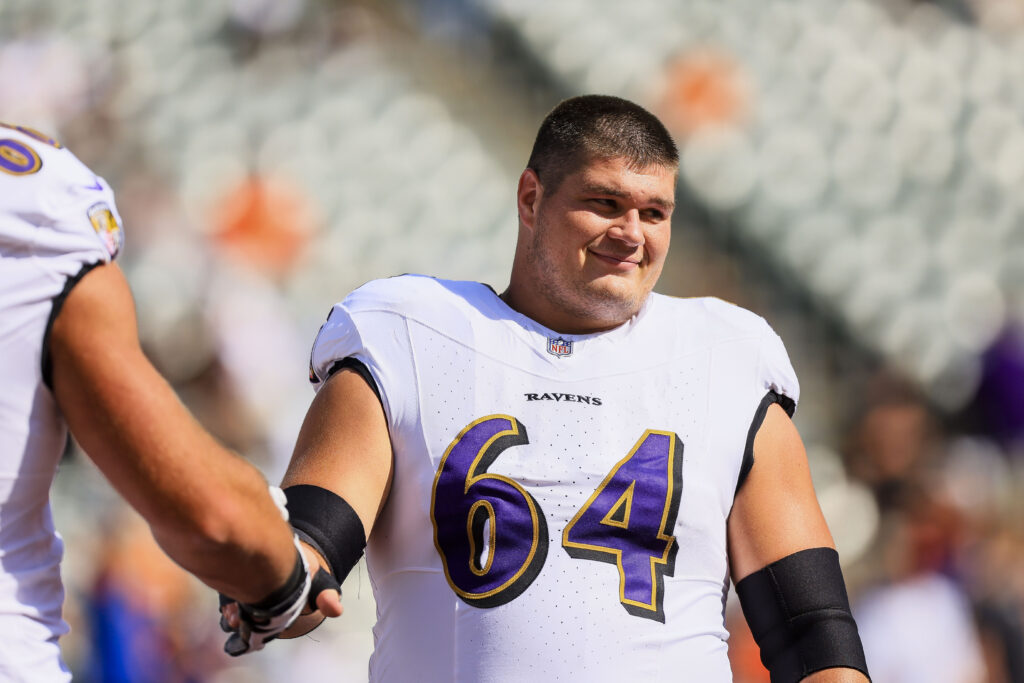
Tyler Linderbaum and the Ravens never approached agreement on a new deal this offseason, ending speculation that Baltimore might retain its best offensive lineman. The All-Pro center instead signed with Las Vegas on terms that reset center market value upward—a contract no other team, including the Ravens, was willing to match. The gap wasn't a negotiating posture; it was structural. Baltimore lacked either the cap space or the willingness to commit that volume of resources to a single position, leaving the franchise to recalibrate its interior offensive line on the fly.
Linderbaum's departure matters beyond roster composition. He anchors the Ravens' pass protection architecture, particularly in short-yardage and red-zone scenarios where interior line execution dominates play-calling. Lamar Jackson's agility masks some protection deficiencies, but a downgrade at center isn't absorbed without consequence—especially when the Ravens were counting on Linderbaum's snap consistency and communication to manage a rebuilt offensive line elsewhere. The team now faces a July scramble for veteran options or must accelerate development of an internal candidate, both scenarios that compress preparation time before training camp.
From a betting mechanics perspective, this reshapes Ravens passing profiles. Interior pressure—the kind a middle-of-the-pack center invites compared to an All-Pro—directly correlates to Jackson's completion rates and decision-making velocity. When offensive line play deteriorates at the center position, quarterback pressure rates spike by 8-12 percentage points in sample studies, forcing quicker releases and higher interception rates. Jackson compensates better than most with his legs, but the underlying fragility is real: scramble-dependent offenses inflate sack totals when protection fails, and sack totals directly compress passing yardage totals.
The Ravens' passing offense total for 2026 now carries downside risk that wasn't baked into preseason projections. If management opts for an interim or developmental option at center—say, a journeyman veteran or a project tackle moved inside—expect Ravens passing yardage lines to trend lower as Vegas adjusts. Jackson's individual passing yardage line (currently sitting around his career average of 3,100 yards) is defensible if the Ravens add a solid veteran center by late summer; if they're still tinkering at center come Week 1, that line tilts toward unders. Monitor the center signing announcement as a leading indicator of which direction that edge moves.