Jackson's Leverage Play: Why Ravens Contract Stalemate Matters for 2026 Betting
By Justin Erickson ·
Lamar Jackson holds maximum negotiating power after Baltimore's offseason restructure, and a year of uncertainty could reshape how his production is valued in the market.
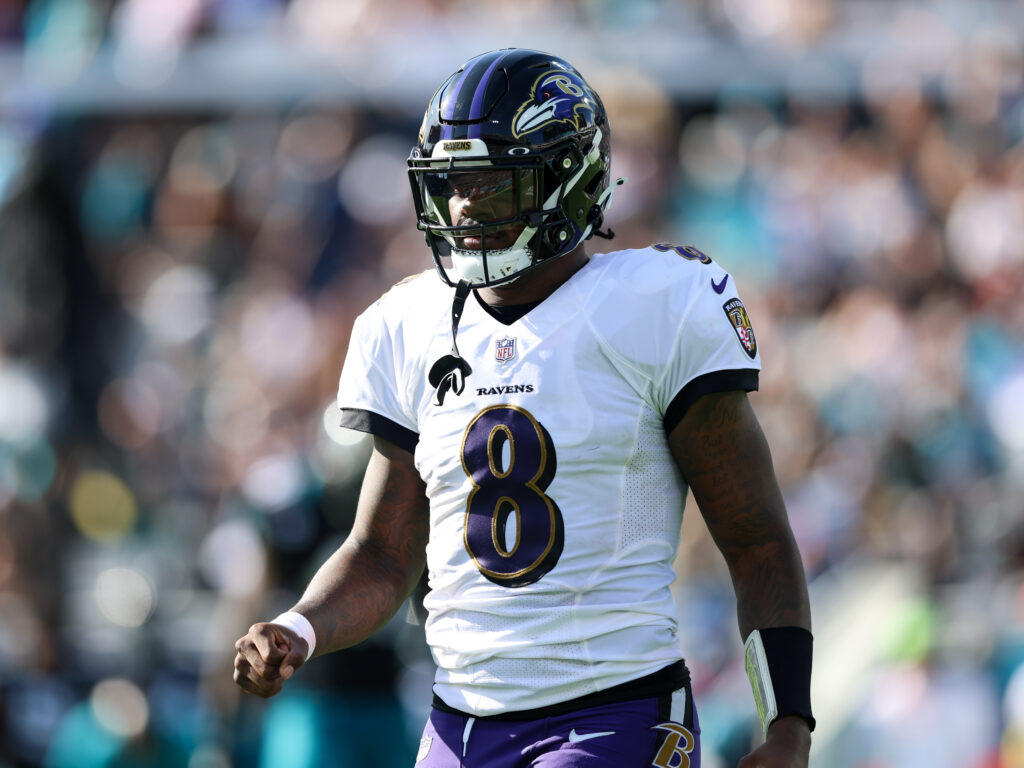
Lamar Jackson reaffirmed his intention to remain a Raven during his first OTA appearance of the offseason, but the contract situation between quarterback and franchise tells a more complex story. Baltimore executed a maximum restructure this spring to manage cap space after negotiations stalled in the winter months, pushing Jackson's 2027 cap charge to $84.34 million and creating a structural problem that demands resolution. That debt—combined with Jackson's proven willingness to walk away from negotiating terms he won't accept—has inverted the traditional power dynamic in quarterback extension talks.
The framework of this standoff traces directly to Jackson's last negotiation in 2023, when he secured $185 million guaranteed and no-trade protections while representing himself. General managers and agents around the league now view him as unmoved on the fully guaranteed demand, according to reporting on the contract impasse. Jackson himself deflected when asked about pursuing guaranteed money again, suggesting the leverage conversation is functionally complete: he can hold his position because Baltimore has far more to lose by allowing the situation to drift into 2027 without resolution. The alternative—playing 2026 under a new coaching staff with heightened injury risk and minimal organizational incentive to keep him healthy—is the threat that matters.
Jackson's injury history in 2025 adds texture to this dynamic. A hamstring injury in Week 3 lingered through much of the season, limiting his availability during a year the Ravens finished outside the playoffs. That durability question creates genuine uncertainty for Baltimore: paying premium money for a player entering his age-30 season while managing a fresh coaching regime under Jesse Minter is a different calculation than it was two years ago. Yet the same uncertainty strengthens Jackson's hand—he can argue 2026 is the only chance to prove he can stay healthy in a full season, making any discount now a mistake.
From a betting standpoint, this contract fog creates two distinct windows. In the near term—if extension talks extend into training camp or the regular season without resolution—Jackson's passing and rushing volume lines could flatten or compress as books price in genuine uncertainty about his long-term commitment to the offense. An unhappy quarterback operating under a franchise tag equivalent doesn't always produce at peak efficiency, and that psychological drag is real. Conversely, if Baltimore and Jackson reach an extension before September, it would likely signal organizational confidence in his health that hasn't been fully priced into his yardage and touchdown projections for 2026. A resolved contract removes the distraction layer and restores him to his historical production baselines—roughly 4,200 passing yards, 35+ passing touchdowns, and 800+ rushing yards per full season.
Baltimore's negotiating posture also matters for team-level props. The Ravens made no secret of their cap constraints this offseason, and a Jackson extension that doesn't come with major guarantees beyond 2026 would free resources for secondary and offensive line investment. That roster improvement flows directly into team total season win projections and weekly spread positioning. If Jackson stays unsigned or signs a deal heavy on 2026 compensation but light on guarantees, expect Baltimore's win total to be priced defensively for 2026. The opposite holds if a long-term deal gets done before the season: the team has signaled stability and investment capacity that translates into better Super Bowl odds and higher team totals.