Penix on Track for Week 1 Return, but Atlanta's QB Depth Chart Remains Fluid
By Justin Erickson ·
Michael Penix Jr. is progressing faster than typical ACL timelines, yet the Falcons' decision to sign Tua Tagovailoa signals they're hedging their bet on his availability—and that uncertainty should shape how bettors value Atlanta's passing projections.
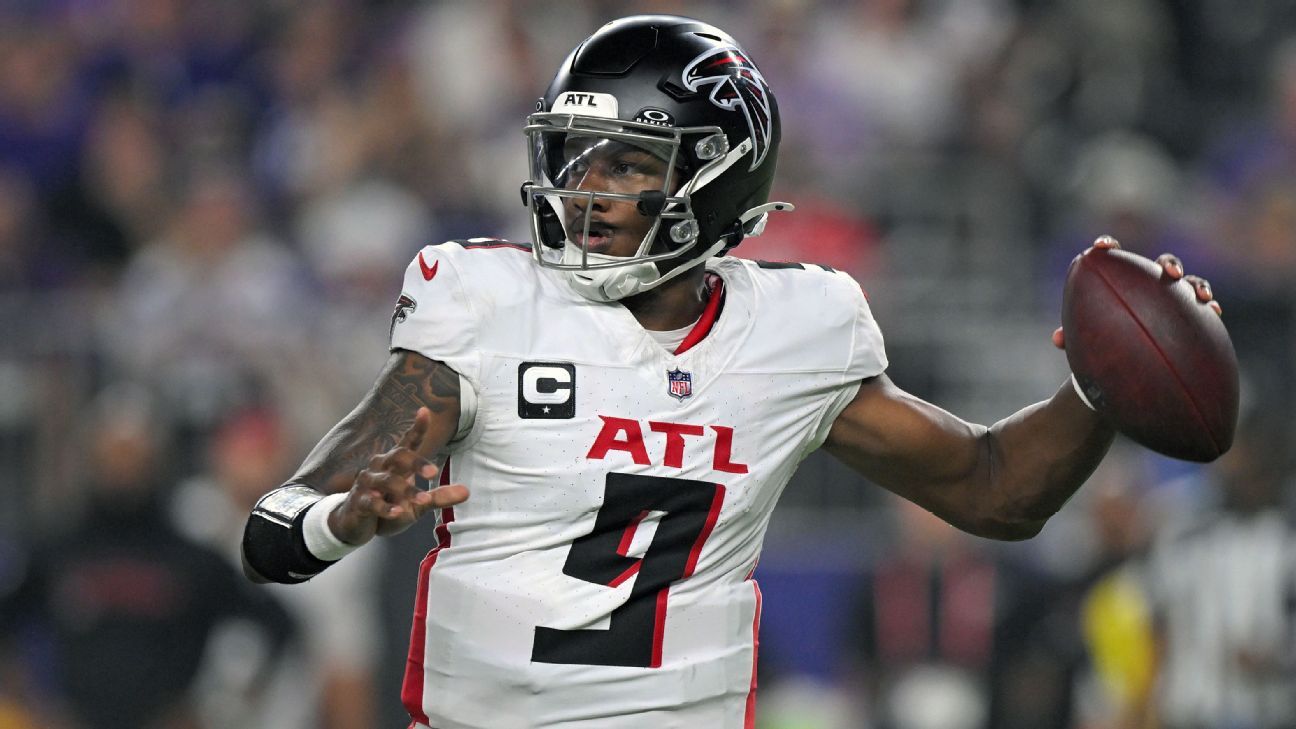
Michael Penix Jr. is throwing again. As ESPN reported, the Falcons quarterback participated in limited practice drills Tuesday—7-on-7 work and individual sessions—roughly five and a half months after tearing his ACL against Carolina in Week 11. He started throwing in mid-March and says he feels "right where I need to be," with Week 1 as his stated target. For context: standard ACL recovery timelines hover around nine months for NFL quarterbacks. Penix is operating inside that window, which matters.
But the real story isn't Penix's rehab pace—it's what the Falcons did after his injury became certainty. Atlanta signed Tua Tagovailoa to a multi-year deal. That move tells you everything about the organization's internal confidence level. Coaching staff, front office, and medical personnel all have data about Penix's recovery that public injury timelines can't capture. If Atlanta believed with high conviction that Penix would be ready for kickoff, they don't absorb the cap hit and depth-chart confusion of a Pro Bowl-caliber backup. Tagovailoa's presence is a hedge—a smart one, but a hedge nonetheless.
Penix has context here. This is his third torn ACL in eight seasons (two in college, one professional), so he's walked this road before. Familiarity with the rehab process can accelerate decision-making and mental readiness, but it doesn't change tissue healing or the mechanics of strain. Falcons coach Kevin Stefanski explicitly declined to commit a timeline for Penix's return to 11-on-11 drills, let alone live game action. That language matters. "We'd rather not put a timetable" is front-office speak for "we're watching this closely and we're not willing to guarantee anything yet."
For bettors, this creates a two-outcome scenario. If Penix is cleared by Week 1—a best-case outcome that the player and franchise are openly targeting—Atlanta's passing volume and efficiency projections shift upward considerably. Penix in 2025 was an efficient passer (67.9 completion rate, 8.4 yards per attempt in 15 games before injury); his arm talent is established. The market has likely already baked in some Tagovailoa baseline into Atlanta passing totals and win curves. A Penix clearance erases that discount. Conversely, if Penix isn't ready by Week 1 or early September, Tagovailoa becomes the de facto starter, and Atlanta's offensive ceiling compresses. Tagovailoa's career splits (strong in Miami's run-first system, untested in Stefanski's more pass-heavy approach) create volatility. Over-unders on Falcons team passing yards in preseason games will carry elevated variance until clarity emerges. Early-week numbers before any injury updates should be treated with caution; they're pricing both timelines simultaneously, creating soft edges on both sides.
The prop-betting edge here is asymmetric: fade strong conviction on any Atlanta passing volume or efficiency prop until the week-to-week injury report stabilizes. If Penix clears for Week 1 drills (11-on-11 participation) by mid-August, his passing-yards over should compress as the market removes the Tagovailoa discount. If he's still limited, overs on Atlanta team passing yards become more vulnerable heading into the season. Right now, with Penix in 7-on-7 drills only, the market is in a holding pattern. Watch for the jump to live-action work as your signal to reassess lines.