Kraft's Seven-Month Recovery Resets Packers TE Upside—But Market May Still Underprice His Week 1 Workload
By Justin Erickson ·
Tucker Kraft says he'll start Green Bay's season opener with no usage restrictions, a claim that contradicts typical NFL rehab protocols and carries measurable fantasy and receiving prop implications.
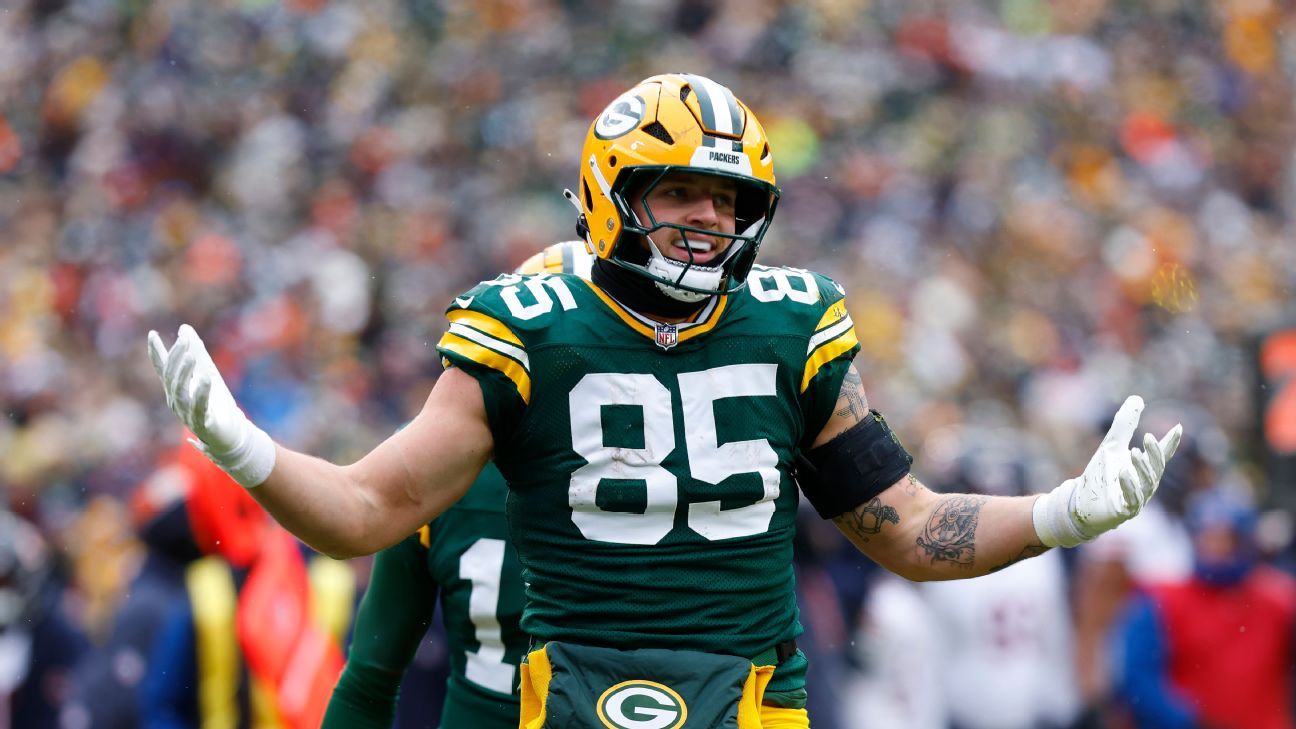
Tucker Kraft is betting on himself to beat the Packers' nine-month ACL rehab timeline by a month and a half. The tight end tore his ACL on November 2, 2024, against Carolina and is now, as of June 10, 2026, seven months post-op. He made that clear Wednesday at minicamp: he expects to open Week 1 without pitch-count limitations—a stark declaration that stands in direct tension with how Green Bay has historically managed ACL returns.
Kraft's case for confidence rests on specific data points he's willing to share publicly. He's already hit 21.5 mph in running tests, a rehab milestone he views as a meaningful threshold. His quad strength is tracking ahead of schedule. Swelling is minimal. Critically, he invested heavily in the first three months after surgery—the window when tissue repair happens fastest and when early rehab discipline pays the highest dividends. That early commitment, Kraft argues, compressed his overall recovery arc. The mechanism is real: players who attack rehab aggressively in months one through three often do outpace the standard nine-month institutional timeline. But Kraft's statement that he'll need "all the conditioning I need in camp" to start unrestricted in Week 1 is still a claim that requires verification during training camp and preseason.
Context matters here. At the moment of his injury, Kraft was having the best season of his three-year career: 32 catches, 489 yards, six touchdowns through nine weeks, averaging 15+ yards per catch. He was the only tight end in football with those aggregate metrics through Week 9. He's also a Y-tight end—a position that demands run-blocking, route diversity, and leverage across multiple formations. That role demands explosive multidirectional movement, not just straight-line speed. A seven-month post-ACL athlete hitting 21.5 mph in a controlled running test is not the same athlete cutting and decelerating in a full-contact game. The Packers' historical nine-month hold is conservative by design, but it's not arbitrary.
For receiving and target-share prop bettors, Kraft's return status will be the single largest variable in Packers tight end pricing for Week 1. If he takes the field without restrictions, his target volume should track closer to his pre-injury pace—roughly 4 to 5 targets per game based on his 32 catches in nine games. A market that prices him for limited snaps or a gradual activation will misprice receiving yards and receptions lines significantly upward. If the Packers do implement a soft pitch count despite Kraft's public confidence, lines will correct sharply downward within 24 hours of the first depth chart. Watch his status in late July and early August carefully: preseason performance and coaching commentary will telegraph whether his Week 1 workload projection holds or caves. A player who publicly commits to full availability but shows hesitation in preseason drills is a classic fade; a player who moves explosively in pads and earns high snap shares in dress rehearsals is a legitimate receiving-yards-over candidate Week 1. The edge exists in reading the gap between his optimism and his actual field presence, not in taking his statement at face value.