NFL · injury
Packers lose Bako-Bewele to torn patellar tendon; offensive line upheaval reshapes Green Bay's passing outlook
A season-ending knee injury to Green Bay's right tackle forces an immediate reshuffle at a position already under pressure, with downstream effects on quarterback protection and pace of play.
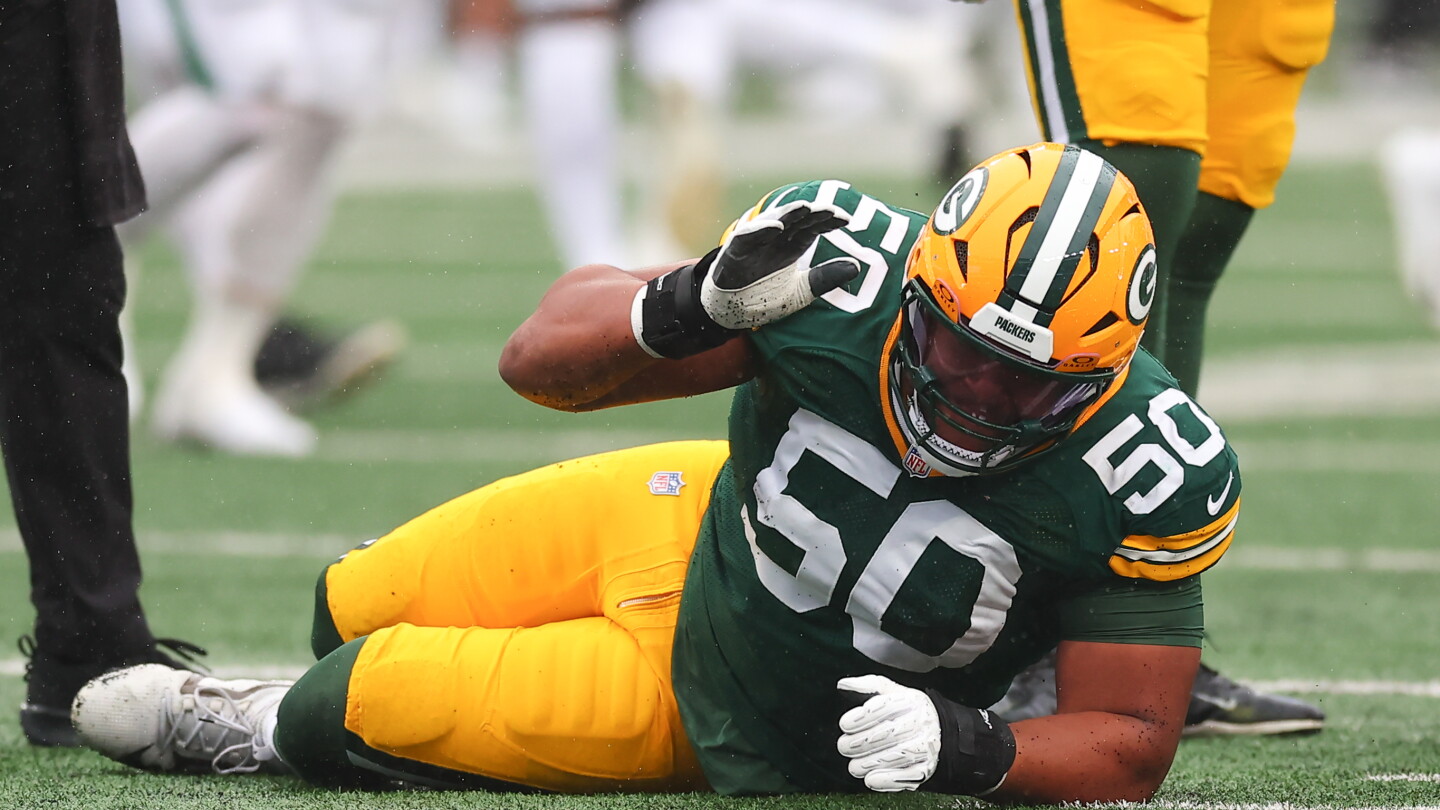
Green Bay's right tackle Zach Bako-Bewele is done for the 2026 season after tearing his patellar tendon, per NBC Sports, leaving the Packers scrambling to replace a starter mid-stream. The loss happens just three weeks into the campaign—early enough that the team faces a long runway of uncertainty at a position critical to both pass protection integrity and run-game consistency.
Bako-Bewele was drafted by Green Bay and entered the season as the presumptive answer to a positional need that had dogged the franchise for years. His absence creates a cascade of problems. The Packers must either promote from the practice squad, trade for a veteran, or shuffle internal depth—each option carries different risk profiles. A rookie or marginal replacement will struggle against elite edge rushers, particularly in the NFC North where Detroit and Minnesota field aggressive pass-rush units. Conversely, a trade for an established tackle eats into cap space already tight from long-term commitments elsewhere on the roster.
From a passing-game perspective, a weakened right side forces adjustments that reverberate through quarterback decision-making and play-calling. If the Packers' new right tackle is a significant step down in talent, the offense will see slower progressions—more checkdowns, fewer intermediate shots downfield, and earlier pocket collapses. Vegas and sharp action already price in some deterioration, but the market may underweight how much a shaky edge impacts overall passing efficiency. Backup and replacement-level tackles surrender sacks at roughly 8-10% higher rate than starters; that translates to 1-2 additional sacks per game depending on dropback volume. Higher sack rates compress passing yards and touchdowns while inflating interception risk (hurried throws lead to worse decisions).
For bettors, this injury reshapes Green Bay's passing totals and quarterback lines immediately. If the Packers insert an undrafted free agent or below-average swing tackle, expect passing yards to contract 15-25 yards per game versus their open-season projection. The line will adjust downward, but the adjustment often overshoots in the short term—sharp money recognizes that a truly bad tackle doesn't just lose one game; it compounds over 14+ weeks, creating a persistent drag that casual markets underestimate on initial news. Quarterback interceptions tick upward under pressure, and rushing touchdowns may tick down as the offense becomes more conservative and protection-focused. The Packers' defense, meanwhile, could see increased workload (more time on field if drives stall earlier), which has downstream effects on defensive prop volume.
Monitor whether Green Bay brings in a proven veteran or experiments with youth. A trade for a solid journeyman (someone with even league-average tape) narrows the downside substantially and keeps passing volume closer to preseason projections. A practice-squad call-up amplifies the pain. Either way, the weeks immediately following this injury are prime fading windows for Packers pass-volume props until the replacement settles and the market equilibrates.