Denver's 2026 Outlook: The Market Is Overreacting to Last Year's Elite Defense
By PropBetEdge Editorial Team ·
The Broncos' one-year Super Bowl run exposed a fundamental mismatch between their defense and offense that a receiver acquisition alone won't fix.
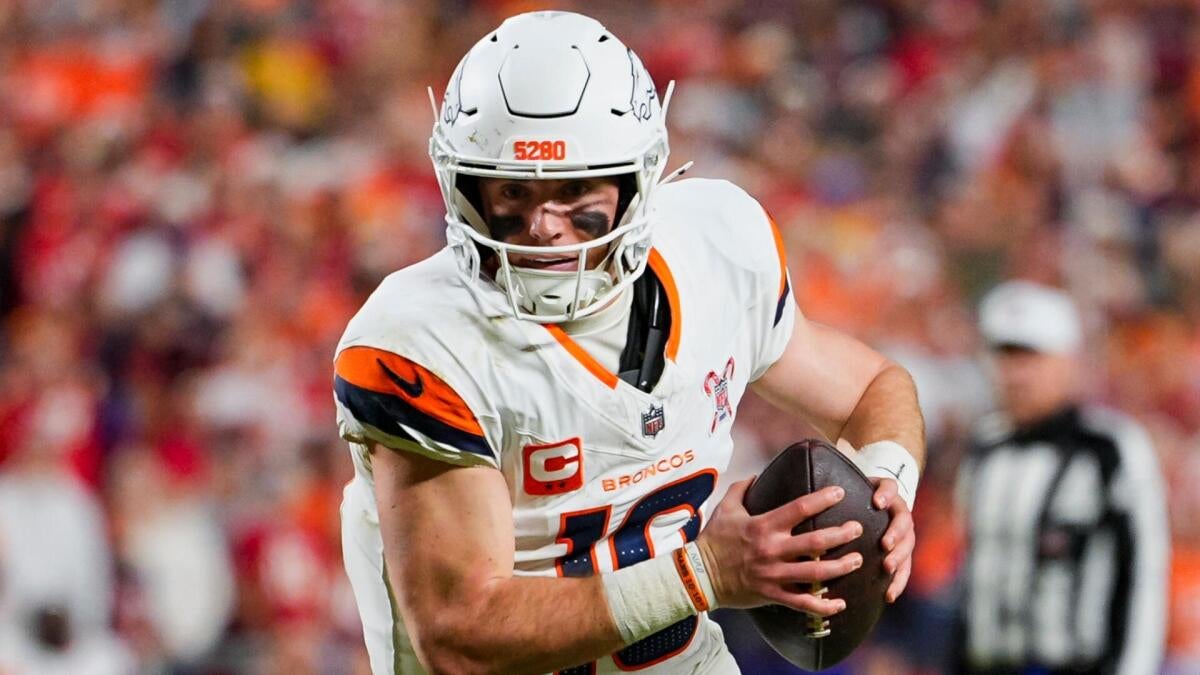
Denver's path from Wild Card hopeful to AFC Championship game in 2025 was bookended by defensive excellence and offensive mediocrity—the kind of imbalance that typically doesn't sustain itself. The Broncos posted the fifth-best point differential in the AFC despite ranking 25th in passing yards per play, won 14 games behind a defense that led the league in sack rate and red-zone success, and nearly made the Super Bowl with backup Jarrett Stidham in the conference finals after losing Bo Nix in overtime against Buffalo. This wasn't a team that figured out how to score; it was a team that didn't have to.
Entering 2026, the market has quietly repriced Denver downward. The Broncos sit at 9.5 wins with a -140 playoff probability—roughly 58% implied odds to make the postseason—and are third in AFC West futures behind both the Chiefs and Chargers despite being the No. 1 seed eight months ago. Twelve teams have better Super Bowl odds than Denver's +2000, a 20-to-1 shot that reflects heavy skepticism about sustainability. The narrative is familiar: fluke defensive season, average quarterback, middle-of-the-pack passing attack. Books are treating last year as noise.
But here's where the market's recency bias creates an edge. Denver's defensive infrastructure—the personnel, the scheme, the red-zone discipline—didn't evaporate. The Broncos kept their core pass rush, retained their best coverage defenders, and paired Nix with Jaylen Waddle, a Pro Bowl-caliber receiver who immediately becomes Denver's top target. Waddle's arrival directly impacts Nix's three-year floor: his yards-per-attempt average jumped 0.8 yards when Stefon Diggs arrived in Buffalo, a non-trivial lift for a young quarterback playing in an efficient system. Nix doesn't need to become Patrick Mahomes; he needs to not regress, and pairing him with a 6-foot-1, 210-pound target who can create separation on intermediate routes reduces the margin for error.
The scheduling question matters here. Denver's first four weeks pit them against Kansas City (road), Jacksonville, Los Angeles (Rams), and San Francisco—a stretch that allows the offense to establish rhythm against one playoff team, two rebuilds, and one NFC contender. If Nix and Waddle can produce a 2-2 or 3-1 record early, the over on 9.5 wins becomes a near-certainty by midseason, and that line has likely already moved by then. The market opened at -115 on the under, suggesting a fair-value calibration around 10.2 wins; the Broncos' defensive profile, Waddle's immediate impact, and a relatively soft early schedule all argue that 10+ wins is the most likely outcome, not a stretch.
The Super Bowl odds present a more speculative angle but one grounded in roster construction. Denver is better on paper than it was in May; Waddle removes one layer of ceiling constraint on the offense. The Patriots and Bills don't become tougher opponents in 2026. And while the Broncos' pass defense ranked first by yards-per-play, that efficiency will normalize—elite defenses usually do. But elite sack rates and red-zone execution tend to stick around. Betting on Denver to win 10+ games is betting that last year's defense wasn't magic; it was system and talent. That's a safer bet than the market's current -105 on the under suggests.