Bucs' Second Consecutive Survivor Collapse Exposes Sharp Money's Chalk Avoidance
By Justin Erickson ·
Tampa Bay's home loss to Cleveland as the most-backed Circa Survivor pick signals a structural problem: public favorites are breaking down faster than historical baseline, and sharp money is already positioned elsewhere.
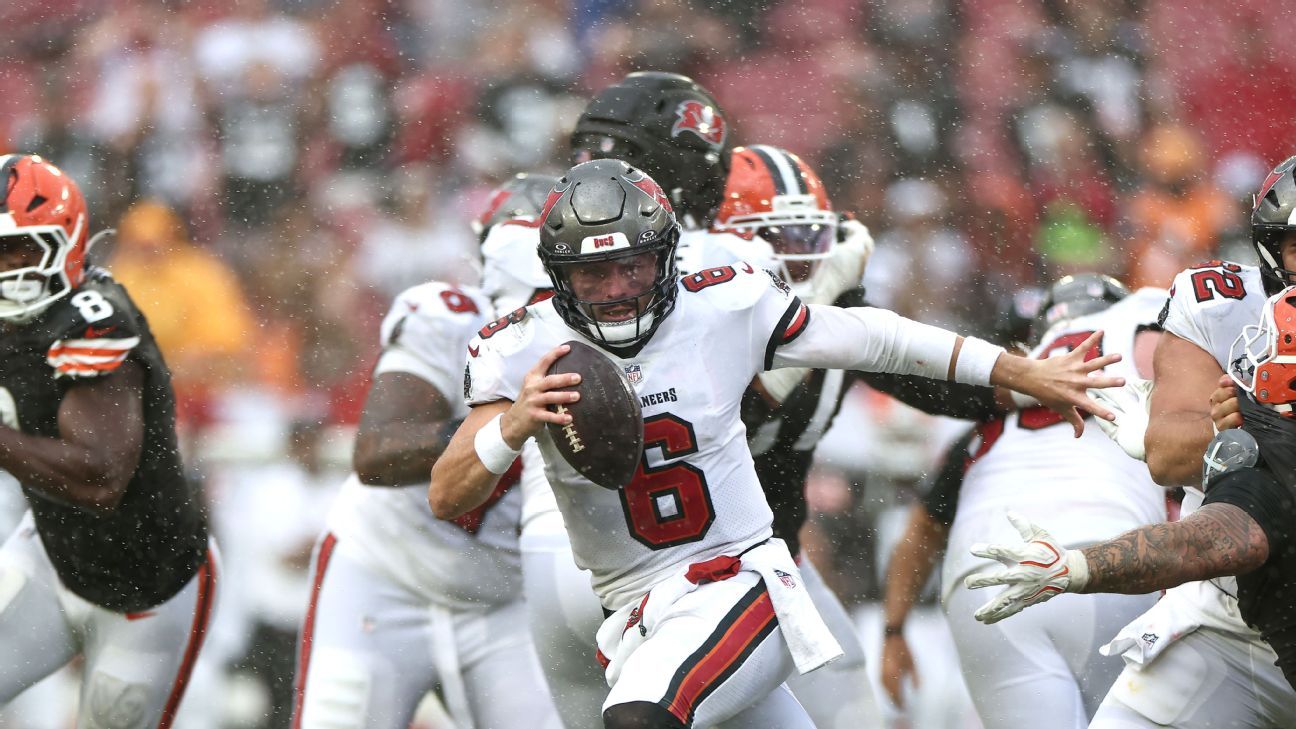
The Tampa Bay Buccaneers lost at home to the Cleveland Browns 24-19 on Sunday, collapsing as the most popular pick across professional survivor contests for the second consecutive week. The Bucs drew 27% of ESPN survivor entries and 6,601 of the 25,017 total Circa Survivor contestants—the second-most backed team in that $25 million pool—only to falter as 8.5-point favorites. The loss followed Week 1, when the Los Angeles Chargers (21% of ESPN entries) were upset by Arizona, creating a rare two-week cascade of public chalk disasters that typically occurs once or twice per season, not in back-to-back weeks.
What makes this pattern worth examining is not the games themselves but the market structure underneath. Circa Survivor attracts a mix of casual bettors, office pools, and professional handicappers. When 27% of the pool gravitates toward a single team, it reflects consensus around conventional wisdom—Baker Mayfield's Tampa offense, home-field advantage, a 8.5-point spread. The sharp entry point, by contrast, is clarity: San Francisco, the second-most backed team at Circa, executed its game plan against Miami. The 49ers' popularity was built on skill-position matchup advantage and a proven defensive scheme. Tampa Bay's popularity was built on narrative momentum and Vegas' point spread. One survived. One didn't.
The Buccaneers now sit 11 games into a streak without covering the spread—tied for the longest non-cover streak in the Super Bowl era. That statistic matters because it reveals something structural about the team's true win probability versus perceived value. A team favored by 8.5 points that loses outright isn't encountering variance; it's encountering a gap between how good Vegas thinks it is and how good it actually is. The weather delay during the game may have added noise to the result, but Tampa's inability to win a home game against a Cleveland team without Deshaun Watson points to execution issues more fundamental than weather. The Chargers, meanwhile, couldn't contain Arizona's pass rush despite being 2.5-point favorites.
For survivor and contest players, the lesson is mechanical: the market's consensus pick in survivor is often the market's worst pick because survivor punishes correlation. When 27% of entries align on one team, they're all risking elimination simultaneously—exactly when they should be seeking uncorrelated edges. Sharp money understood this by Week 2 and had already shifted allocation away from Tampa. The Buccaneers' collapse doesn't create a betting edge going forward; the damage is done and the line-setting community has already priced in the team's inability to cover home spreads. But it does expose a predictable pattern: public survivor favorites in 2026 are losing cover more frequently than their Vegas spreads suggest they should. That's a data point for weeks ahead.