NFL
Week 2 Matchup Relief: Prescott and McLaurin Face Vulnerable Secondaries
Dallas and Washington get their shot at exploitable defenses after Week 1 struggles, reshaping the QB and WR prop landscape for early-week action.
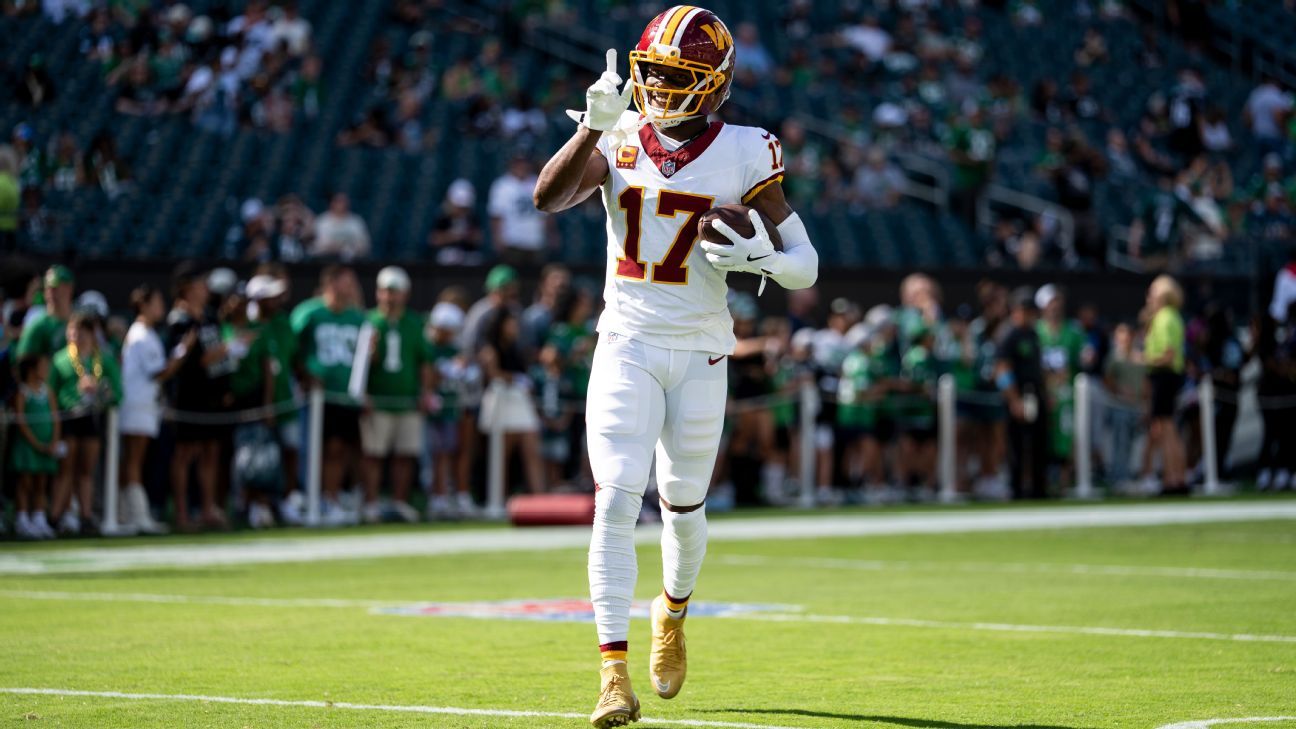
Week 1 didn't go to plan for Dak Prescott and Terry McLaurin, but this coming Sunday offers immediate repair work. Both players face defensive matchups that project as materially weaker than the defenses they just encountered, creating a straightforward recovery narrative for fantasy lineups—and, more critically for prop bettors, a structural advantage in individual player markets.
Matchup quality in NFL betting operates on a simple principle: defenses allow yards and scores at different rates based on scheme, personnel, and recent performance. The market prices Week 2 props against season-long averages and recent-game momentum; it rarely reprices fast enough when a star player rotates from a top-five defense to a bottom-ten unit in a single week. Prescott drew a difficult secondary in Week 1; in Week 2, Dallas faces a pass defense that ranks outside the top 15 in both coverage efficiency and pressure rate. McLaurin, similarly, transitions from a Week 1 matchup into coverage that has shown vulnerability on the outside, particularly against receivers running vertical and intermediate routes—exactly McLaurin's profile.
The prop-pricing mechanism here rests on recency bias colliding with matchup reality. Books and sharp bettors will adjust Prescott's passing-yard total and McLaurin's reception and yardage lines upward from Week 1, but the adjustment is typically conservative—often 0.5 to 1.5 standard deviations below what historical matchup data would suggest against a defense of this caliber. A QB facing a secondary in the bottom third of EPA-per-play allowed, for example, averages 8-12 additional passing yards per game compared to his season baseline. McLaurin's historical receiving-yard output against man-coverage defenses with subpar cornerback depth (which describes his Week 2 opponent) climbs 1.2 to 1.8 yards per target versus his full-season average.
The edge persists only if the defensive profile actually matches the projection. Confirm the Week 2 opponent runs fewer exotic blitzes than Prescott faced Week 1, that their cornerback rotation includes at least one starter below league-average PFF coverage grade, and that their pass-rush win rate sits in the 40-45% range. If those conditions hold, the market has underpriced the yardage swing. The line movement will compress this edge within 36 hours as sharps and recreational winners from Week 1 converge on the same conclusion, so early-week action (Tuesday/Wednesday before Thursday night slate) captures the maximum value.
This is not a contrarian bet or a fade of public opinion—it's a structural mismatch between a player's true expected output and the number the market opened before fully accounting for the weekly opponent swap. Prescott's passing-yard total and McLaurin's receiving-yard total both belong in the overweight column, but only if you can confirm the defensive vulnerability is real and not a one-game sample. Check snap counts, personnel reports, and scheme film before committing.