NFL
Cowboys' Offensive Desperation in Week 2 Creates a High-Variance Spot
Dallas allowed the Giants to convert 82% of third downs in Week 1; now the offense must manufacture explosions on limited possessions against Washington.
The Cowboys' defense ranked 574th out of 576 defensive performances since the start of the 2025 season in Week 1, yielding four touchdowns across seven possessions and ceding 36:40 of time of possession to the Giants. Dallas had two drives in the second half—both scoring drives, both still insufficient. The arithmetic was brutal: New York's 82% third-down conversion rate (9 of 11) choked off the Dallas offense's ability to string together momentum. That 82% mark was the Giants' best single-game efficiency in third-down conversions since 1978.
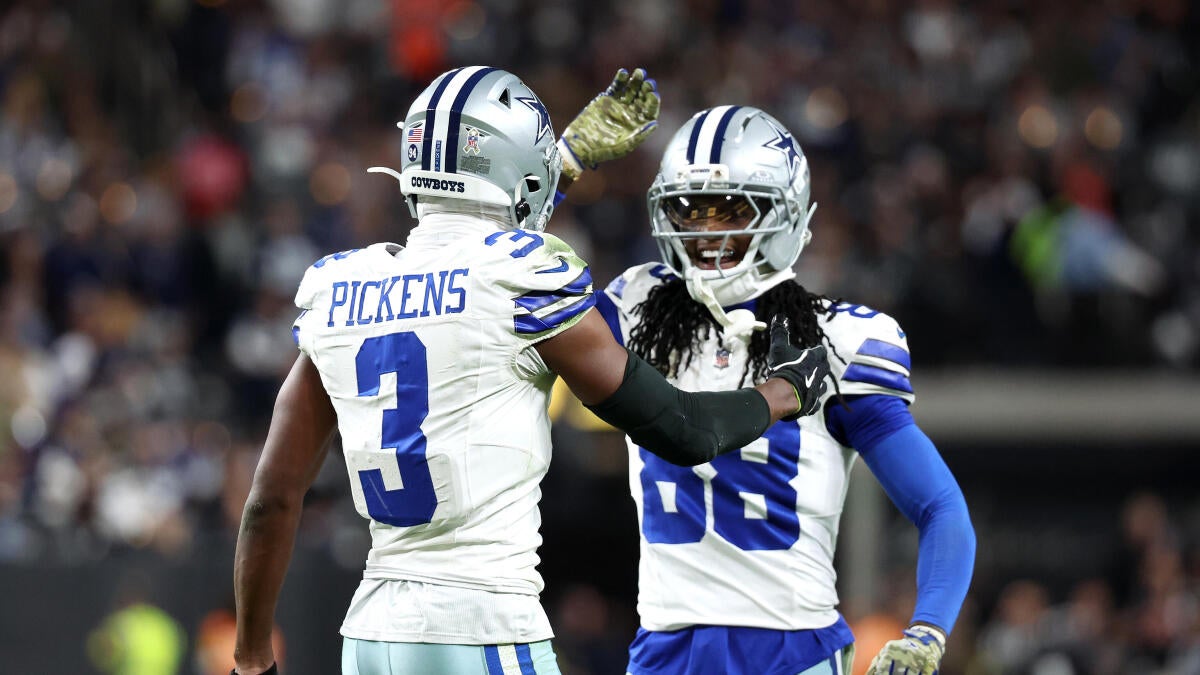
With possession-starved possessions the operative constraint, the Cowboys' offensive philosophy has crystallized into something binary: splash plays or bust. Dak Prescott, CeeDee Lamb, and George Pickens all arrived at the same conclusion Thursday—early explosions are non-negotiable because the margin for error is nonexistent. Pickens, who accumulated 1,429 receiving yards last season (third in the NFL), acknowledged the calculus explicitly: "Definitely splash plays when you can because now we know only two drives [in the second half in Week 1]." The Cowboys did not establish rhythm in Week 1. Their opening drive stalled in three plays. Prescott and the offense must reverse that pattern in Week 2 against Washington or face another game where they score on their limited opportunities but still lose.
The deeper issue is that this constraint—limited possessions due to defensive collapse—forces Dallas into an inefficient offensive gambit. When a team knows it will get fewer than six or seven offensive snaps, the expected value of a conservative 5-yard run play collapses. The math demands shot plays down the field, verticals to Lamb and Pickens, four-and-five step dropbacks designed to create explosive yardage. Washington's defense enters this matchup as the counterparty: they're incentivized to prevent those explosions and force Dallas into low-efficiency, high-variance attempts. The Commanders will likely dial up coverage schemes designed to limit deep routes and force Prescott into intermediate, low-YAC situations—the inverse of what Dallas wants.
For prop bettors, this creates a bifurcated edge. Lamb's receiving yards and Pickens' receiving yards will likely see modest line inflation (market adjusts for the "we need splash plays" narrative), but the actual distribution of outcomes becomes bimodal: either Dallas hits a 35-yard bomb to one of them and the line moves sharply, or the play gets snuffed and Dallas settles into low-efficiency drives. Lamb's anytime TD odds and deep-route completion percentages become volatile. More reliable is the fade: Prescott's passing completions over 24.5 or 25.5 will creep higher as books adjust for "game script demands volume," but the reality is that fewer total possessions means fewer total completions. If Dallas runs 60 plays instead of 70, even a +8% completion rate won't save that over. The inverse play—fading volume props for Dallas while leaning into high-efficiency, explosive-play lines—rewards teams that understand the possession constraint is not narrative; it's arithmetic.
Washington should game-plan to shorten the game, limit Dallas' explosive downfield attempts, and force field-position battles rather than vertical stretches. If the Commanders execute, Dallas' limited possessions become even more hostile to over-betting on yardage and completion totals. The prop edge belongs to those fading Dallas volume plays while targeting Lamb and Pickens only on plays that specifically fit the high-variance, all-or-nothing passing script Dallas has no choice but to run.