Murray Edges McCarthy in Vikings QB Battle as Starter Hierarchy Clarifies
By Justin Erickson ·
Minnesota's offseason QB competition is resolving faster than the team expected, with implications for McCarthy's trade value and offensive playcalling depth.
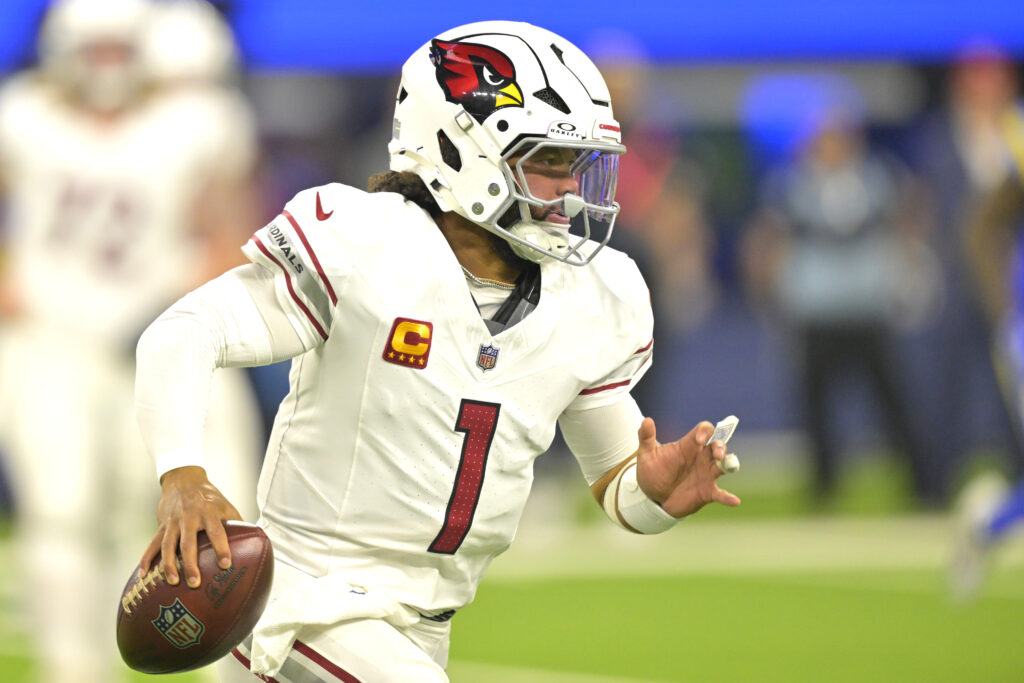
The Vikings committed to a genuine quarterback competition this spring, splitting snaps evenly between J.J. McCarthy and free-agent addition Kyler Murray. Four weeks into organized team activities and minicamp, the gap has widened in Murray's favor—a development that reshapes both the depth chart calculus and the betting surface around Minnesota's offensive ceiling.
McCarthy arrived as last season's starter with the benefit of continuity and internal investment. Murray, signed to a veteran-minimum deal, carried no organizational leverage. The script suggested McCarthy would hold serve. Instead, Murray's command of the offense, faster decision-making, and mobility have given him a clear operational edge. Team officials have begun increasing his rep allocation, a classic signal that the competition is effectively over. McCarthy remains in the mix, but no longer as a co-pilot—now as insurance.
The narrative around McCarthy's future value shifts meaningfully here. He entered the spring with residual prospect equity from his draft capital and rookie season trajectory. That leverage erodes daily he spends as a clear backup. If Minnesota had aggressively shopped him at the trade deadline last season, they could have extracted meaningful compensation while his stock was rising. Holding him into June, watching him lose a spring competition, devalues his tradeable window considerably. A team considering a midseason acquisition won't overpay for a QB the Vikings deemed second-best in a two-horse race.
For bettors, the cleaner QB hierarchy matters directly to passing volume and efficiency props. A settled starter—especially one like Murray, whose college film shows comfort operating in hurry-up situations and extending plays off-script—typically produces more consistent yardage totals than a rotating duo. Minnesota's passing volume likely settles higher than it would under two-QB uncertainty. More predictably, a Murray-led offense also benefits from scheme continuity; coach Kevin O'Neill can build a full-season game plan around one decision-maker rather than hedging playcalls for two profiles. That translates to fewer negative plays, fewer sacks, fewer interceptions. When a starter emerges decisively in June, the offense tightens by September.
Murray's passing yards prop carries the most direct angle. A Murray floor of 225 passing yards per game (conservative for a full-time starter in the NFL) paired with Minnesota's upgraded receiving targets suggests team passing total overs near 245–250 yards could offer value once the betting market resets around a stabilized depth chart. The market has likely priced uncertainty into season-long passing lines; once that uncertainty resolves—and all signals point to it already resolved—overs on both Murray's individual passing yards and Minnesota's team passing total will look attractive relative to prices set during the competition window.