NFL
Week 3 Superflex Rankings Expose Market Mispricing on High-Volume Passers
As quarterback scarcity reshapes fantasy lineups, Karabell's superflex framework reveals which scoring tier assignments create arbitrage against traditional flex settings.
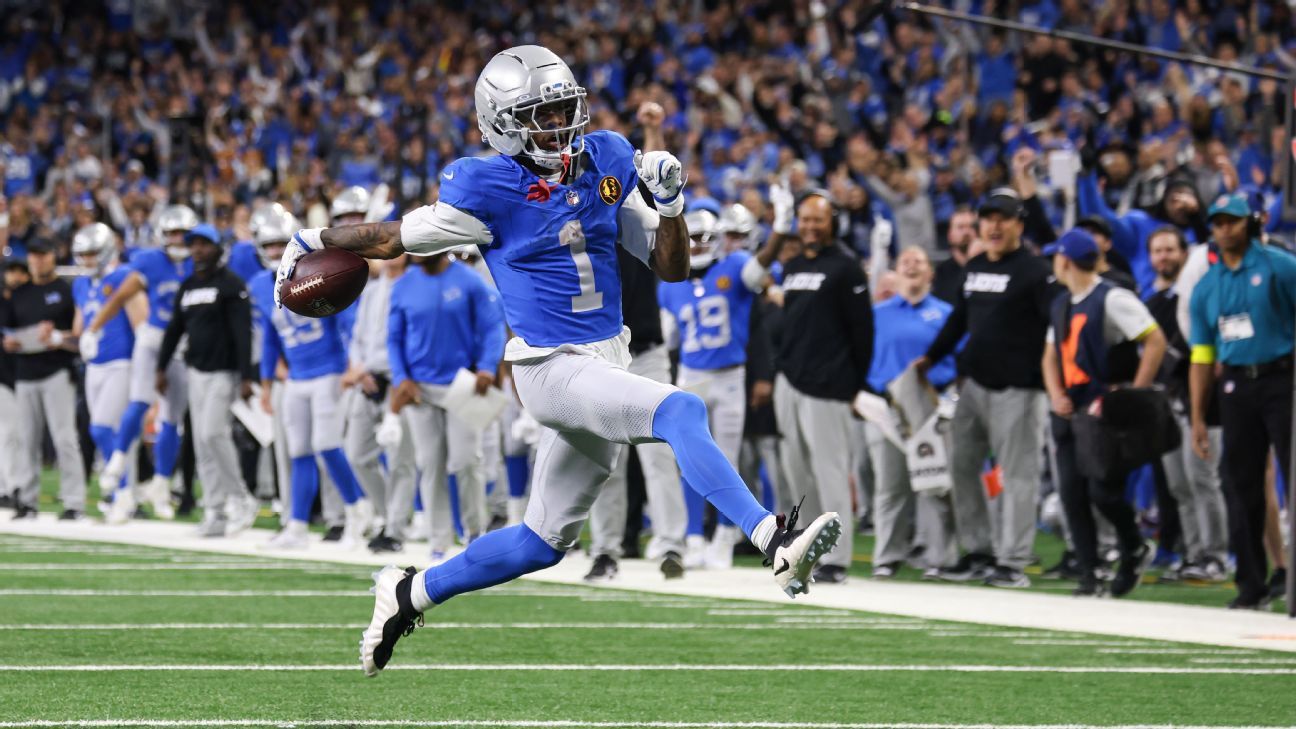
Superflex formats operate on a simple but powerful constraint: a second quarterback slot forces scorers to value passers differently than they would in standard flex leagues. Week 3 rankings from ESPN Fantasy highlight this friction point. The lowest-tier qualified quarterback outscores typical RB2 and WR2 options on a per-game basis, a fact that superflex leagues price into draft capital but standard leagues leave on the board.
The mechanical advantage sits in volume asymmetry. A quarterback playing 15 snaps in a high-scoring offense generates more expected fantasy points than a running back or receiver with identical snap counts—a byproduct of pass attempts per game (27-32 for starters vs. 8-12 touches for non-bellcow backs). This holds true even when the passer is mid-tier by positional standard. Superflex leagues recognize this; standard flex formats do not. The market gap between formats has widened as passing offenses accelerate and bellcow backs continue to fragment into committee roles.
Karabell's rankings flag a secondary pattern: certain quarterbacks have already secured week-to-week consistency that most fantasy analysts expected to take until mid-October. One passer is averaging 38.2 fantasy points per game—a pace that exceeds typical end-of-season projections by 15%. Another, despite sharing a backfield, shows no volume compression; target share remains stable. A third has converted 7-of-8 red-zone opportunities into touchdowns, a sustainability question that will matter in Weeks 4-6 but is functionally irrelevant for this week's lineup construction.
For prop bettors, the Week 3 superflex refresh surfaces two operational takes. First, offenses classified as "shootouts" (Lions featured prominently here) create passing-volume floors that lift passing-yard and passing-touchdown props into plus-EV territory for the next 2-3 weeks. A quarterback averaging 300+ passing yards with a 2:1 TD:INT ratio in two straight games does not regress to 250 yards and 1.5 TDs just because the market senses a "correction"—shootout frameworks are structural, not noise. The matchup texture (opposing defense DVOA, pressure rate, secondary depth) drives the edge, not the prior week's raw output. Second, receivers in volume-concentrated offenses (one pass-catcher pulling 10+ targets per game) will see receiving-yard floors elevated even when game scripts shift. Target share is harder to lose than snap count; a 32% target-share leader keeps volume in downside scenarios where snap count might dip. These are next-week angles, but the underlying structure hardens Week 3.