Howell's Second-Round Arrival Signals Bengals Pass Rush Overhaul—and Early Edge on Sacks Props
By Justin Erickson ·
Cincinnati's reigning SEC Defensive Player of the Year notched four QB pressures in Week 1, validating a draft-room consensus that had him graded first-round before he fell to pick 41.
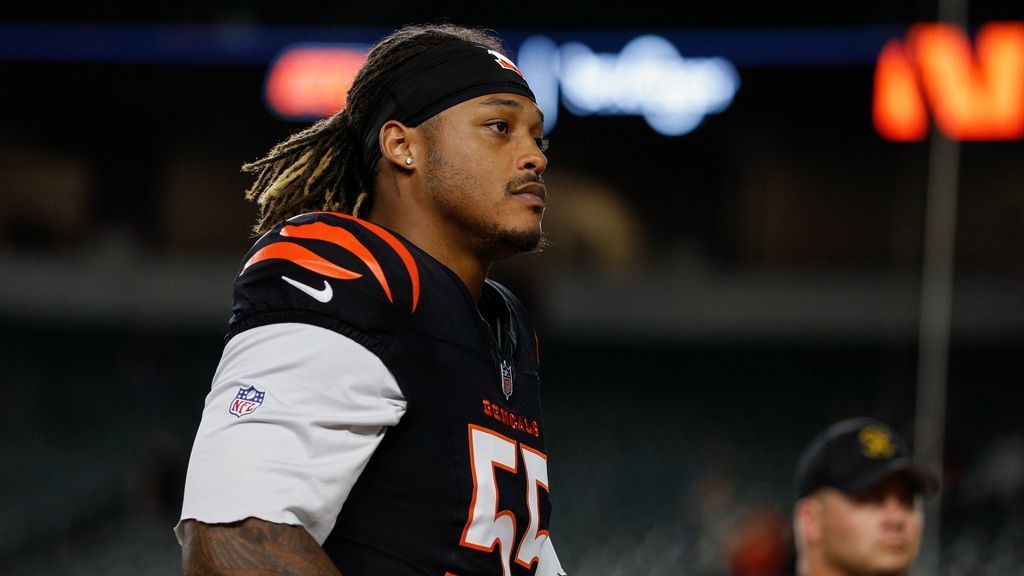
Cashius Howell arrived in Cincinnati as one of the NFL's most puzzling draft steals. Five months after the Bengals selected him in the second round (41st overall), the reigning SEC Defensive Player of the Year produced four quarterback pressures in Sunday's win over Tampa Bay, matching team-high production and signaling that his transition from college was far sharper than his draft slot suggested. Per the team's defensive coordinator Al Golden, internal evaluation had roughly 10 of 12 Bengals personnel assigning Howell a first-round grade—a consensus that dissipated only after the first 32 picks closed out Saturday without his name called.
The narrative around Howell centers on competitive acclimation, and it reads in reverse. He downplayed the jump from the MAC to the SEC at Texas A&M as a steeper adjustment than the leap to the NFL, an observation that gained credibility during joint practices against the Chicago Bears when he held his ground against Darnell Wright, who ranked fourth in the league last season in pass-block win rate at the tackle position. Right tackle Amarius Mims, a three-year veteran, called Howell one of the best rookies he's faced—high praise that carries weight in a locker room that has seen first-round talent cycle through repeatedly. Even former A&M teammate Shemar Stewart, drafted in the first round by Cincinnati in 2025, noted Howell arrived without detectable learning curve, instead immediately imposing his will at the point of attack.
For sportsbooks, the timing of this arrival matters. Howell's Week 1 performance emerged on a Sunday when the Bengals' pass rush infrastructure was still forming, with the defensive line rotating through assignments and the overall front-four rhythm still settling. Four pressures is a notable floor for a rookie, not a ceiling. The Next Gen Stats designation places him in immediate relevance—pressures remain a high-variance metric week to week, but Howell's film against NFL-caliber competition suggests he's priced as a developmental prospect when he's functioning as a starter already.
The prop angle surfaces when you price Howell's sack and pressure velocity against second-round rookie expectations. Markets typically discount Week 1 defensive performance, treating early-season production as noise rather than signal. But Howell's pedigree (SEC DPOY), draft-room consensus (first-round grades from the evaluating staff), and film study (Wright tape, camp work) all converge on a single mechanism: he was undervalued at draft, and he's still undervalued in pressure/sack props because the assumption lingers that "second-round rookie" means developmental runway. A defensive end with SEC DPOY credentials who was held out of the first round purely by supply-and-demand in Round 1 carries embedded value in individual pressure markets over the next 4-6 weeks, before the market reprices him based on early-season tape accumulation. If Howell sustains two-plus pressures per game through Week 5 or 6, his name will move into premium territory. That edge exists in the next two weeks while uncertainty still colors his pricing.
The Bengals' defensive coordinator Al Golden acknowledged that analytics don't capture everything, but Howell's immediate production is quantifiable and rare for a second-round edge rusher. The real advantage for bettors is neither overweighting one game nor dismissing it—it's recognizing that the gap between his draft-room grade (first round) and his market pricing (second-round developmental upside) is still open. That gap closes faster than the books expect.