Giants WR Room Transformed by Injuries and Veteran Depth—What It Means for Pass Volume
By Justin Erickson ·
Nabers' ACL rehab and Olszewski's Achilles tear have forced New York to overhaul its receiving corps, creating a depth chart in flux heading into training camp.
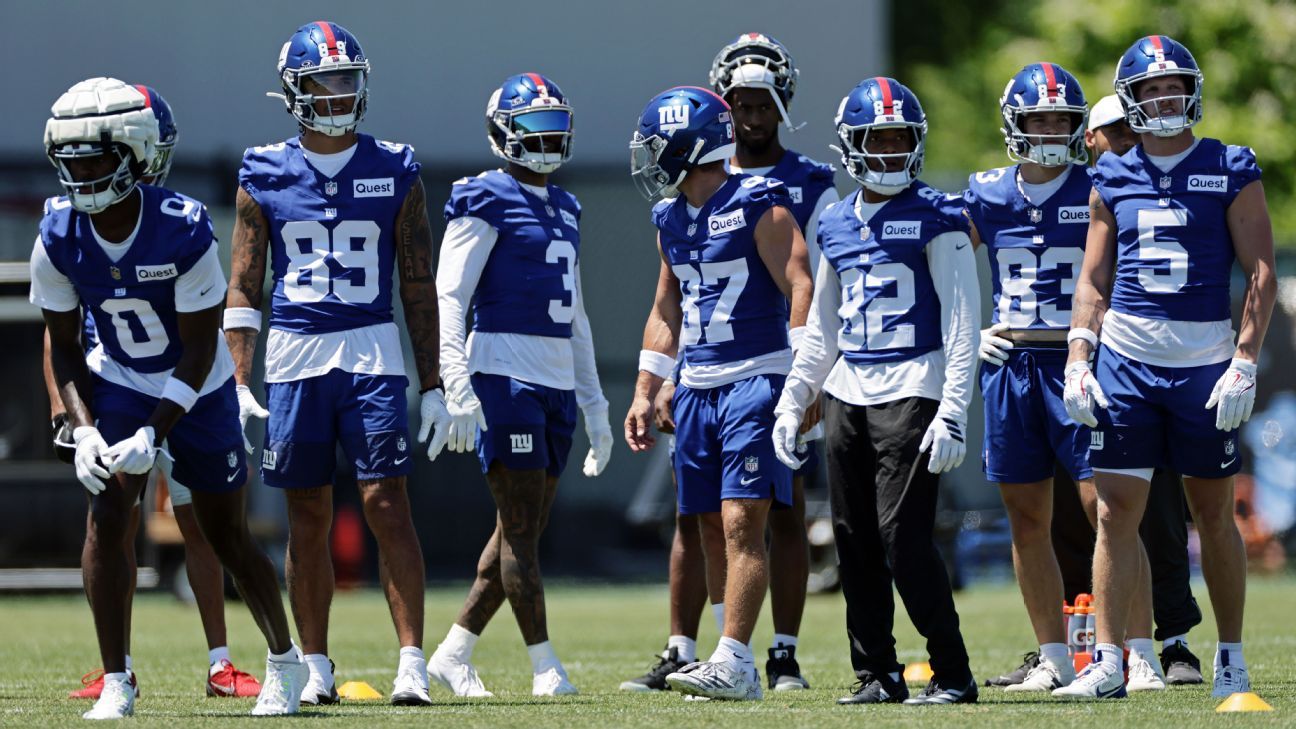
The New York Giants took the field for mandatory minicamp this week with a receiving group that looks nothing like the one that finished last season. Malik Nabers, the team's top talent, is racing the clock on a torn ACL suffered earlier in the offseason and remains a game-time decision for Week 1. Darius Slayton is recovering from core muscle surgery and won't be available until training camp starts. Most recently, returner Gunner Olszewski tore an Achilles, further gutting an already depleted position. The result: the Giants went on a free-agency spending spree, signing Odell Beckham Jr., Juju Smith-Schuster, and Braxton Berrios within hours of each other earlier this month, while also adding Calvin Austin III and Darnell Mooney. Third-round pick Malachi Fields completed the makeover.
Coach John Harbaugh's confidence in the rebuilt group centers on five names he considers locks assuming health: Nabers, Slayton, Mooney, Austin, and Fields. That depth suggests the Giants see a complete retooling as necessary—not just filling roster holes, but building genuine competition. Beckham, who starred for the Giants from 2014-17 before his injury-plagued exit, showed flashes at minicamp: he hauled in contested catches on deep routes and won leverage against loose coverage. But the bigger story is how many mouths now exist to feed. With five established targets (if Nabers and Slayton stay healthy) plus veterans Hyatt, Hodgins, and Collins rotating in, the Giants are operating with unusual roster flexibility heading into training camp.
From a betting lens, this depth chart flux creates real volatility in individual receiving props—but it also signals something larger about quarterback Jaxson Dart's workload. The Giants have intentionally stocked the room with volume targets. Harbaugh's explicit philosophy is competition depth; that translates to scheme flexibility and unpredictable snap counts through the first month of the season. If Nabers is ready by Week 1, he'll command target share immediately—he was a day-one talent before the injury, and Harbaugh made a point of saying Nabers' goal is to become the league's best. If he isn't ready, Austin and Mooney become primary options, but both are mid-tier depth receivers by career profile, not alpha targets. The uncertainty creates a widening range of plausible outcomes for Dart's passing yards and touchdown distribution.
For prop bettors, the Giants' approach means early-season lines on individual receiving yards and receptions will likely misprice durability relative to snap share. Nabers' Week 1 status won't be finalized for weeks; if he's active but comes off the bench in a limited capacity, his receiving props will be overvalued relative to actual snaps. Conversely, if Slayton or Nabers remain unavailable at the start, short-term values on Austin and Mooney's receiving yards could be depressed, as the market anchors to season-long projections rather than the immediate shortage of healthy bodies. Beckham's health carries special leverage given the logjam and his limping during minicamp—if he misses time, his targets redirect to the younger depth players below him, concentrating volume further. The Giants have essentially created a depth chart whose Week 1 snap distribution won't be clear until August; that information vacuum is where edges form.