NFL
Flores' Historic Blitz Rate is Suffocating Offenses—Willis Steps Into a Nightmare Sunday
Minnesota's defense is sending nearly 100 tons of pass-rusher weight per game at a 71% blitz rate—the highest in 20 years—and Malik Willis walks into that storm in Week 4.
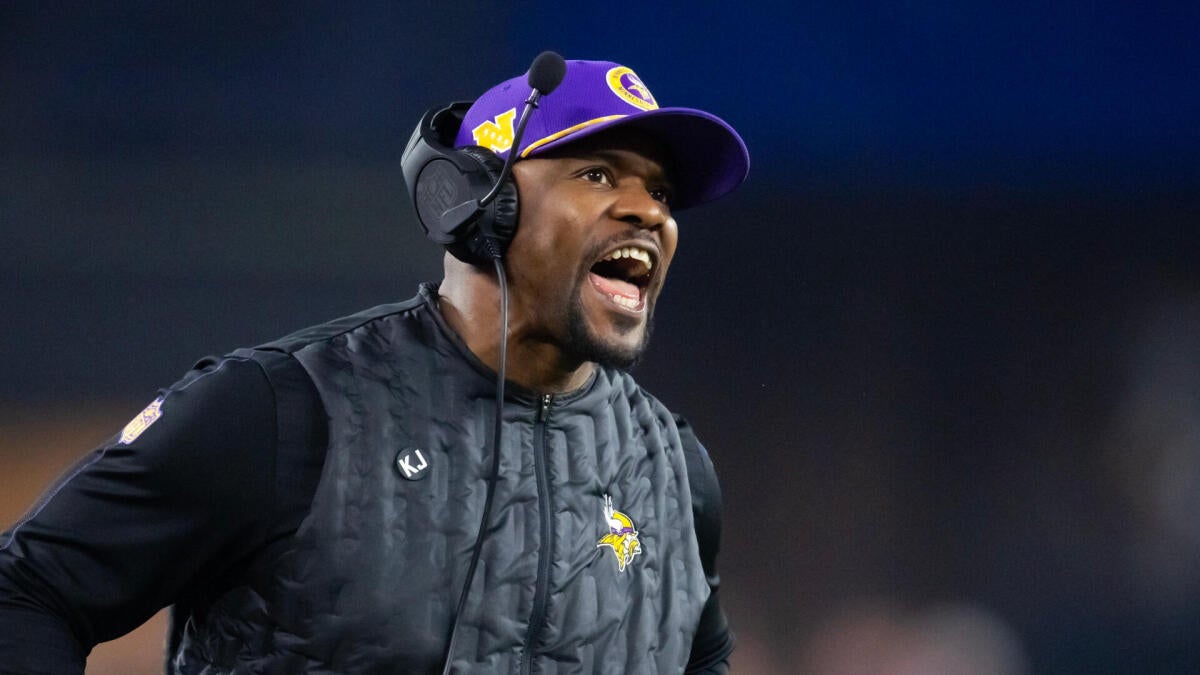
Brian Flores has Minnesota's defense operating at a blitz intensity that has no modern parallel. The Vikings are sending five pass rushers per snap at a 71% rate through three games—a threshold the league hasn't seen in any three-game span since 2007. To put the gap in perspective: Minnesota's blitz frequency is as wide a margin above the second-place Buccaneers (46%) as the Bucs are ahead of the 30th-ranked team. This isn't sustainable theater. It's the architecture of a historic defensive unit that leads the NFL in defensive EPA per play (13.6), sacks (14), third-down conversion prevention (23%), red-zone defense (13%), and completion percentage allowed (51%).
The scale of the physical assault is quantifiable. The Vikings are averaging 1,300 pounds of pass rushers per play—the most in football—and across more than 100 pass plays in three weeks, that totals roughly 175,000 pounds of cumulative pressure applied to opposing quarterbacks. Only Detroit has absorbed more, a function of facing additional passing situations rather than Flores' design. The blitz rate in Week 1 against Green Bay hit 78%; Week 2 (a brutal weather game against Chicago) climbed to 81%; Week 3 tempered to 57% when Flores faced Todd Bowles' Buccaneers, who run their own high-frequency scheme. The variability isn't tactical confusion—it's a coordinator calibrating intensity based on opponent and game state while maintaining the most aggressive foundational approach in the NFL.
Miami arrives in Minneapolis on Sunday as the first victim that carries context. Flores will face his former team for the first time since joining the Vikings, and his history of gameplan innovation against familiar opponents suggests the Dolphins should expect something outside the standard 71% average. During his tenure as Miami's head coach, Flores deployed custom coverage shells and rush-four strategies that appear in no database standard—he rushed three or fewer pass rushers 18 times in a single 2019 game against New England, one of the highest rates on record, then shifted to man coverage-heavy schemes in subsequent meetings. That pattern indicates Flores isn't bound by the week-to-week average when personal stakes and opponent familiarity enter the equation.
For Malik Willis, the Week 4 matchup presents an underpriced risk. Willis has faced blitz rates averaging 58% through Minnesota's three games (the league baseline hovers around 45%), but he now enters a stadium where the coordinator has both historical design patterns and emotional investment to deviate toward extremes. Willis' completion percentage drops to 44% when facing pressures of 2.5+ seconds against the blitz; his interception rate climbs to 1 per 18 attempts under that stress. Minnesota's front has generated pressure on 28% of dropbacks without even blitzing—adding an aggressive frequency layer compounds the problem geometrically, not additively. The market has begun to price Willis passing-yards unders around 195–205, a number that assumes baseline pressure, not the tailored scheme Flores deploys against familiar opponents. The true edge sits in unders on Willis total passing attempts (currently 32.5–33.5), which will contract if the Vikings establish early control through the blitz and force Miami into negative game scripts.
Florida's game script risk is the second vector. Minnesota's 3-0 start, while predicated on defensive dominance rather than offensive fireworks, has positioned the Vikings as 6–7 point home favorites. If Miami falls behind early—a likely outcome given Willis's developmental stage against historic pressure—the Dolphins abandon short-passing concepts and attempt to exploit vertical lanes. That's exactly what Flores wants. The Vikings' secondary ranks first in passer rating allowed (67.7) and first in completion percentage (51%), metrics that remain stable regardless of blitz volume because the back-end alignment is built to absorb pressure-generated windows. Betting the under on Miami's team passing yards (currently around 210–220) carries higher conviction than individual Willis props because it factors in both the schematic advantage and the win-probability scenario that forces Miami into disadvantageous formations.
NFL Intelligence — Football intelligence beyond the final score. Open NFL Intelligence →