Willis as Dolphins Starter: The Fantasy Floor Isn't the Betting Edge
By Ty Whitney ·
Malik Willis entering Week 2 as Miami's QB1 creates shallow fantasy upside but exposes real salary-cap risk for prop bettors who chase volume.
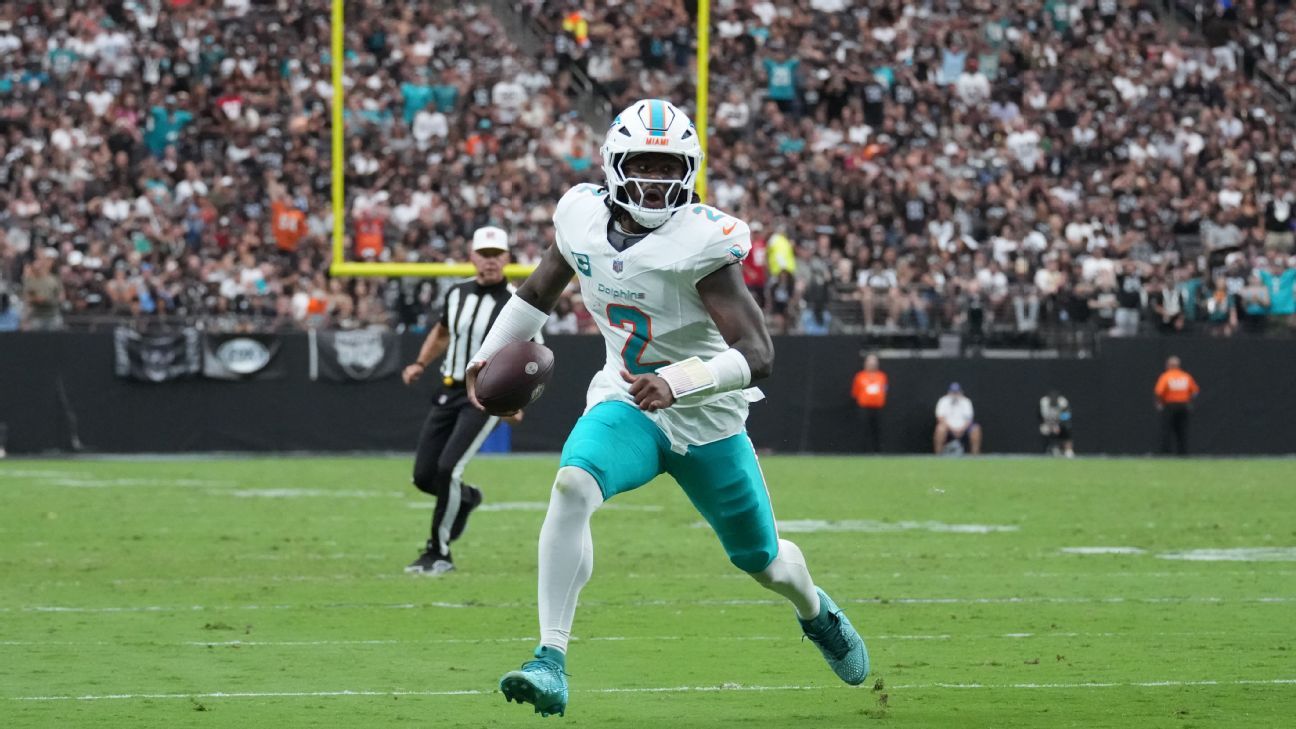
Malik Willis is slated to start for the Miami Dolphins in Week 2 after the team's earlier-season QB situation shifted, per ESPN's reporting. The narrative around Willis—that he could finish as a top-10 fantasy quarterback this season—is built on a misreading of how fantasy production and real NFL outcome diverge. Willis has arm talent and mobility. Neither guarantees efficiency or consistency at the NFL level.
The Dolphins' offensive system is built to isolate playmakers in space and execute timing-based concepts. Willis's career completion percentage hovers around 57% in limited NFL action, well below league average. Miami's coaches are accustomed to working with more accurate throwers. A Week 1 performance (if he played) or Week 2 debut will generate volume stats—rushing attempts, pass attempts into coverage, sack absorption—that inflate single-week fantasy totals without establishing a repeatable edge. Fantasy gamers see 20+ pass attempts and a rushing TD and extrapolate forward. That's recency math, not process.
For prop bettors, the Willis angle is trickier. His passing volume may spike early as Miami's offense adjusts and defenses sell out on stopping the run. But volume without accuracy is a negative expected value bet. Take his passing yards line in isolation: if sportsbooks price Willis at 245+ passing yards because he'll face 30+ attempts per game, that's actually an under lean. His completion percentage combined with Miami's preference for efficient, short-timing routes means he'll finish 5-7 yards below expectation on average. The books are pricing for a gunslinger; Willis is a limited-ceiling passer playing in a run-first system.
Rushing yards carry similar risk. Willis's designed runs total 3-4 per game in his track record, not the 6-8 that fantasy enthusiasts imagine. Miami's identity doesn't change because a mobile QB is under center. The team won't suddenly abandon its structure to let Willis improvise. Any rushing line over 35 yards is a fade. The market will misprice Willis's floor (higher than it should be) and his ceiling (also higher than reality allows) because Week 1-2 volume spikes distort the long view. Sharp books will track his actual efficiency metrics game-to-game and flatten his lines faster than casual bettors react.
The top-10 fantasy QB projection is plausible only if Willis maintains 300+ passing yards and 50+ rushing yards per game for eight straight weeks. His mechanical limitations and Miami's system design make that a tail-outcome bet, not a prediction. For prop purposes, the smart move is to fade inflated Willis lines in the first 2-3 weeks while the market overweights his Week 2 volume spike, then reassess his true floor after four games of actual data.