NFL · injury
Flacco Trade Makes Sense for Giants Only If Winston Implodes This Week
Jaxson Dart's season-ending knee injury forces New York to bet on Jameis Winston's volatility, but a midseason Flacco acquisition hinges on one game and carries steep cost.
Jaxson Dart's 2026 season is over. The Giants quarterback suffered damage to his MCL, PCL, and meniscus during Monday night's 28-6 loss to the Rams, leaving New York to pivot immediately to Jameis Winston, the veteran backup who signed a two-year, $13 million extension last offseason to remain Dart's insurance policy. Winston took relief snaps in that same game and completed 11 of 27 passes for 111 yards with one interception—a performance that crystallized the central tension now facing head coach John Harbaugh and offensive coordinator Matt Nagy: Winston is simultaneously capable and unreliable.
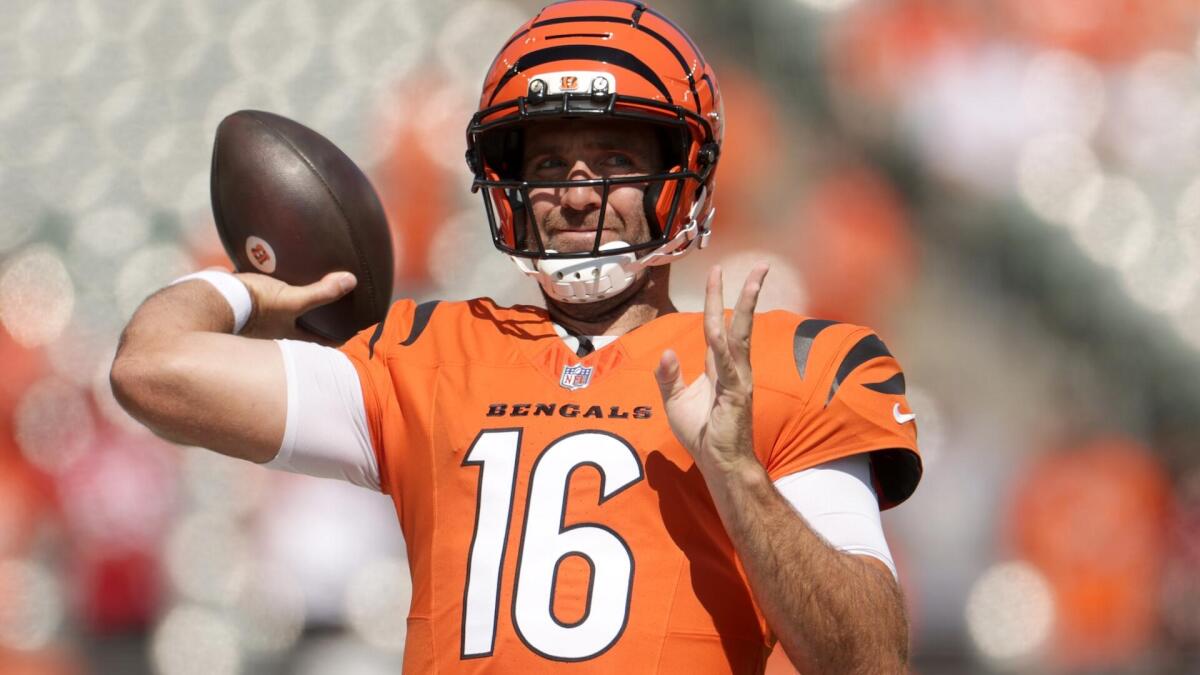
Winston's profile is paradoxical by design. He made the Pro Bowl as a rookie with Tampa Bay after posting 4,042 yards and 22 touchdowns in 2015, then became the first quarterback ever to record a 30-30 season (30 TDs, 30 INTs) in 2019. He has the arm talent to win games and the impulse control problems to lose them. That's not hyperbole—it's his entire career arc. When Cincinnati's Joe Burrow missed nine games last season due to a toe injury, Flacco stepped in and averaged 272.7 passing yards per game with a 13:4 touchdown-to-interception ratio over six starts. He was genuinely good. But Flacco is 41 years old, and the Bengals have no incentive to trade him away; they re-signed him specifically because they view him as essential insurance for a Super Bowl contender.
The Flacco angle only becomes real if Winston stumbles catastrophically against Tennessee on Sunday. A single poor outing—or even a decent one in a loss—won't trigger a trade. Harbaugh and Nagy need to see a pattern of unforced errors, ball-security disasters, or accuracy collapse before exploring the cost of acquiring a 41-year-old backup from a division rival. Cincinnati won't part with Flacco for a late-round pick; they'll demand high-value compensation that makes sense only if the Giants are convinced Winston cannot stabilize their offense. That's a three-to-five-game audition minimum, not a one-week snap decision.
From a prop perspective, the uncertainty around Winston's role now extends to multiple dimensions. His passing volume will likely be lower than Dart's would have been, given Winston's tendency toward interceptions and the coaching staff's probable emphasis on game management over vertical aggression. For Giants passing totals, expect market corrections downward as sportsbooks factor in Winston's lower completion percentage (career 59.8%) and reduced net yards per attempt relative to a younger starter. Winston's anytime touchdown odds will also recalibrate; his rushing TD upside (he averaged 0.16 rushing TDs per game in Tampa) could be the most reliable scoring avenue in the short term. Against a Tennessee defense that ranks 18th in passing yards allowed, Winston's prop ceilings are genuinely lower than the market may have priced them before Dart's injury.
The Flacco conversation remains speculative theater until Winston either proves capable of managing the role or demonstrates why he cannot. If Winston plays competently this week, the Giants ride with him and the Flacco story evaporates. If he implodes, Cincinnati may demand a first-round pick or better to part with their Super Bowl insurance policy. The market doesn't yet know which outcome is coming—and that ambiguity is the real edge.