A.J. Brown to New England Reshuffles Two Playoff Rosters: What It Means for 2026 Props
By Justin Erickson ·
The Patriots acquired a top-tier receiver in his prime; the Eagles lose volume but gain cap clarity—and the passing distribution on both sides just shifted in measurable ways.
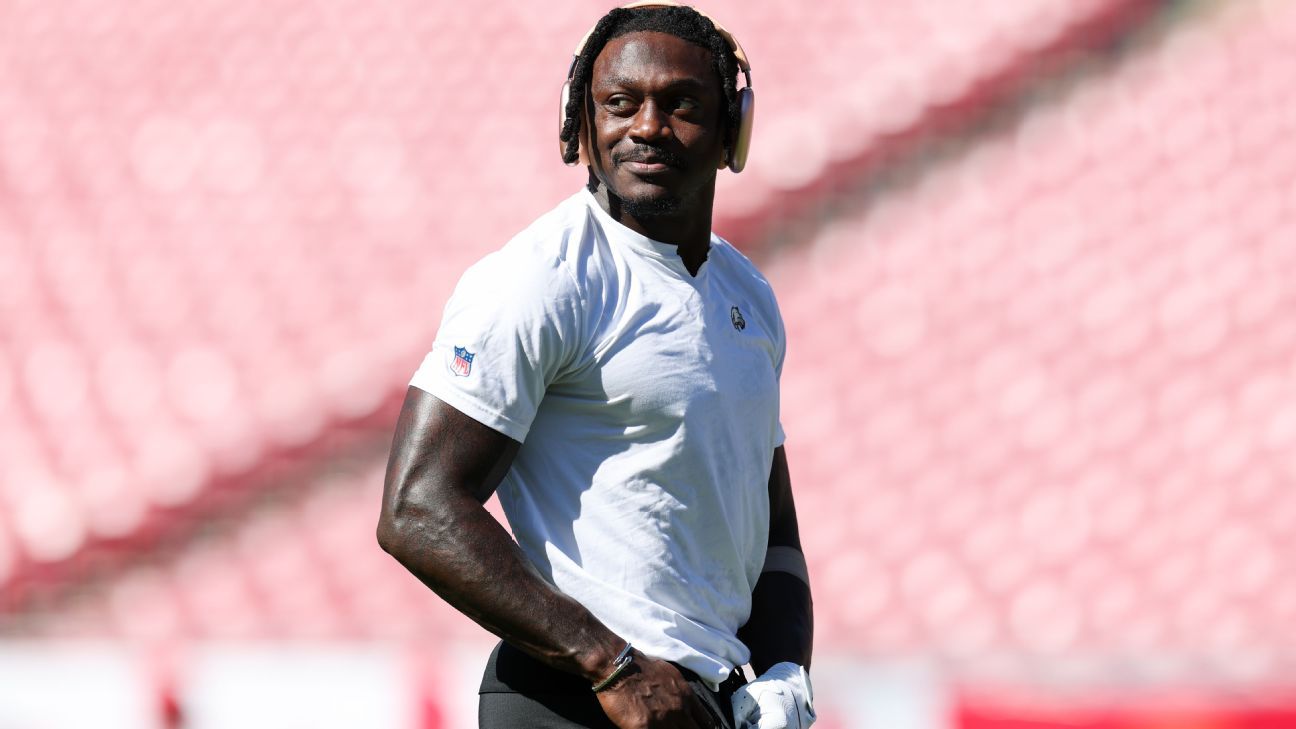
The A.J. Brown trade to New England finally crystallized what had been league whisper for months: Philadelphia dealt its No. 1 receiver to the AFC champion Patriots for a 2028 first-rounder and a 2027 fifth-rounder, per ESPN's reporting. Brown, 29, arrives in New England as a healthy seven-time 1,000-yard receiver who finished in the top 15 in fantasy PPG in all four seasons with the Eagles. The calculus is straightforward for the Patriots—Drake Maye finished last season second among quarterbacks in fantasy points per game with a league-best 72% completion rate and 8.9 yards per attempt, numbers that dramatically outpace Jalen Hurts's 65% and 7.1 YPA. For Brown, this isn't a downgrade in quarterback quality; it's an upgrade in precision and volume efficiency.
The passing implications ripple immediately. Maye will now distribute his elite accuracy to a receiver who has led the NFL in target share in six of his last seven seasons. ESPN's projection slots Brown for 130 targets in 2026—a figure that aligns with his Philadelphia baseline and reflects his continued role as the focal point of New England's offense. Maye's own passing-yards projection (4,094) and touchdown projection (27) suggest the Patriots offense remains prolific, but the concentration of targets tilts sharply toward Brown. This is not a ceiling-raise scenario for Maye; this is a clarification of where his volume goes.
On the other side, Philadelphia's passing attack must absorb the loss of roughly 130 targets. DeVonta Smith becomes the primary outside receiver by default, but Hurts's raw passing volume—already constrained relative to Maye's efficiency—doesn't suddenly expand. The Eagles will likely lean harder on the run game and shift volume to underneath routes and tight-end targets to offset Brown's departure. Smith's target share will rise, but his total receiving yards may not, a distinction that matters for season-long prop pricing but less for weekly receiving-yardage lines, which tend to adjust for opponent quality rather than team volume shifts.
For prop betting, the trade's edge centers on precision of allocation rather than surprise volume creation. Maye's trajectory suggests a quarterback who can sustain 4,000+ passing yards while hitting 27+ touchdowns; Brown's floor in that system is a WR1 season anchored on a top-five target share and consistent red-zone access. The Patriots' schedule moderates their passing volume relative to 2025, but the internal distribution—Brown's piece of the pie—is locked in at an elite percentage. Romeo Doubs, who was brought to New England to be a secondary receiver, now slides into a WR4 role where his receiving-yards prop and touchdown upside compress significantly. Projects to 88 targets from a role that likely demanded 110+.
Smith's elevation in Philadelphia is real but modest. He moves from the No. 2 receiver in a two-elite-option system to the clear No. 1, but he's operating in a less-efficient passing offense and under a quarterback (Hurts) whose completion rate and yards per attempt lag Maye's by a full standard deviation. Smith's season total rises moderately; his per-game consistency may actually dip because Hurts's downfield accuracy creates more variance in when volume translates to yardage.