NFL · injury
Edwards' ACL Tear Depletes Texans' D-Line Depth as Braswell Steps In
Houston's defensive tackle rotation faces a season-long void after Mario Edwards Jr. suffered a torn ACL in Week 3, forcing the Texans to promote practice-squad edge rusher Chris Braswell and lean heavily on an already-thin interior line.
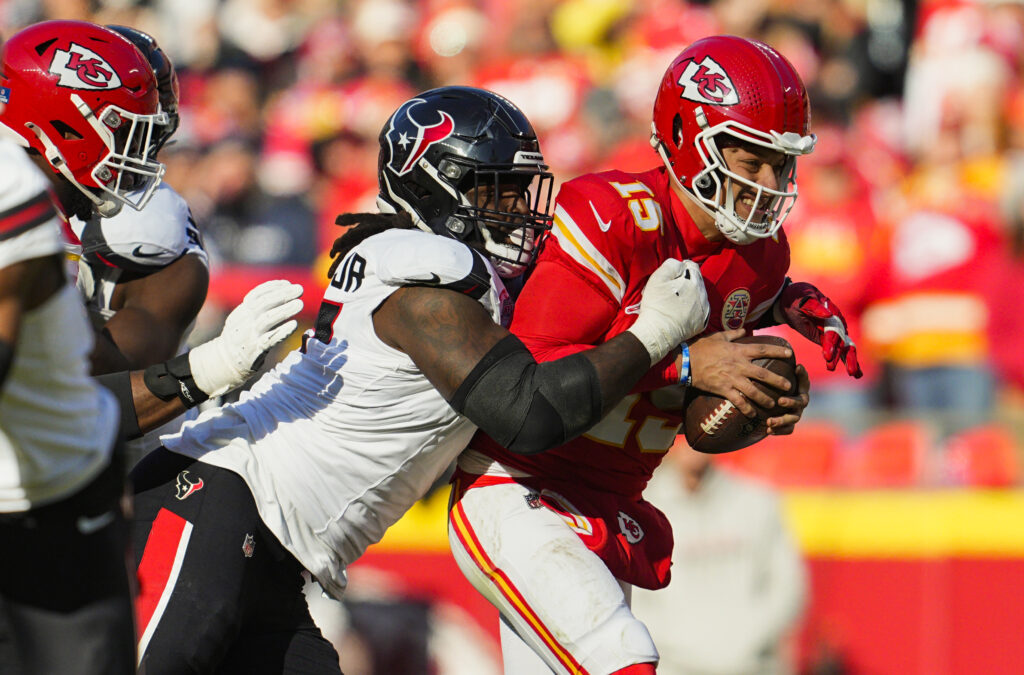
The Texans have placed defensive tackle Mario Edwards Jr. on injured reserve following a torn ACL suffered during the Week 3 loss to Indianapolis. The team announced the move on Wednesday, officially ending Edwards' 2026 season and triggering a reshuffling of Houston's defensive front. To fill the roster spot, the Texans activated practice-squad defensive end Chris Braswell, a 2024 second-rounder whom the Buccaneers cut loose during August's final roster reduction.
Edwards' departure punches a visible hole in Houston's defensive line infrastructure. The 32-year-old had re-signed on a one-year, $1.49M deal in August after appearing in 26 games across the 2024-25 seasons, amassing 4.5 sacks. Through three games this year, he'd logged 56 snaps, six tackles, two quarterback hits, and a sack—a serviceable contribution in a rotational role. But the timing of the injury compounds the team's depth crisis: rookie Kayden McDonald is already on IR, leaving Logan Hall and Jaden Crumedy as the only healthy depth pieces behind starters Sheldon Rankins and Tommy Togiai. That's a narrow bench for the middle of a defensive front expected to anchor the run game.
Braswell carries minimal pedigree for the jump to significant snaps. He drew a second-round draft grade from Alabama and logged back-to-back 17-game seasons with Tampa Bay—a showcase of durability that yielded only 2.5 sacks. The Buccaneers' decision to waive him on cutdown day suggests they saw little upside worth preserving. However, Braswell's college connection to Will Anderson Jr. (the two were teammates from 2021-22) may ease his assimilation into Houston's scheme. Anderson is the Texans' centerpiece pass rusher; pairing him with even modest depth on the interior could stabilize the edge rush if the pocket holds cleaner. That's the bet Braswell gets here—a low-floor, team-chemistry-supported opportunity to prove Tampa Bay's evaluation was premature.
For betting purposes, the Edwards loss tightens Houston's defensive efficiency in run-stopping and interior pass rush. Teams facing the Texans will test the middle more aggressively, and backup interior linemen often draw penalties or surrender yardage at elevated rates in those situations. The Texans' opponent this week (check their schedule) should explore pulling schemes and quick-hitting runs up the gut; if that team has a back with a rushing prop at elevated volume, there's a small mechanical edge favoring the over on those carries—the backup interior line represents a known weakness. Braswell's presence doesn't immediately restore that depth; he's an edge rusher in a run-stuffing role, a mismatch that the offense can exploit short-term. Houston's remaining interior depth is thin enough that projected team totals for games where the Texans are underdogs (where run volume climbs) may be slightly understated. The injury doesn't move preseason playoff odds materially, but it does narrow the margin for defensive adjustments mid-season.
Edwards' path forward points toward free agency. A torn ACL typically demands 9-12 months of rehabilitation, placing his realistic return to football in late 2027 at earliest. At 32, his leverage on the open market will depend on how thoroughly he recovers and whether testing at the combine shows full mobility restoration. The Texans, meanwhile, must weather a thin middle until McDonald returns and hope Braswell develops faster than his Tampa timeline suggested.
NFL Intelligence — Football intelligence beyond the final score. Open NFL Intelligence →