Houston's Defensive Line Depth Play: Edwards and Clowney Returns Signal Defensive Rebuild on the Cheap
By Erik Schwartz ·
The Texans are stacking familiar names on the defensive line after releasing Edwards, banking on reclamation value to shore up a vulnerable front.
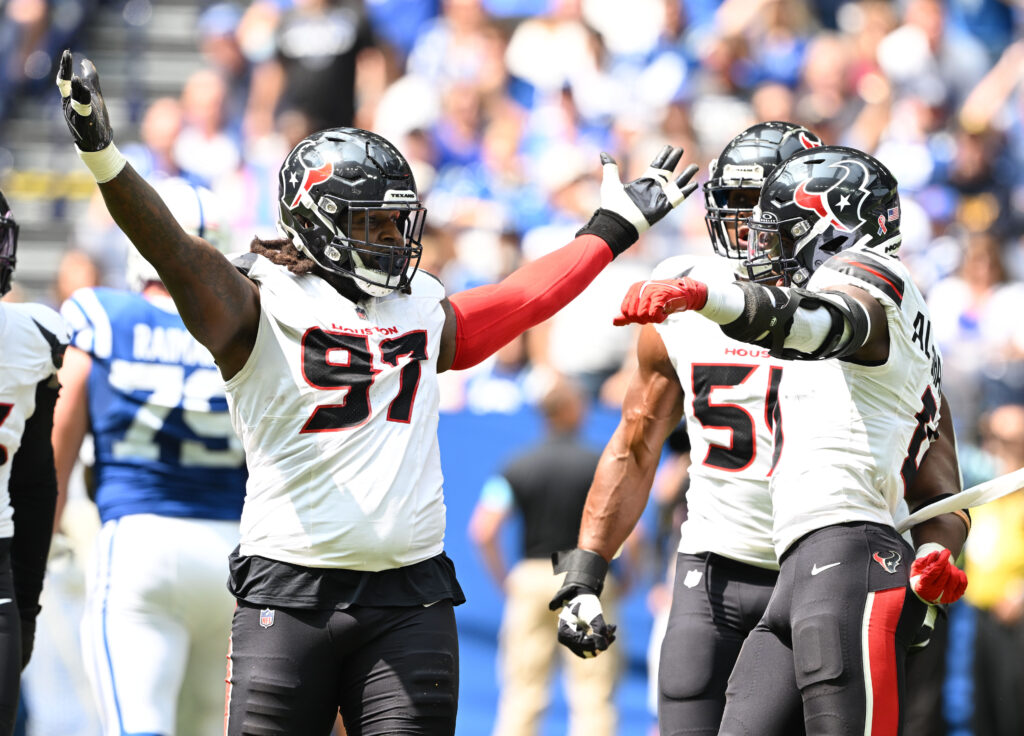
Houston signed defensive tackle Mario Edwards Jr. on Sunday, capping a day of defensive line reunions that also brought back former No. 1 overall pick Jadeveon Clowney. The moves represent a calculated gamble on reclamation: both players were released recently and both have prior Texans tenure, which means the team has a institutional understanding of their strengths and injury history without paying market price.
Edwards spent his early career bouncing between Tampa Bay and Kansas City before joining Houston, where he logged rotational snaps as a run-stuffer in the interior. He's never been a pass-rush specialist—his value has always been situational, gap-assignment reliable in controlled schemes. At his age and with his recent release, the Texans are getting him at veteran minimum or near it, which is the only valuation window where his profile makes sense. Clowney, the marquee name in this pairing, carries far more upside; his athleticism and pedigree remain intact despite injuries, and the Texans built part of their defensive identity around him earlier in his career.
The dual signing tells you the Texans' secondary got picked apart last season. When defensive lines leak, safeties work harder. When linemen can't hold their gaps, quarterbacks extend plays and find throwing windows downfield. The Texans are not suddenly becoming a dominant pass rush—Edwards doesn't do that—but they're attempting to tighten the pocket by adding warm bodies who understand assignments. It's a depth move, not a splash, and it won't fix systemic issues if they exist in coverage or linebacker flow.
For prop purposes, this matters only if the Texans' cornerstone receivers see elevated target volume because the pass rush can't generate clean sacks. If Houston's defensive line remains a liability, opponents will attack vertical routes aggressively, and Texans safeties will find themselves backpedaling more. Conversely, if Clowney rediscovers late-career form and even a part-time Edwards can anchor the interior, Houston's secondary gets help in the form of a collapsing pocket. The Texans' pass-rush win rate, not Edwards' individual snap count, is the true prop lever here. Watch the sack totals for Houston's opponents over the next 3-4 weeks: if they're being pressured into sub-3-second pocket times, the secondary edges toward unders on opponent passing yards; if the D-line remains porous, overs widen.