NFL · transaction
Carter's Contract Stalemate Could Signal Philadelphia's Defensive Shift
The Eagles' hesitation to pay Jalen Carter at market rates reflects both his injury history and lingering character questions—a calculus that reshapes their defensive tackle rotation.
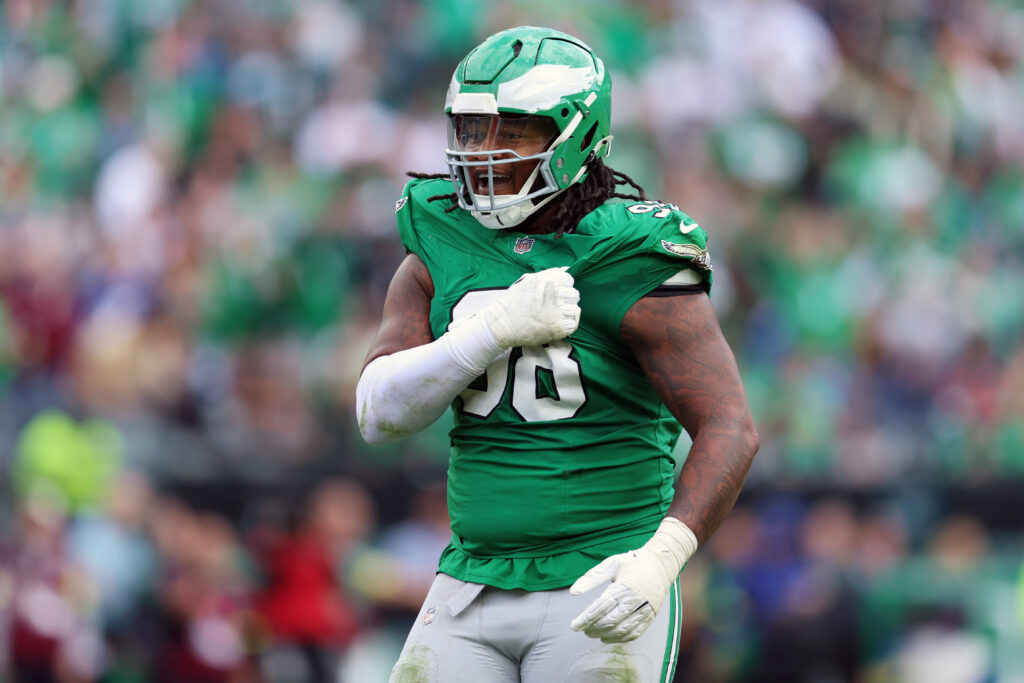
Howie Roseman's reputation for early contract extensions and cap wizardry makes Philadelphia's reluctance to sign Jalen Carter to a long-term deal this offseason noteworthy enough to demand scrutiny. The 2023 first-round pick became extension-eligible this spring, but the Eagles have pumped the brakes rather than lock in their star defensive tackle at the new positional market rate. That hesitation carries real implications for how Philadelphia deploys its defensive front over the next two seasons.
The sticker shock is partly legitimate. Jeffery Simmons' fresh deal with Tennessee reset the defensive tackle market at $35.3 million annually—a $4 million jump from Chris Jones' Chiefs contract. Carter, who emerged as one of the league's most disruptive interior linemen during his first two seasons (10.5 sacks, 20 tackles for loss, four forced fumbles), would reasonably command similar money. But last season's shoulder surgery sidelined him for six games and his production nosedived: three sacks, five TFLs, zero forced fumbles. He earned a Pro Bowl selection anyway—a testament to the broader impact metrics still value—but durability questions now cloud the calculus.
Character risk amplifies the stalling. Carter's 2023 street racing incident at Georgia, which resulted in a death, remains a permanent shadow on his profile. More recent red flags compound it: two fines for illegal hits in 2024, then the spitting incident with Dak Prescott before the 2025 opener. These aren't isolated; they form a pattern that likely factors into Philadelphia's unwillingness to hand him a four-to-five year commitment at peak money. The team would keep him—Carter is too valuable to discard—but any extension would need to come at a team-friendly number, not a record-setting one.
For defensive line projections, this standoff matters. If Carter and the Eagles remain locked in negotiation through training camp, snaps and production will be monitored closely by both sides. A shortened offseason ramp or usage patterns designed to manage durability could depress his tackle and sack totals relative to his first-two-season baseline. Conversely, if Philadelphia structures a shorter-term prove-it deal to reset the conversation in 2027, they may lean on Carter more aggressively in 2026 to demonstrate marketability. The Eagles' interior line anchors their defensive identity; Carter's availability and snap allocation ripple directly into DT sack rates and tackle distributions across the position group.
The betting angle hinges on snap-count and role clarity. Until extension terms clarify, take unders on Carter's tackle and sack props for the first two months of the 2026 season—not because he's declined, but because contract limbo often produces cautious deployment and potential injury management. Once a deal is done (either way), the market will reprice based on actual role definition. Early-season overs on Carter's line assume full health and aggressive usage; both remain uncertain while negotiations drag.
NFL Intelligence — Football intelligence beyond the final score. Open NFL Intelligence →