49ers Defense Rewrites Week 1 Narrative; Chargers Face Schedule Reckoning
By PropBetEdge Editorial Team ·
San Francisco's dominant opener against Los Angeles proves injury concerns may be overblown, while the Chargers' loss to Arizona in Week 1 threatens a season built on early division wins.
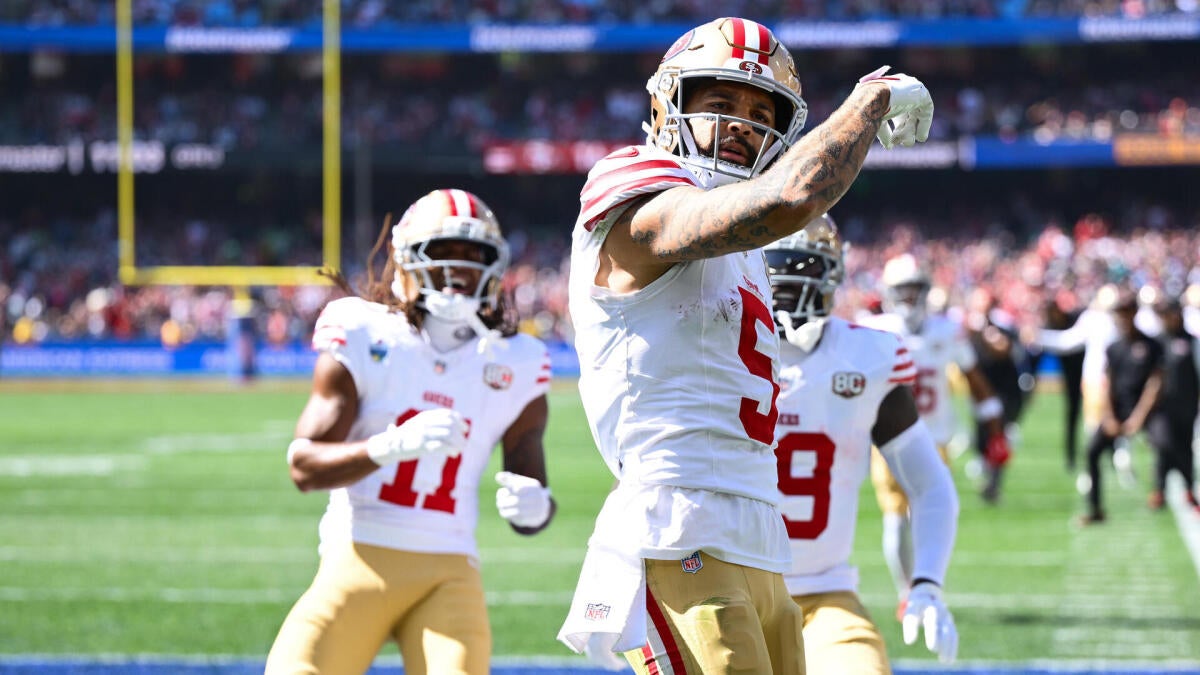
The 49ers dismantled the Rams 27-7 in Australia on Sunday, and the margin understated how thoroughly San Francisco controlled the game. That performance matters less for what it was—a Week 1 beatdown that will be forgotten by December—than for what it signals about the team's structural health entering a season many expected to be shadowed by injury management. With Alfred Collins on injured reserve, Mykel Williams on the physically unable to perform list, and De'Zhaun Stribling sidelined for at least the next month, the 49ers are operating below full capacity. Yet they still generated the third-lowest EPA per play allowed in the league against an offense led by the reigning MVP. That defensive efficiency, paired with the arrival of Mike Evans as a complement to Brock Purdy's weaponry, suggests Kyle Shanahan's roster has enough firepower to sustain its usual West-division dominance through the regular season's meat-grinder middle.
The Chargers' 26-14 loss to Arizona tells a different story. Jim Harbaugh's team entered Week 1 facing a mathematically brutal schedule: the ninth-toughest in the league based on 2025 win totals. The strategic logic was clear—win the two early home games against projected bottom-feeders, then grind through an eight-game gauntlet that doesn't relent until December. Losing to the Cardinals at SoFi Stadium, by 12 points, with two turnovers, shatters that plan. Arizona never trailed; the game was never in doubt. Whether the Cardinals have unexpectedly arrived or Los Angeles has regressed more sharply than projected, the outcome is the same: a division where tread-water wins matter, Harbaugh can't afford to cede games against weaker opponents.
The Super Bowl odds markets have already recalibrated. The 49ers opened at +1400; the Chargers sit at +2000 alongside Denver and Green Bay. But those numbers lag the structural reality. San Francisco's path—NFC West dominance leading to conference representation—has clarified after one week. The Rams, defending Super Bowl champions, just surrendered 27 points to an offense still operating with key personnel unavailable. The Seahawks, the other West contender, haven't played a game that will move the needle relative to this 49ers statement. If the 49ers' health trajectory improves with each passing week as Collins and Williams return, the division tightens around a single clear favorite.
For bettors, the 49ers' Week 1 performance against a stout defense introduces a durable angle on Brock Purdy's individual efficiency. He completed 70% of passes, threw two touchdowns, posted a 110.2 passer rating, and faced consistent pressure from Los Angeles's front. When the Rams defense—built on exotic coverage and defensive line depth—cannot force negative plays on a Purdy-led offense this healthy, projection forward shows that Purdy's passing yardage and touchdown prop lines in matchups against mid-tier defenses carry +EV. The market will shade Purdy props cautiously after the Los Angeles result, but the efficiency was real, not variance. Against a Chargers team that now faces the psychological weight of a loss it couldn't afford, expect the 49ers to push game script in their favor early; Purdy volume should trend toward the over side of season averages in divisional play.
The Chargers, conversely, sit in a hole where margin-of-error calculus has already tightened. They need to stabilize in Week 2 against a non-bottom-feeder opponent to reset narrative momentum. Until they do, fading their offensive projection—particularly Justin Herbert's TD pass props in games where early deficit risk is high—carries historical edge. Teams down early in brutal schedules tend to throw more, but negative game script also invites defensive aggression and turnover opportunity. Herbert's interception rate in Week 1 against Arizona (two turnovers in 35 passing attempts) suggests the underlying mechanics of the offense are under pressure, not just circumstance.