Deebo Samuel's Return to SF Fills a Depth Crisis, But Don't Chase His Volume Yet
By Justin Erickson ·
The 49ers reunite with their versatile receiver to cover for Ricky Pearsall's knee injury, but Samuel's role in a crowded passing attack is murkier than his familiar name suggests.
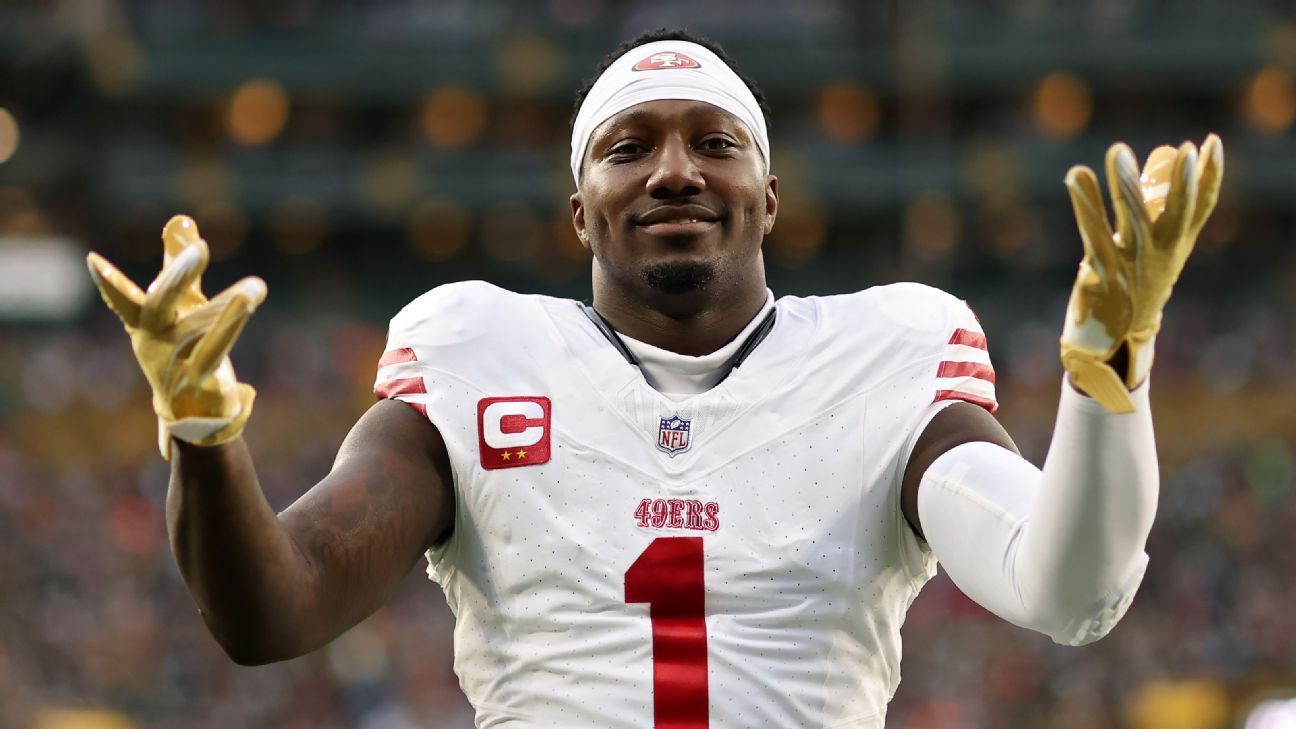
The San Francisco 49ers signed Deebo Samuel to a one-year, up-to-$7 million deal on Thursday night, reuniting the receiver with the franchise that drafted him in 2019. The move is a direct response to uncertainty around Ricky Pearsall's posterior cruciate ligament injury—the team reported Wednesday that swelling in his right knee carries "concern" and may require extended absence—and a strained calf keeping veteran Christian Kirk sidelined. Samuel, who spent the 2025 season with Washington after being traded away last offseason for a fifth-round pick, appeared in all 16 games for the Commanders, hauling in 72 receptions for 727 yards and five touchdowns while adding 17 carries for 75 yards and another score.
This is a tactical band-aid, not a strategic transformation. Samuel's peak value came in 2021 when he accumulated 1,770 combined rushing and receiving yards with 12 touchdowns from scrimmage and earned All-Pro honors. That was seven seasons ago. At 28 years old and coming off a season where his per-game yardage averaged just 45.4 yards, he's no longer the centerpiece; he's insurance. The 49ers' actual receiving hierarchy remains tilted toward Mike Evans, whose veteran presence and red-zone gravity form the core of the offense, alongside a rotating cast of younger options like De'Zhaun Stribling, Jordan Watkins, and Jacob Cowing. Kyle Shanahan's system is designed to distribute opportunities through scheme rather than concentration, and the arrival of Samuel doesn't change that calculus—it expands the menu.
For bettors, the temptation is to view Samuel's return as a volume unlock. He's familiar with the system, he can line up in multiple positions, and he's joining an offense that just lost one of its projected starters. The reality is messier. Samuel will absorb snaps that otherwise would go to depth receivers and special packages, which is valuable for the team but not necessarily for his individual stat line. His best-case usage scenario sits somewhere between his 2025 Commanders role (where he was the primary target on a middling passing offense) and his 2021 peak (where Shanahan built entire game scripts around his versatility). This offense doesn't need to do that. It has Evans, Christian McCaffrey in the backfield, and a defense good enough to win low-possession games.
The prop angle traces through opportunity frequency and red-zone allocation. Samuel's receiving yards for the season will largely depend on whether Pearsall returns within the next month and whether Kirk's injury settles quickly. If both stay sidelined into September, Samuel's target share could spike to 15-20% of passing attempts for 3-4 weeks, which would support overs on his weekly receiving yards lines (likely in the 40-60 range). If Pearsall and Kirk return by mid-August, Samuel's baseline drops to 10-12% of targets, making similar overs much riskier. The market will price opening lines assuming partial availability of the entire receiver group, which means early-week lines before injury clarity emerges carry edge in one direction or the other—but only if you know the severity timeline. Touching Samuel anytime touchdown props is reasonable given his hybrid role and the absence of clear intermediate-term receiving options, but avoid season-long totals until the injury picture crystallizes.
The broader takeaway: Samuel is a depth filler masquerading as a depth headline. The 49ers made a sensible move; the betting community should resist the narrative that he's now a high-volume piece.