Jones' Achilles Recovery Accelerates; Pierce's Ankle Threatens Colts' Receiving Room
By Justin Erickson ·
Daniel Jones clears a pivotal rehab milestone weeks ahead of training camp, but Alec Pierce's ankle surgery could leave Indianapolis thin at wideout when it matters most.
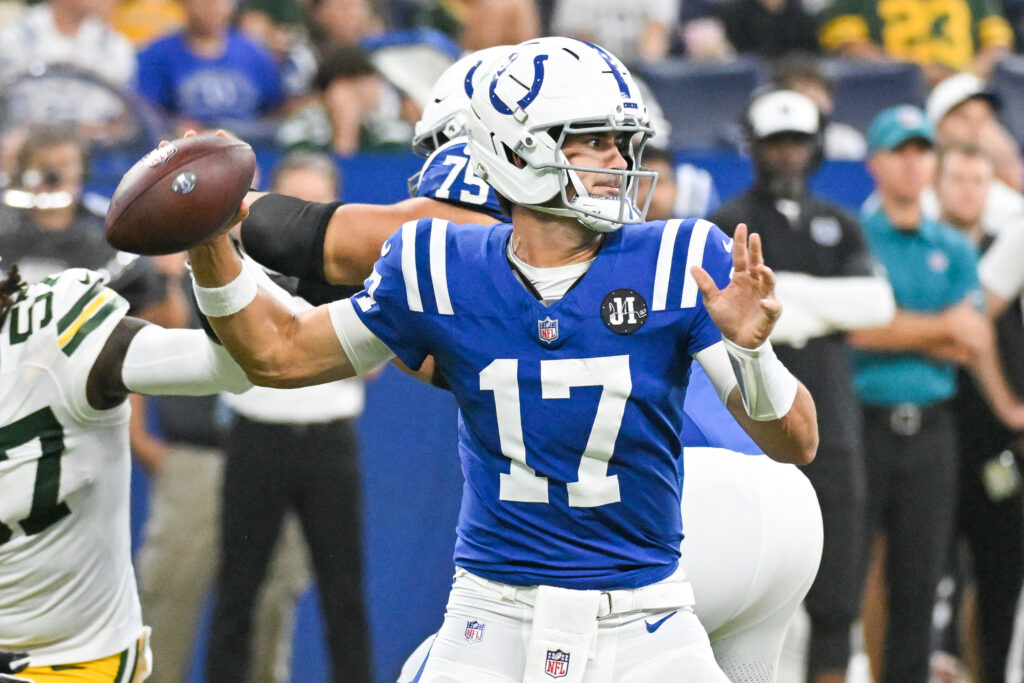
Daniel Jones has moved from individual drills to seven-on-seven work in OTAs, marking tangible progress in his recovery from the Achilles tear that cut short his Colts debut last season. Head coach Shane Steichen confirmed the step forward on Tuesday, signaling confidence that the 29-year-old will be ready for full participation once training camp opens in roughly five weeks. The trajectory matters: Jones went from sideline observer to live reps in less than seven months—a window compressed enough to suggest medical clearance is tracking ahead of conservative timelines.
But the receiver situation paints a different picture. Alec Pierce underwent ankle surgery this spring and now faces a real risk of missing the opening weeks of training camp in late July. Steichen did not rule out Pierce's absence when pads come on, though the team remains optimistic about his availability for Week 1. The distinction is critical for a Colts offense that just lost Michael Pittman Jr. in free agency. Pierce, locked into a four-year, $114 million extension signed this offseason, was supposed to anchor a three-headed receiving attack alongside whatever complement Indianapolis builds around him. Instead, he may be rehabbing while the offense installs timing routes and chemistry in live action.
The Colts' investment in both players reveals organizational conviction about their roles. Jones' $88 million over two years and Pierce's $114 million extension represent the team's bet that these two will carry the passing game. But injury timelines don't care about contract size. If Pierce misses even two weeks of padded practice before Week 1, the receiving corps enters the season with fewer live reps than projected. Jones, meanwhile, will have near-complete training camp access—but without his presumed top target fully available during the cohesion period. The margin for error on early-season offensive execution tightens considerably.
For prop purposes, the Pierce uncertainty creates a secondary-receiver bet. If Pierce does miss training camp time, the burden of work falls harder on whoever emerges as the second option—likely a name not yet on the public's radar. Conversely, when Pierce does return and ramps up through the preseason, expect his target share to lag behind what a typical $114 million receiver gets in September. The real angle: Jones' passing volume and TD output in Weeks 1-3 carry elevated variance because his timing with Pierce will be under-rehearsed. Targets may be there, but completion percentage and red-zone efficiency could suffer from compressed prep time. Pierce's receiving yards and receptions are also depressed props for the first month; you're not buying a star performer at full bandwidth, you're buying a player working through game-speed integration. The market has likely priced Jones as a fully functional passer by Week 1, but he may operate in a situational offense for the first month while Pierce acclimates.