NFL
Chiefs Engineered Walker's Workload Spike—Now Comes the Managed Fade
Kenneth Walker's 369 all-purpose yards through two games led the NFL by design, but Kansas City is deliberately cutting his touches this week against Miami, a move that reshapes both game-script and prop expectations.
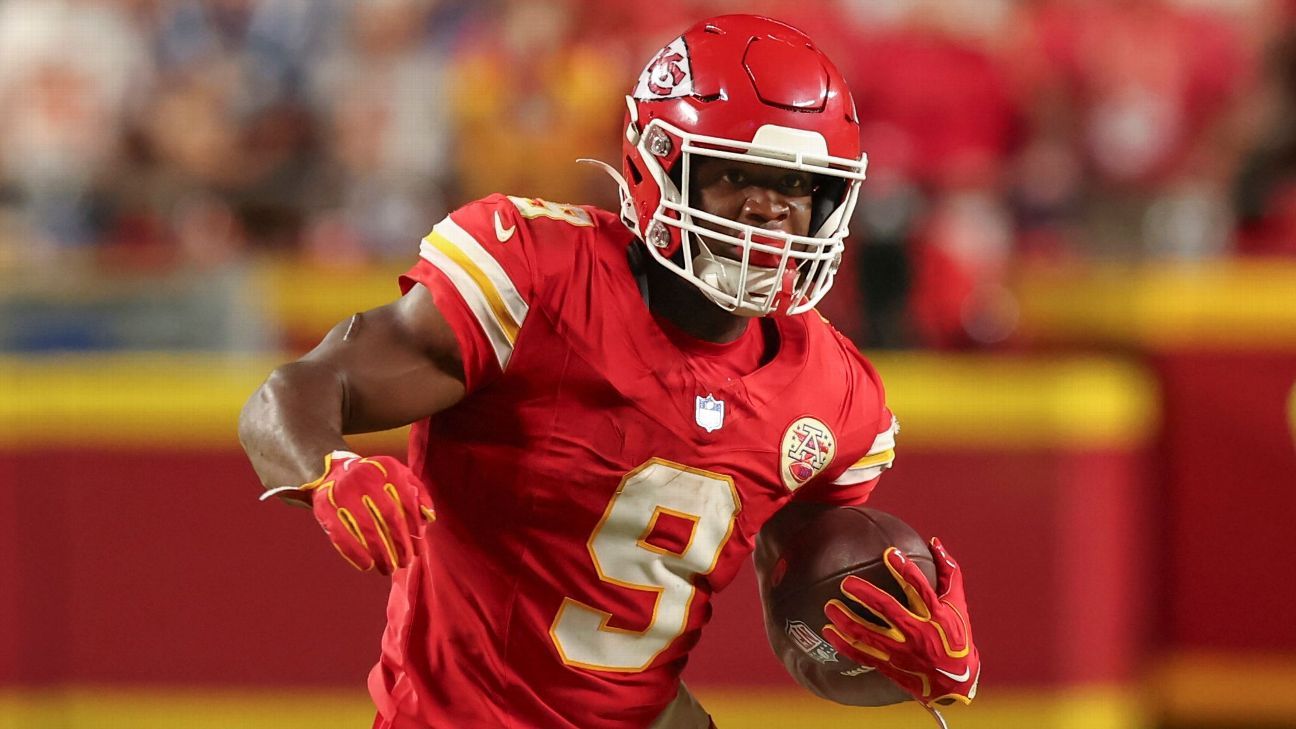
Kenneth Walker arrived in Kansas City last offseason as the Chiefs' marquee free-agent acquisition, and through two games he has validated that spend with 369 all-purpose yards and 59 touches—tied for the most among all skill position players in the league. Against Indianapolis on Monday night, Walker carried the workload that an overtime victory demands. But Andy Reid's acknowledgment Thursday that the running back's usage has exceeded initial expectations signals a deliberate recalibration, not a durability crisis. The franchise is methodically reducing Walker's snap share this weekend against Miami to accelerate development of rookie Emmett Johnson and preserve the veteran's effectiveness over a 17-game season.
The mechanism behind the reduction is straightforward: Walker has been exceptional at generating yards after contact (29 broken tackles already, per Next Gen Stats), which makes him indispensable in close games and high-leverage moments. But that production comes with a finite energy budget. Reid and offensive coordinator Eric Bieniemy have watched Johnson accumulate 103 all-purpose yards on 14 touches through two games—a 7.4 yards-per-touch clip that suggests the rookie is ready for expanded responsibility. The coaching staff is not panicking. They are allocating carries deliberately. Defensive coordinator Eric Bieniemy stated it plainly: "What you don't want to do, when you're raising some of these young players, is put them in a situation where it could be detrimental to them." Running backs coach DeMarco Murray echoed the same theme—Johnson needs reps to develop confidence, and Walker needs rest to sustain his elite level.
From a prop-betting perspective, this is a critical distinction. Walker's touch volume through two games reflects game script (Chiefs won in OT; games were close) and coaching design working in concert. The market has likely priced Walker's receiving and rushing totals based on his first-two-week role, which averaged roughly 29-30 touches per game. Against Miami, that baseline should compress by 3-5 touches, a reduction Reid described as "a little bit" but one that carries measurable impact on yards-per-game and reception props. Johnson's usage will rise in tandem. The Dolphins defense ranks in the lower half of the league in rush yards allowed, which could mean the Chiefs build an early lead and accelerate Johnson's snap share even further. Walker's prop lines have not yet adjusted to reflect the coaching staff's public commitment to workload management—that gap is the edge.
The timing matters as well. Reid telegraphed this shift midweek, three days before the game, which means the market has had time to absorb the narrative but may not have fully repriced individual player props. Books typically anchor lines on recent performance (369 yards over two games) and only adjust when injury or a clear game-narrative change (blowout win, opponent adjustment) is officially confirmed. A deliberate coaching decision to split carries, announced before Sunday, often gets priced slower than it should because it lacks the urgency of an injury report. Expect Walker's receiving-yards line to be vulnerable to the downside; expect Johnson's receiving-yards line to be underpriced relative to the snap inflation coming his way. This is not a multi-game pattern yet—it is a single-week operational call—but it is announced and structural, not reactive to one outlier performance.