NFL · injury
Broncos Place Coleman on IR; Backfield Depth Test Intensifies
A high-ankle sprain sidelines Denver's rookie fourth-round running back for at least four games, opening the door for committee carries and shifting backfield leverage.
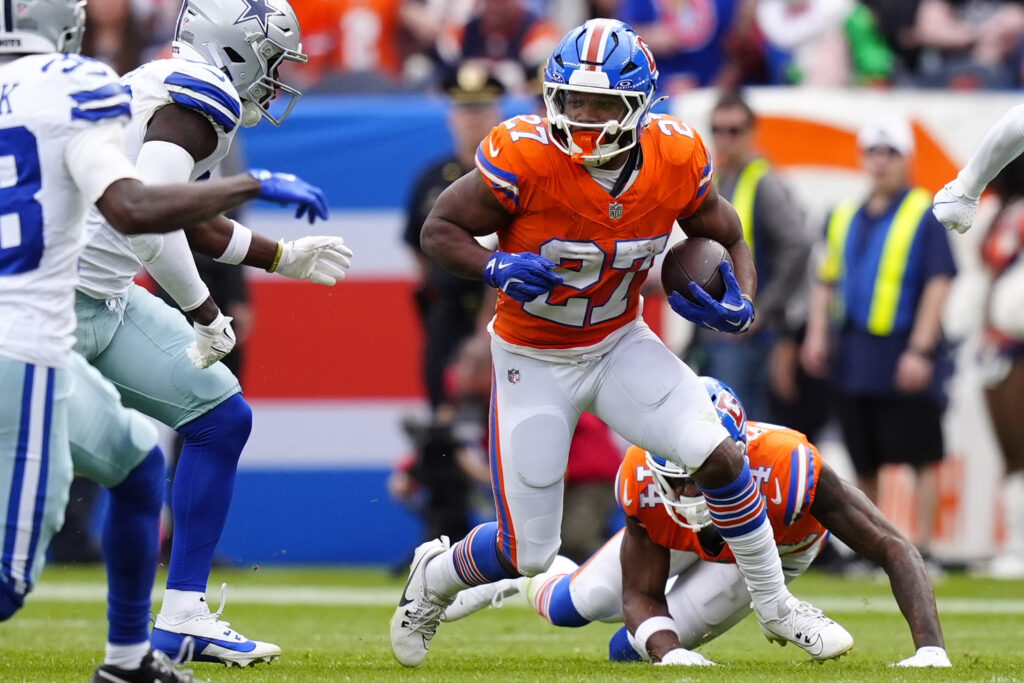
The Broncos placed rookie running back Jonah Coleman on injured reserve Saturday with a high-ankle sprain, per ESPN reporting. Coleman, a fourth-round selection from Washington, will miss a minimum of four games before becoming eligible to return. Denver's backfield depth, already thin heading into the season, now faces a compression that could reshape touch distribution and create measurable shifts in carry and target allocation.
High-ankle sprains are notoriously slow healers in football, and the "minimum four games" language typically signals a longer absence—teams rarely rush these back for fear of re-injury. For Coleman, that likely means he'll miss the next month of play at minimum, and possibly longer depending on Week 5 and Week 6 conditioning checkpoints. The injury arrives at a critical point in the season when backfield rotation patterns solidify; a four-week gap leaves him vulnerable to losing early-season snaps to backup options who will accumulate game tape and rhythm.
Denver's remaining depth chart now relies on whoever occupied the No. 2 and No. 3 roles before Coleman went down. If that committee consists of a mid-range starter and a reserve-grade fill-in, expect carries to shift toward one primary ball-carrier while pass-catching work distributes across multiple targets. This matters for prop pricing because line-setters will adjust team rushing totals downward slightly—Coleman was likely forecast for 10–15 touches per week—but may not immediately reflect which backup absorbs those carries. Early-week games against teams that struggled against zone-running attacks could see the Broncos lean heavier into ground-play than their season average, artificially inflating the primary ball-carrier's carry total before the market corrects.
Watch for whether Denver elects to carry three active running backs on the active roster or adds a practice-squad replacement. If they elevate an untested back, his ceiling on carries will be capped by play-calling conservatism; if they lean on an established backup already in the building, that player's snap count and carries could spike immediately. The first two weeks after Coleman's placement will reveal the usage pattern most clearly. Any back stepping into the primary role should see reduced competition for early-down work, creating an opening to fade receiving yards totals if the player is checked-down-dependent.
From a spread perspective, Coleman's absence alone shouldn't significantly move Denver's win-total expectations unless he was forecast as a 10-plus-carry per week starter. However, his loss in two-minute situations and red-zone work—pass-catching on late-game drives—could subtly weaken the Broncos' close-game execution if he was a featured target in those spots. Monitor early-season game scripts closely; teams that play from behind more often will deploy different backs than teams with leads, and Coleman's absence may shift fourth-quarter receiving work toward slot receivers or tight ends.