Kyler Murray's Arrival Resets Vikings QB Calculus—and Their Win Total Bet
By Justin Erickson ·
Minnesota swapped a three-headed QB carousel for a former No. 1 pick with half the interception rate; the market's already moving, but the edge remains in how Murray changes the offense's floor.
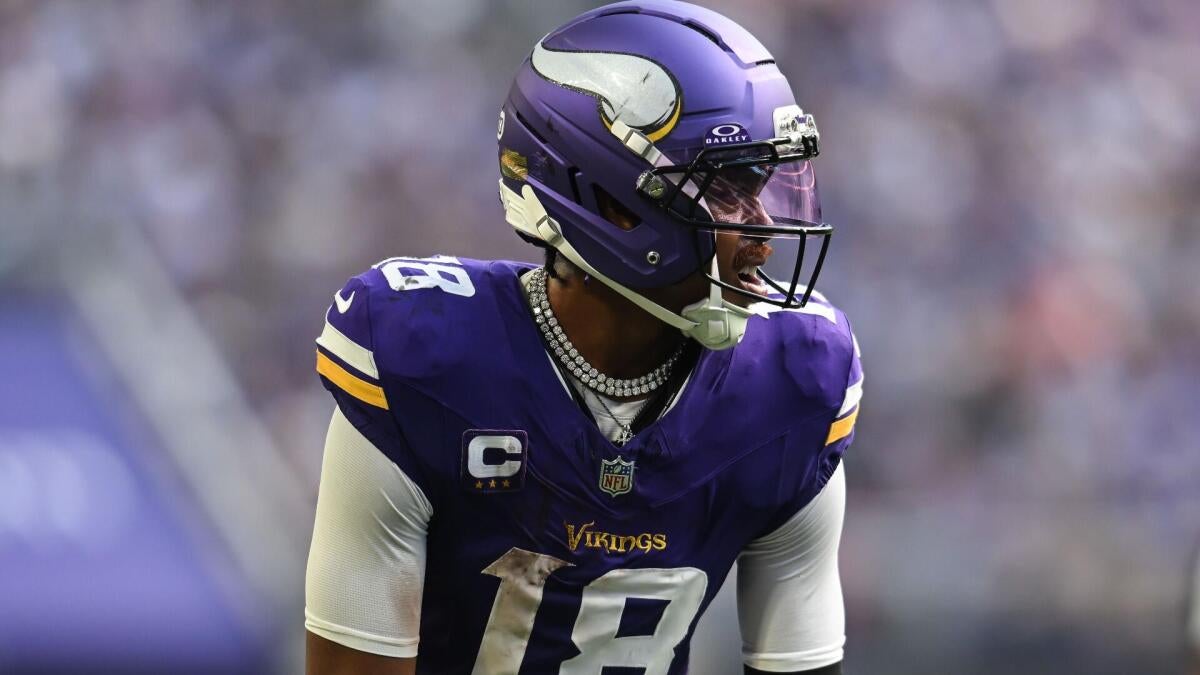
The Vikings won nine games last season with a quarterback situation that looked like committee-designed chaos: three starters, league-leading 20 interceptions, and a passing attack ranked 28th in yards per play. J.J. McCarthy held down most starts as a rookie, but the damage was done. Now Minnesota has signed Kyler Murray to a deal that amounts to a controlled reset. Murray threw 12 interceptions across 30 games over the past three seasons, a rate nearly 60% better than the Vikings' 2025 collective disaster. That's not elite QB play—it's functional, which for Minnesota's roster is a step change.
The offensive talent was always there, just strangled by uncertainty under center. Jefferson and Thielen saw target share compressed by negative game script and checkdown-heavy offense. A competent QB doesn't unlock these receivers into breakout seasons, but it does move them from suppressed to baseline productive. The Vikings averaged 4.90 yards per play in 2025 while their defense ranked second in yards allowed and sack rate. That gap—good defense, mediocre offense—is the kind of franchise held back by quarterback variance, not scheme. Murray's durability is the asterisk: he's played 30 of 51 possible games since 2023, averaging just over one game per two weeks available. The Vikings are betting on health; the market is pricing in a floor improvement without assuming full-season availability.
Minnesota's schedule in the first half tilts favorable—they avoid Kansas City, Detroit, and Buffalo until week 9, and the NFC South slate in weeks 3-5 (Tampa, at New Orleans) offers wins against mid-tier competition. The Vikings have the defensive foundation to stay competitive even if Murray misses 4-6 games. Their secondary and pass rush ranked top-five against the third-down conversion rate; a league-average offense on top of that defense pushes them toward 10-11 wins in a best-case scenario. The DraftKings over 8.5 sits at -110, implying a 52.4% probability threshold. That's depressed for a team that finished 9-8 with a dysfunctional QB room. Murray's baseline competence plus defensive strength justifies a higher expectation, even accounting for his injury risk.
The prop mechanics matter here: Murray's arrival doesn't just improve the team win total—it reshapes receiving efficiency. Jefferson and Thielen combined for 143 targets in 2025 on a 28th-ranked passing offense; with Murray under center and third-down success rate expected to climb from last in the league, their receptions and receiving yards should rise by 15-20% if Murray plays 14+ games. The market has moved slightly on the over (line was tighter pre-Murray signing), but hasn't fully repriced the offense's uplift relative to what a healthy, competent QB does for two top-tier receivers on a team with playoff-caliber defense. The Vikings' three-year trend shows they oscillate over-under their totals; they exceed projections when their offense and defense both function. 2026 is set up for that convergence.
The deeper angle: teams with Murray's passing efficiency paired with Minnesota's defensive ranking historically land in the 10-11 win range. The over 8.5 at -110 is your early-season edge before the market fully prices in how much a functional QB and top-five defense can carry a mid-tier offense. Wait for line movement toward -120/-130 on the over, and the value collapses; bet it now at the current juice.