Titans' Quarterback Overhaul Creates Win-Total Mismatch as Tennessee Enters Crucial Rebuild Year
By Justin Erickson ·
Tennessee's third consecutive basement finish forced a regime change and top-pick infusion, but the odds market has already priced in skepticism—leaving sharp bettors deciding between fading dysfunction or buying the upside.
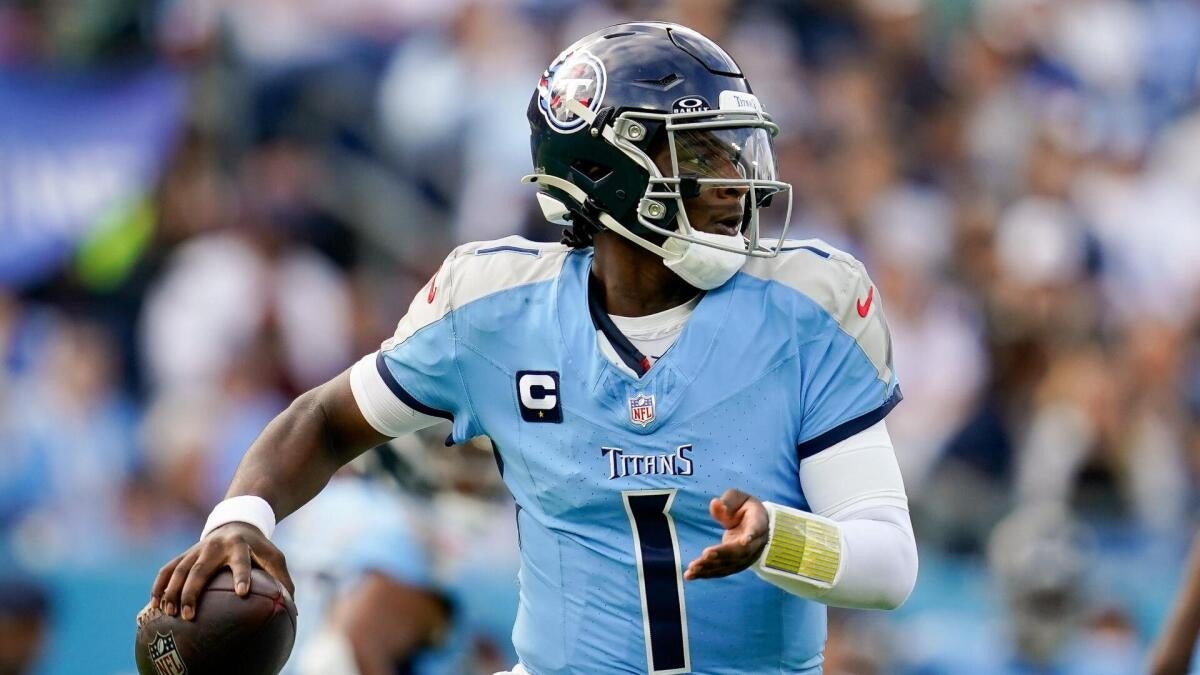
The Titans fired Brian Callahan after 4-19 in two seasons, scrapped the interim approach with Mike McCoy, and hired Robert Saleh to oversee a full reset centered on Cam Ward at quarterback and Carnell Tate at receiver. Both were top-five selections in the 2026 draft. On its surface, this is the standard reset narrative: new coach, new stars, clean slate. But the numbers reveal a deeper structural problem that a single offseason of retooling cannot mask in Year One.
Tennessee finished 3-14 last season, extending a two-year total of six wins across both campaigns. The defense allowed the most points in franchise history (5.81 yards per play allowed, 28th in efficiency) and ranked 29th in DVOA. The offense finished 31st in yards per play and posted a passing attack that ranked 32nd—better only than the Jets. Ward did throw just seven interceptions as a rookie, a silver lining on an otherwise barren landscape. The point differential tells the real story: minus-194 in 2025 alone. That's not variance. That's being 194 points worse than opponent over 17 games, a level of systematic disadvantage that doesn't vanish because you hired a new defensive coordinator.
Saleh's track record with the Jets (3+ seasons, below .500) doesn't inspire confidence, though his 2025 stint as the 49ers' defensive coordinator offers a recent success marker. The offensive line saw wholesale replacement: Zeitler, Cushenberry, Udah, and Hance all departed, replaced by a patchwork of mid-tier additions. Michael Carter left at running back; Nicholas Singleton arrives as a fifth-rounder, a depth-chart move, not an upgrade. The receiving corps added K.J. Osborn, Wan'Dale Robinson, and Tate via draft, but Van Jefferson and James Proche departed—lateral movement at best. Defensively, the Titans added edge help (Jermaine Johnson, Jacob Martin) and safety depth (Tony Adams), but the secondary remains undersized after trading L'Jarius Sneed and releasing Kaiir Elam.
The market has moved backward since February when Super Bowl odds sat at +10000. Today, at +13000, the Titans trade at the eighth-worst odds in the AFC—ahead only of the Raiders, Browns, Jets, and Dolphins. The win total sits at 6.5, and the movement on that line is revealing: it opened at -140 to go over in February and has weakened to -105 by August 1st, indicating modest public appetite for Titans improvement but sharp resistance. Make-the-playoffs odds remain a -440 miss, implying a 81.5% historical likelihood of another losing record. The Titans have finished below .500 for three straight years. Even with Ward's arm talent and Tate's route-running ability, an offense ranked 32nd in passing efficiency doesn't turn into a playoff team in one offseason. Defenses will see film on Ward and tighten coverage schemes. The secondary will remain a liability.
For bettors, the lean is straightforward: the under at 6.5 carries persistent value because the structural deficit (defense 28th in efficiency, special teams additions minimal, offensive line still in transition) is unlikely to fully correct in Year One under a first-time head coach with unproven quarterback chemistry. The over at 6.5 is priced for a near-doubling of wins from 3 to 7+, a swing that typically requires either a top-five defense or an elite quarterback year. Ward won't be elite; the defense won't be top-five. The playoff odds at -440 miss are a bluff—overpricing the idea that a new coach and draft picks instantly cure a minus-194 point differential. Take the under, and fade the Titans' division-title odds at +800; the Colts and Jaguars made similar moves and will compete harder.