Rams' Defensive Overhaul Tests Win-Total Logic That's Already Paid Six Years Running
By Justin Erickson ·
Los Angeles mortgaged its future to turn a league-leading offense into a two-way juggernaut, but the market may be pricing the upside faster than execution can deliver it.
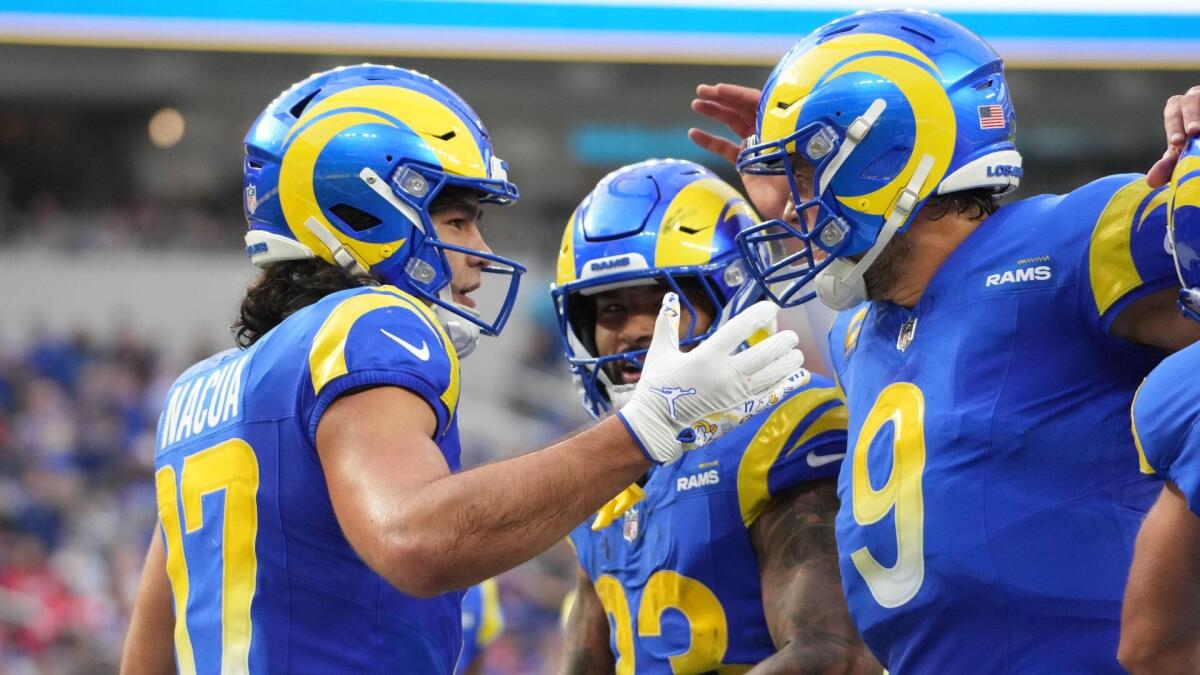
The Rams entered 2025 as a league-leading offensive engine and still managed 12 wins—yet finished third in their division and watched the Seahawks hoist a trophy they'd been co-favored to win. That indictment of defensive liability catalyzed one of the offseason's most aggressive makeovers: a June 1 blockade trade for reigning Defensive Player of the Year Myles Garrett, sandwich trades for cornerbacks Trent McDuffie and Jaylen Watson, and enough structural upheaval to have Aaron Donald contemplating a retirement reversal. The message is explicit—Sean McVay is pivoting from offensive dominance to two-way contention, and the market has bought in hard. Super Bowl odds compressed from +800 (mid-trade season) to +550 by August 1, while the win total has held steady at 11.5, though the over odds shifted from +100 in June to -125 today.
The defense ranked 14th in pass yards per play last season despite a top-10 sack rate, and 19th against the run—gaps that Garrett and the cornerback pair should theoretically patch. But here's the mechanical friction: adding elite talent to a unit that was already scheme-adjacent to the top 10 doesn't guarantee linear improvement. The Rams' 2025 defense ranked third in red zone conversion rate—a clutch metric—while bleeding yards in volume. Garrett is a generational pass rusher, but he doesn't fix run defense philosophy, and cornerback upgrades don't account for the coaching, communication, and familiarity gaps that plague any defensive overhaul in year one. The offense that led the league in scoring (6.18 yards per play, ranked first) is still intact with Matthew Stafford in place, but interior line departures (DJ Humphries, Nick Vannett) and the loss of slot weapons (Tutu Atwell, Cobie Durant) introduce some offensive creep that the market hasn't fully absorbed.
The Rams have finished over their win total in five of the last six seasons, and McVay's nine-year tenure features seven playoff berths in nine years—a predictable winner's profile. But that historical over-hit came in a different context: the 2025 team posted a +172 point differential (best of McVay's era), meaning they were outperforming their win total already. At 11.5 wins in 2026, the market is essentially asking: does a top-five defense attached to a top-two offense equal 12+ wins? The math works on paper. The execution risk is real.
For prop angles, the win-total over at -125 carries compounded risk because it's built on defensive improvement that won't be fully stabilized until Week 4 or 5. Early-season defenses—especially those with new cornerback pairings and edge-rusher integrations—tend to leak yards in September while communication hardens. That environment could depress team totals and game scripts early, which matters because the Rams face soft early scheduling but play it in a transitional defensive state. More durable is the notion that Stafford's passing volume may dip slightly if the defense holds, reducing the passing yards prop ceiling relative to 2025 benchmarks. Garrett and Watson absorption will occupy coaching bandwidth through October, suggesting the offense doesn't hit full rhythm until mid-season. The real edge is fading aggressive overs on Rams win totals until the defense shows it can execute in live game situations; the trade capital and talent are genuine, but the Seahawks have built a higher-ceiling roster, and the Ravens and Bills remain in the +1000 range for a reason. That discount reflects smart market skepticism.