NFL
Patriots Super Bowl Window Tightens as Repeat Burden Weighs on Drake Maye
New England's 10-win turnaround masks a harsh historical pattern: Super Bowl losers almost never repeat, and the schedule only got harder.
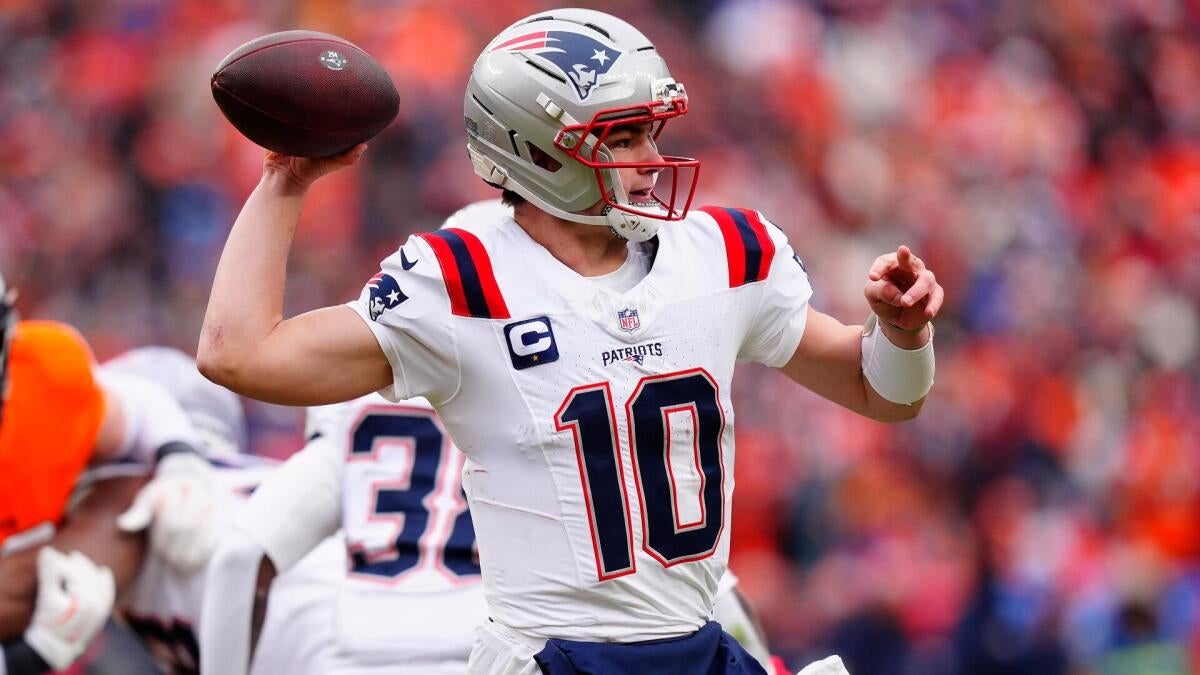
The Patriots won 14 games in 2025, captured the AFC East, and reached the Super Bowl—then lost to the Eagles. Mike Vrabel's squad now enters 2026 as the defending conference champions with a tougher schedule and the same burden every Super Bowl loser faces: the monumental task of staying elite after a near-miss. The data is brutal. Since the Patriots won Super Bowl 53 the year after their loss to the Eagles, seven Super Bowl losers have followed up their run. Exactly one went Over its win total the next season. Three teams won only six games, including each of the past two champions who came up short (the Chiefs last year, the 49ers the year before that). The market has already begun to price this reality in.
Drake Maye's MVP-caliber 2025 season—anchored by an elite passing attack that led the league in yards per play—carries the weight of the repeat narrative. The Patriots took hits to the supporting cast despite strategic additions: they lost Stefon Diggs at receiver but added A.J. Brown (acquired June 1) and Romeo Doubs, addressing protection gaps that showed up against Seattle's elite defensive line during the Super Bowl. The defensive rebuild also absorbed losses, though Dre'Mont Jones and Jesse Luketa arrive to bolster an edge rusher room decimated by Anfernee Jennings' departure. What didn't change: the red-zone conversion rate ranked 30th last season, and goal-to-go situations showed a league-worst 0% conversion rate. Those inefficiencies in high-leverage spots have a way of compounding over 17 games.
The win-total odds reveal the market's caution. On June 1, the Patriots sat at 9.5-win totals with -150 juice on both the Over and Under. By August 1, they've moved to 10.5, with the Over at +115 and the Under at -140. That shift tracks a team that the market is now rating as slightly more likely to regress than improve. The Brown acquisition shortened Super Bowl odds initially (from +1600 to +1600 but with tighter divisional competition behind the Bills), yet the Patriots remain +1600 to win it all—the best odds since Brady's departure, but still a 1.5% implied probability in a 32-team league. The offense carries legitimate upside if Maye's 2025 form holds and the new receiver room gels, but the 17-game test against a tougher schedule and the historical weight of repeat failure have already begun pricing in a correction.
Bettors seeking value on the Patriots in 2026 should recognize the calendar trap. The most enticing contrarian play sits with the Under 10.5 wins at -140, not because the team can't score points—they absolutely can—but because Super Bowl losers historically lack the defensive anchorability and roster stability to maintain that production under a grind schedule. A team that lost 30% of its pass rush depth in the offseason and ranked dead last in goal-to-go execution will find tighter margins when playoff teams stop letting them operate cleanly downfield. If the passing attack sputters even slightly—which happens to nearly every elite offense in a second consecutive campaign—the 30th-ranked red-zone unit becomes the team's ceiling, not a gap to fix in Year 2. The Under pays 1.4-to-1 in a scenario where New England posts a respectable 9 or 10 wins and still misses or barely scrapes the postseason, a result that aligns with historical precedent.
The Super Bowl odds remain the truest tell. At +1600, a 1.5% implied probability, the Patriots are priced exactly where regression and repeat contention meet—but they're tilted toward the former. Maye's individual passing production will likely remain robust, making passing-yard props and anytime touchdown angles on him personally worth tracking separately from team-total underperformance. However, the team's ability to string together wins in a tougher environment, buttressed by a depleted pass rush and historical red-zone liability, makes the full-season Under the sharper macro expression of that asymmetry.
NFL Intelligence — Football intelligence beyond the final score. Open NFL Intelligence →