Bears Win Total at 9.5: The Regression Trap and Why the Overs Are Overpriced
By Justin Erickson ·
Chicago's 11-win leap came from unsustainable close-game luck; the 2026 win total betrays a market that hasn't yet priced in how hard repeating that magic actually is.
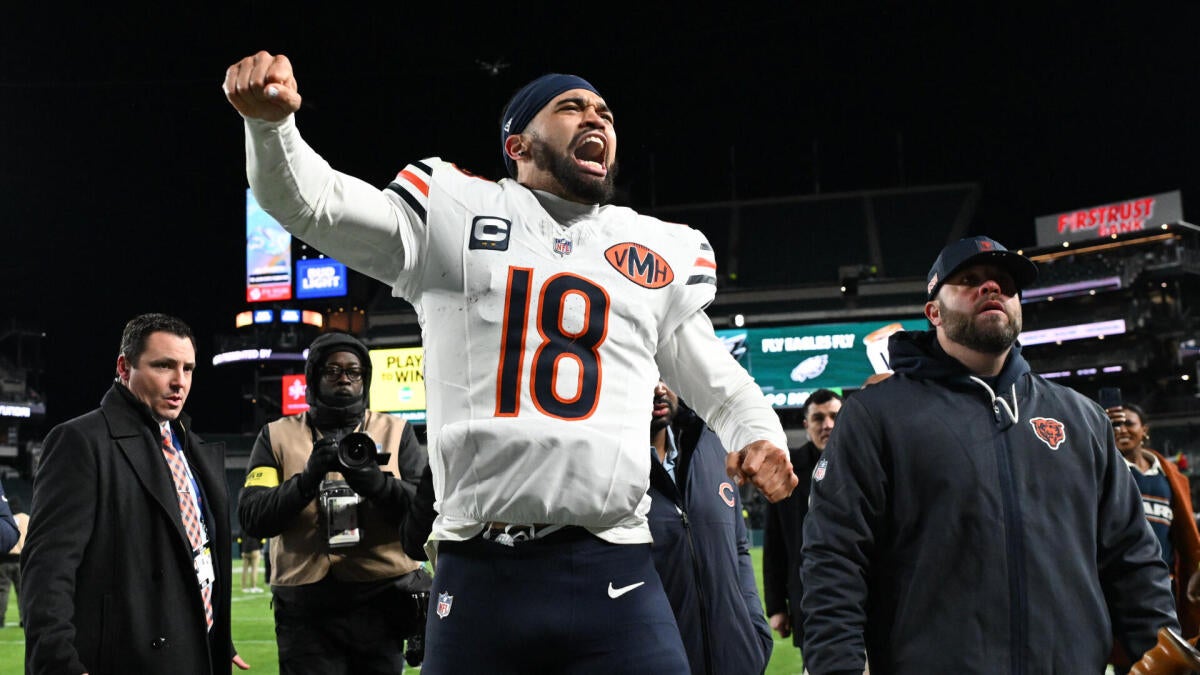
Ben Johnson's first season as Bears head coach delivered the franchise's sharpest one-year improvement in recent memory: from four straight last-place finishes to an NFC North title and an 11-6 record. The problem is what that record actually reveals. Chicago won more games than it deserved to, banking on fourth-quarter heroics and a turnover-generation rate that sat atop the league—a metric notorious for variance across seasons. The underlying skill set remains competitive but flawed, and the 2026 win total of 9.5 suggests oddsmakers haven't yet recalibrated for how hard it is to repeat lightning-in-a-bottle execution.
The Bears' 2025 foundation rested on two pillars, neither of which is portable to 2026. First, they led the NFL in interception rate while ranking 29th in opponent passing yards allowed per play. That asymmetry—turnovers masking a porous pass defense—won't hold. Second, their point differential of +5.70 yards per play ranked ninth in the league, but their actual record implied a team that should have won roughly 9-10 games, not 11. Close wins are real wins, but they're also the fastest departing guests in football. Teams that climb out of four-year holes tend to overcorrect in expectations the moment they flash competence. The market—setting Chicago at 9.5 wins with nearly identical juice on both sides—is pricing them as a borderline 10-win team. That's a sucker's bet on repetition.
The offseason roster moves tell a quieter story. The Bears let go of Kevin Byard, Jaquan Brisken, and Chauncey Gardner-Johnson at safety, a unit already exposed in coverage. They drafted a pair of safeties (Coby Bryant, Cam Lewis) who will need reps to contribute, while the defensive line overhaul (Neville Gallimore, Kentavius Street, James Lynch, Jordan van den Berg) targets rush improvement but introduces youth and chemistry risk. On offense, losing DJ Moore and Olamide Zaccheaus to free agency (and later acquiring cheaper replacements like Scotty Miller and Kaden Davis) represents a step backward in receiving talent, even if Johnson's system can mask some of that loss. The personnel sheet screams "defend the title," not "build a powerhouse."
From a betting mechanics standpoint, the 9.5 win total underprices two converging headwinds: defensive regression in the secondary (which propped up the entire 2025 campaign) and the historical difficulty of repeating close-game excellence. The Lions and Packers both outpaced Chicago's point differential last season and have deeper talent rosters entering 2026. The Vikings remain a functional threat. Johnson is a proven play-caller, but coaching acumen doesn't reverse interception rate volatility or magically transform a bottom-five pass defense into a middle-tier unit. The market reaction to a franchise turnaround typically overshoots in the direction of the trend; bettors see 11 wins and assume 10-11 is the new floor. It isn't. Chicago's floor is closer to 8 wins if the secondary collapses. The ceiling is 11-12 if the defensive line overhaul pays off and the turnover luck holds again—unlikely, but possible.
The Under at 9.5 wins carries the mechanical edge because the price doesn't yet reflect the team's regression risk. The data supporting that risk is not a single outlier game; it's a multi-year pattern in how close-game winners revert. Chicago will be good in 2026. They won't repeat last year's magic. The sportsbooks have priced them as if they will.