Bears' Close-Call Success Masks a Fragile Foundation—and That Matters for 2026 Futures
By Justin Erickson ·
Chicago won 11 games on fourth-quarter heroics and lucky turnover breaks, but the division suspects a regression is coming.
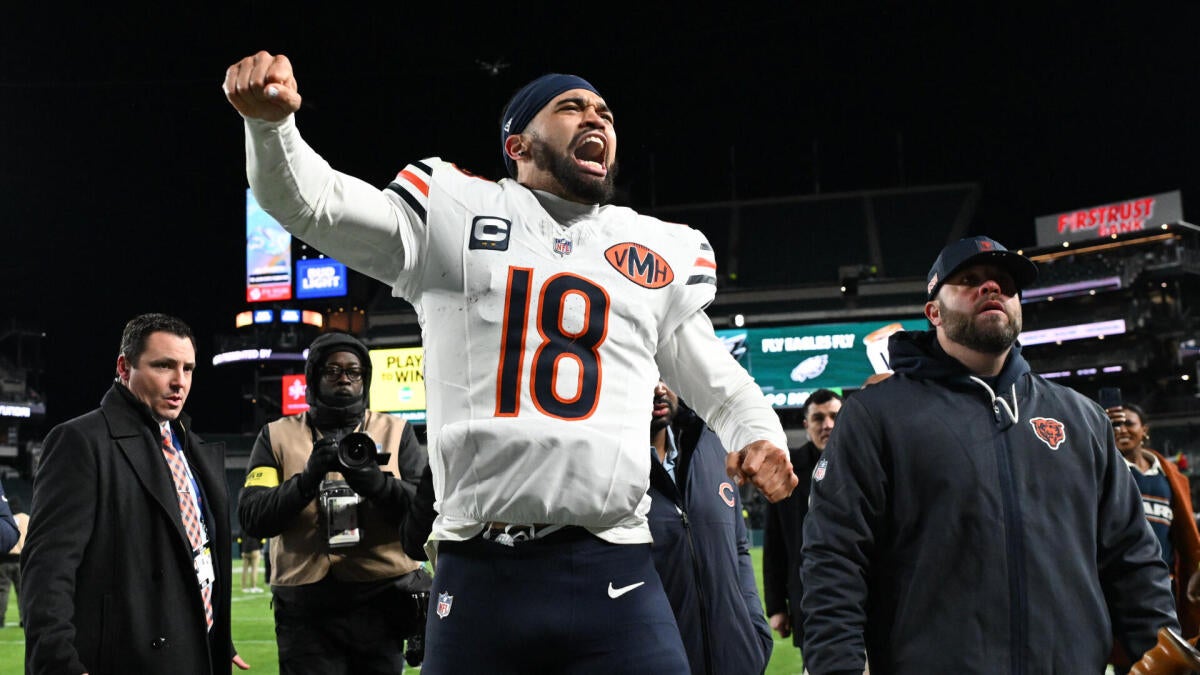
Ben Johnson's Bears won the NFC North in his first year at the helm, going 11-6 and forcing the Rams to overtime in the divisional round. On paper, it's a stunning turnaround from three consecutive fourth-place finishes. But the underlying math tells a far less encouraging story: Chicago's point differential ranks 16th in the league, trailing several teams that finished below .500. The Lions and Packers both posted better margins despite losing the division. When you win games with thin margins, the market correctly prices regression risk.
The Bears' 2025 success rested on a specific—and fragile—foundation: avoiding mistakes more than dominating opponents. Chicago ranked first in interception rate and third in sack avoidance while generating a league-leading interception rate on defense. These are turnover metrics, not sustainable competitive advantages. Interception rates spike and crash year-to-year based on variance and opponent mixing; asking the Bears to remain tops in a category they'd historically never led is asking them to defy their own history. The more material problem is the defense's poor run and pass efficiency numbers (both bottom-five in yards allowed per play), masked by spectacular turnover luck. Once that luck normalizes—and it will—Chicago's 11-win foundation cracks.
Offseason roster moves reinforce the risk. The Bears traded away D.J. Moore, their most established receiving threat, to Buffalo and replaced him with role players (Kalif Raymond, Scotty Miller). The wide receiver group is now a collection of mid-tier targets rather than an elite unit. On defense, the Bears lost Kevin Byard, Jaquan Brisker, and Chauncey Gardner-Johnson at safety and swapped out edge defenders Dominique Robinson and Joe Tryon-Shoyinka for depth additions. These aren't upgrades; they're lateral moves at best. Meanwhile, the offensive line added Garrett Bradbury and Jedrick Wills—respectable interior reinforcements—but the unit was already functional.
The betting market has priced this vulnerability. Chicago's win total sits at 9.5 at even money for the over, a full game lower than last year's 8.5 (which the Bears crushed by winning 11). The market is saying: we expect one fewer win, and you're paying even to get to double digits. That's not aggressive; it's conservative protection for a team that got lucky. The under at -120 is the sharper line because it accounts for regression as the base case. Johnson's coaching matters—he's a legitimate offensive mind—but he can't engineer a second consecutive season of outstanding turnover ratio from a team that doesn't have the personnel or historical profile to sustain it. The 2026 Bears are a 9- or 10-win team operating with last year's championship-caliber schedule luck already priced into the books. Take the under.
Division-title odds at +310 are tempting only if you believe Johnson's coaching transcendence overcomes that point-differential gap. The Lions and Packers have structural advantages that don't rely on interception variance. The Packers added Malik Nabers and operate in a division where the Vikings are rebuilding. Detroit's point differential advantage was three full points per game over Chicago last season. Betting the Bears to repeat a division title is betting on luck to repeat, which it won't. The real 2026 value is betting against Chicago outperforming its offensive and defensive efficiency profiles.