49ers' Win Total Trap: Defensive Volatility and Divisional Pressure Make 10.5 a Sell
By Justin Erickson ·
San Francisco's rebound to 12 wins masks a defense that ranked 24th in pass efficiency and dead last in sack rate, creating a floor-ceiling mismatch that favors the under as Raheem Morris inherits a fifth coordinator in five years.
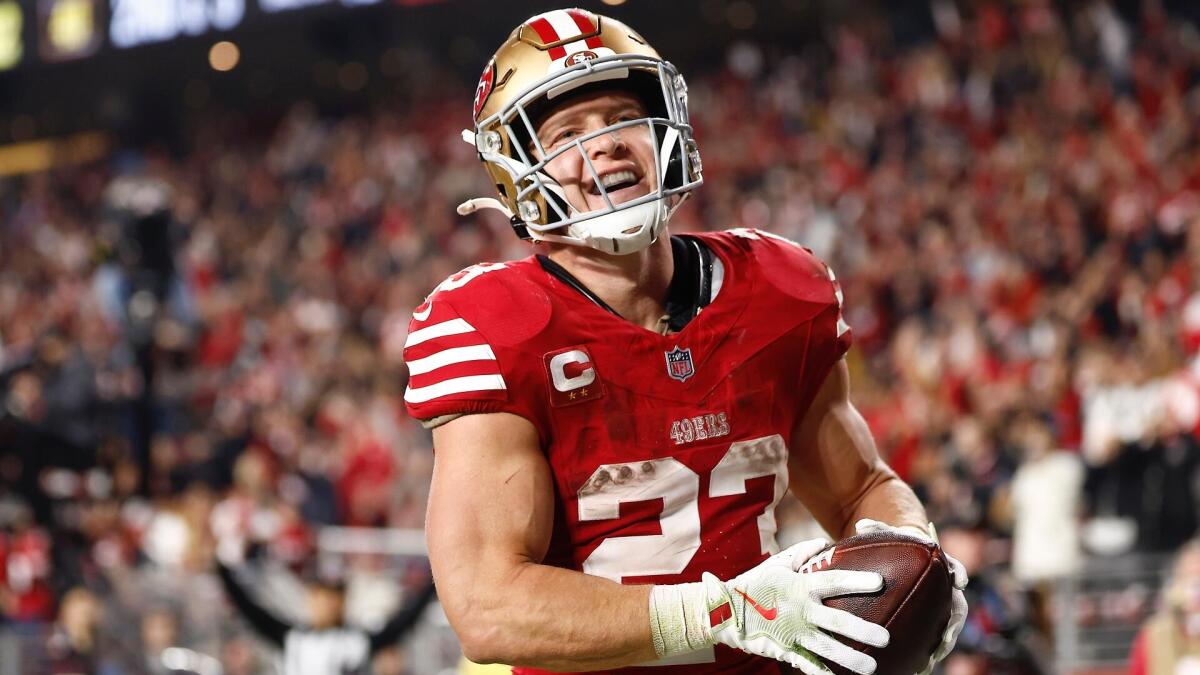
The 49ers' 2025 season looked respectable on the surface: a 12-5 record, a divisional round appearance, and a +66 point differential that suggested a team capable of contending. Strip away the win total and the narrative frays. San Francisco's defense, marketed as the unit that carried the franchise back to relevance, ranked 24th in yards allowed per play, 30th in pass defense efficiency, and dead last in the NFL in sack rate. That wasn't a down year for a strong unit; that was systemic fragility masked by four wins in goal-to-go situations—a situation-specific edge that rarely sustains across 17 games.
The offseason moves compound the problem rather than solve it. Yes, the 49ers added Dre Greenlaw at linebacker, a talented addition when healthy. But defensive coordinator Robert Saleh is out, and Raheem Morris comes in as the fifth coordinator in five years. That's not organizational stability; that's a unit in search of an identity while the Seahawks and Rams—both of whom made statement moves (Seattle's quiet resurgence, Los Angeles' Myles Garrett trade on June 1)—have settled into defensive schemes. The turnover at the coordinator position historically correlates with first-year regression, especially when the inherited roster has no consensus pass rush. The 49ers generated only 28 sacks last season, last in football. Better health might inch that number up, but personnel is personnel. Cameron Sample and newly drafted Romello Height (third round) are project-level edge rushers, not established pass rushers who can mask scheme instability.
Offensively, the picture is less dire but still constrained. The 49ers ranked eighth in yards per pass play but 30th in yards per rush, a split that suggests the running game was a liability despite the defense's inability to pressure opposing quarterbacks. The trade-off doesn't improve in 2026: they lost Brian Robinson at running back without a proven replacement, and while adding Mike Evans and Christian Kirk in the passing game provides depth, neither solves the fundamental problem of an offense that must operate through the air in a division where the Seahawks and Rams have constructed rosters built to disrupt passing lanes.
The win total sits at 10.5, and the market is correctly pricing uncertainty—the over opened at +115, implying roughly a 46.5% implied probability of 11+ wins. But the under at -140 carries the sharper edge. Here's the mechanism: a defense that finished 2025 ranked 24th in pass efficiency will face immediate pressure to improve under a new coordinator, but first-year scheme changes historically correlate with slower starts (weeks 1-6) and mid-season volatility as players adjust. The running game's weakness forces the offense into obvious passing situations where elite defensive schemes (Seahawks, Rams) can operate at peak efficiency. The 49ers' point differential (+66) was respectable but not elite; they outperformed their Pythagorean win expectation slightly. Reversion toward a 10-11 win pace is the base case, not the outlier.
Books adjusted Super Bowl odds from +1800 to +1700 after the Garrett trade, signaling the market's read that the Rams got stronger relative to San Francisco. That's accurate. A division that was competitive now tilts slightly toward Los Angeles, which compresses playoff odds and win-total upside for the 49ers. The under on 10.5 wins exploits the market's residual respect for San Francisco's brand—a playoff team last year with a star quarterback—without adequately penalizing the defensive volatility and coordinator carousel that will define 2026.