Erick All's Second ACL Heals, But Bengals' Blocking Depth Remains Fragile
By Justin Erickson ·
A corrective surgery compounds All's path back, positioning him as a reserve option in Cincinnati's ground game rather than a immediate snap contributor.
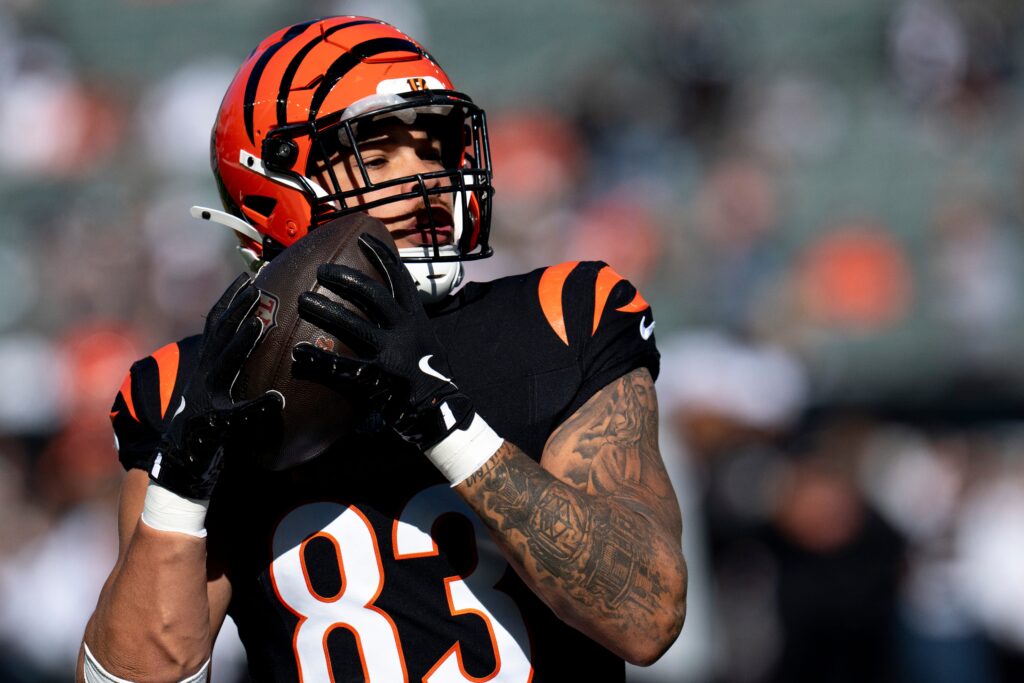
Erick All cleared spring practices and is fully healthy for the 2026 season, nearly two years after tearing his ACL for the second time in December 2024. The Bengals tight end has spent the entire 2025 campaign rehabbing from a second knee surgery—a corrective procedure made necessary because his original college ACL repair was performed incorrectly. All required a three-month waiting period between the discovery of the failed first surgery and his second reconstruction, which compressed his offseason ramp and pushed his return to just weeks before training camp.
All's injury history reads like a cautionary tale about structural instability. He originally tore the same knee in college, derailing his final year. Then in his rookie season—where he logged 42% of Cincinnati's offensive snaps despite the previous damage—he re-tore it, finishing 2024 with just nine total NFL games played. The surgical complication that forced a second repair erased his 2025 season entirely. In plain terms: he has lost two full years of development at a position where blocking consistency and chemistry with pass-catchers compound over time.
Cincinnati's tight end room is now anchored by Mike Gesicki, Drew Sample, and Tanner Hudson—three veterans who have taken meaningful snaps in All's absence. All enters 2026 as a rotational depth piece, not a lock for significant playing time. The team ranked 29th in rushing yards last season, and while All projects as a plus run blocker when healthy, he will need to earn reps in a crowded room. His role in Cincinnati's blocking schemes will be contingent on proving durability through camp and the preseason without setback.
From a betting lens, the durability question shapes the Bengals' offensive line prop environment. Cincinnati's ground game underperformance last season created pressure to improve run production in 2026—a mandate that could inflate rushing volume props and lower rushing yards per carry thresholds if the blocking floor improves. However, All's return as a reserve rather than a snap-count anchor means the ceiling on his personal impact is constrained. His presence in the rotation may lift the team total on rushing attempts slightly (more power formations available), but it will not materially shift individual receiving or touchdown props. The meaningful edge here is directional: the Bengals' investment in blocking upgrades (including All's return) is real, but his minutes ceiling is capped by personnel ahead of him, limiting the downstream effect on his own receiving volume or touchdown opportunity.
Bettors should view All's clearance as a positive sign for the Bengals' run game floor, not as a catalyst for high-leverage receiving props tied to his name. His snap share will likely stabilize in the 20–30% range depending on personnel, well below the 42% he commanded in 2024. That constraint matters when sizing totals or anytime TD lines: All is a secondary beneficiary of Cincinnati's blocking investment, not the primary driver.