Bengals' Burrow Restructure Signals Offensive Commitment—and Roster Stability for Bettors
By Justin Erickson ·
Cincinnati's willingness to rework Burrow's deal after a defensive spending spree reveals how far the franchise has moved to placate its QB, and what that means for passing volume this fall.
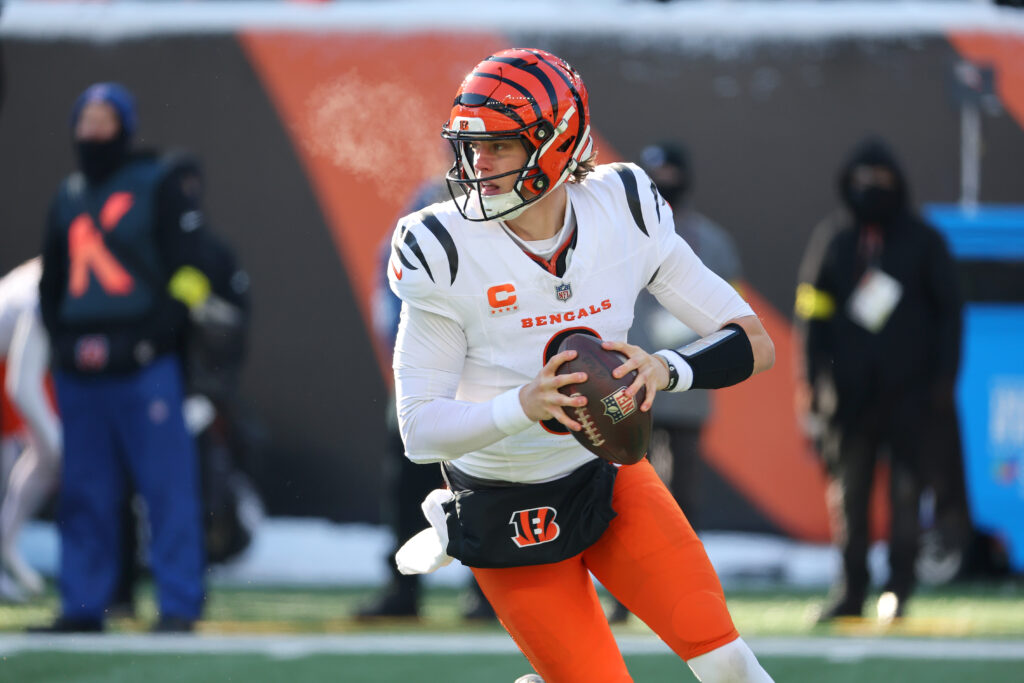
Cincinnati is operating in a box. The Bengals rank near the bottom of the league in remaining cap space—just over $7 million after aggressively addressing defensive needs in March. Defensive end Boye Mafe, safety Bryan Cook, defensive lineman Jonathan Allen, and acquired tackle Dexter Lawrence all received eight-figure commitments. Director of player personnel Duke Tobin is blunt about the bind: the team is "damn close" to the top of the league in total roster spending, and quarterback Joe Burrow's $48 million cap charge this year is the most obvious lever to pull.
What matters here isn't the mechanics of the restructure itself—converting base salary to signing bonus, spreading cap hits forward, the usual maneuvers. What matters is the signal. Burrow, per Tobin's comments, is willing to rework the five-year, $275 million deal he signed in 2023. That's notable because Burrow had publicly aired frustration in December, comments that sparked trading speculation before Cincinnati's front office quickly shut it down. The franchise's aggressive offseason suggests Burrow got what he wanted: proof that the Bengals would build around him. A restructure is the institutional follow-up—Burrow accepting lower immediate cash in exchange for the Bengals' commitment to fund the weapons he needs.
This matters for the betting market because restructures are stability plays, not cap-cutting emergencies. Burrow isn't being squeezed out. He's being locked in deeper. That's the opposite of the narrative that precedes quarterback trade talk or declining usage. If anything, a willingness to absorb a restructure—and a willingness by the front office to ask for one—signals alignment. The Bengals drafted, extended, and are now reshaping the cap architecture around Burrow. The "right people" Tobin mentioned include already-extended wideouts Ja'Marr Chase and Tee Higgins. Burrow's pass attempts and yards volume rest on that offensive confidence remaining stable through the season.
The betting angle hinges on volatility risk, not direction. Burrow's passing volume was volatile last season, fluctuating with injury and game script. A restructure and fresh cap room don't add yards to Burrow's arm, but they do reduce the probability of mid-season cap desperation trades or receiver departures mid-contract year. Chase and Higgins are locked in. The quarterback is locked in. That removes tail-risk uncertainty from Burrow's season-long passing yardage and touchdown projections—the kind of uncertainty that suppresses prop value when teams are in flux. For bettors, this is about confidence in the baseline, not a sudden spike in volume.
The real tell is what Cincinnati didn't do: trade Burrow, bench him, or let this become an open controversy heading into training camp. Instead, they're paying him and reshaping the cap around him. That's not a sign Burrow's role will shrink. It's a sign the organization has decided the investment is worth protecting. A restructure doesn't change his ceiling. It removes one more excuse for it to collapse.