NFL · transaction
The Tight End Salary Ceiling: Why Market Leaders Haven't Unlocked Star Power Pricing
George Kittle and Trey McBride broke $19 million per year in 2025, but the position remains starved for elite receiver-level deals—and the gap between blocking and pass-catching tight ends is creating a new two-tier market.
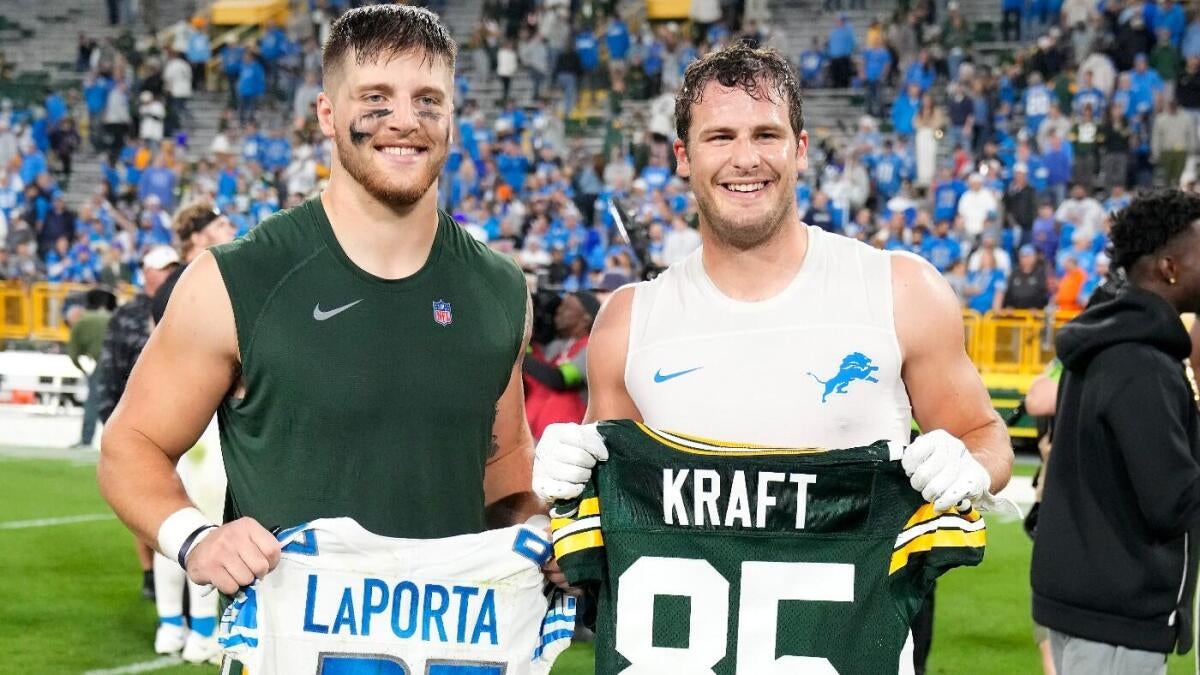
The 2026 offseason has been a financial revolution across the NFL's skill positions, with Patrick Mahomes resetting the quarterback standard above $60 million annually, Jahmyr Gibbs joining a new running back tier at $20 million-plus, and centers like Tyler Linderbaum jumping 50 percent to $27 million per year. Tight ends, inexplicably, have been left holding the bill. George Kittle's April 2025 extension with San Francisco—$19.1 million per year on average—remains the position's highest-water mark, followed by Trey McBride's $19 million deal with Arizona signed one month earlier. Kyle Pitts, despite posting 88 receptions, near 1,000 receiving yards, and a second-team All-Pro selection in 2025, couldn't escape the ceiling: his June deal with Atlanta sits at $17.67 million per year. The position has barely moved the needle in six years. Austin Hooper's 2020 contract with Cleveland ($10.5 million annually) took six years to crack—George Kittle finally pushed past it in 2020 at $15 million per year. The gap between Kittle-McBride and the rest of the tight end ecosystem is widening, but not in the direction you'd expect. Behind Pitts sits a cliff: Isaiah Likely's Giants deal ($13.3 million per year) marks a $4.3 million drop. The real story isn't about the elite pass-catchers—it's about the emergence of blocking-specialist wages reshaping the market. Charlie Kolar became the first pure blocking tight end to exceed $8 million per year when the Chargers signed him in March 2026; three months later, Darnell Washington eclipsed that floor substantially. What's happening is positional divergence. Pass-catching tight ends are being priced like premium slot receivers (Jaxon Smith-Njigba sits at the top for his position), while blocking-heavy players are carving out a distinct second tier. The market is treating "tight end" as two separate jobs rather than one position. This creates a valuation problem for the next wave of All-Pro candidates like Tucker Kraft, Sam LaPorta, and Brock Bowers, who are entering their franchise-tag-and-extension windows while the ceiling for pure pass-catchers remains artificially low. The prop implication is subtle but consequential: teams are budgeting aggressively for blocking specialists, which means the offense's pace-of-play and route-distribution weights may shift. If a team re-ups a high-volume blocking tight end at $9-10 million annually, that capital comes from somewhere else—either snap count distribution or game-plan design. Teams that sign or retain blocking-first tight ends on new deals typically see their net passing attempts decline relative to their offensive pace; the tight end takes on more chip-blocking, fewer slot routes. That phenomenon should compress receiving totals for pass catchers in those systems, particularly when a blocking-specialist extension lands in the middle of a season.
NFL Intelligence — Football intelligence beyond the final score. Open NFL Intelligence →