NFL
Kittle's Achilles Recovery Clears Week 1 Hurdle; 49ers Stack Gets Veteran Validation
George Kittle is on track to suit up for San Francisco's Australia opener, validating the 49ers' offseason bet on four aging All-Pro targets around Brock Purdy.
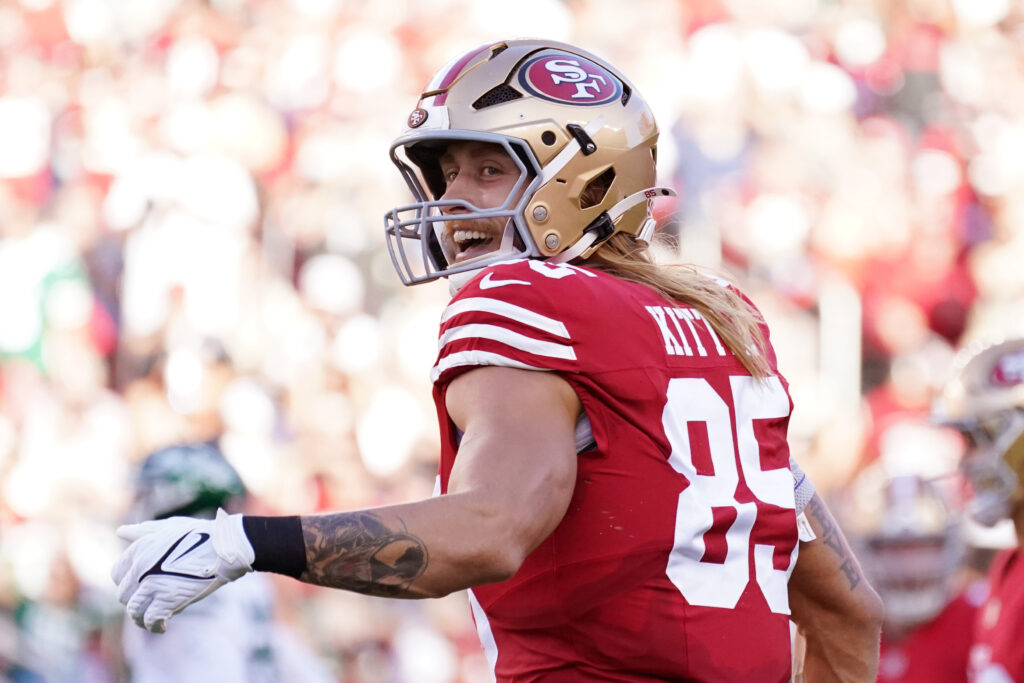
George Kittle remains on the 49ers' active/PUP list as of mid-August, but team brass has expressed a "high level" of confidence the All-Pro tight end will be available for the Week 1 matchup against the Rams in Australia—roughly three weeks away. The timeline matters because Kittle's offseason has been complicated: a hamstring injury in September 2025, two torn ankle ligaments to close the regular season, and an Achilles tear sustained in the wild-card playoff win in Philadelphia. That injury severity typically carries a 4-6 month rehabilitation window; from the time of the Achilles injury (mid-January 2026) to Week 1 (early September 2026), Kittle is tracking within the recovery window, with no setbacks reported since spring.
General Manager John Lynch signaled in April that he expected Kittle ready for the opener, and eight weeks of clean medical updates have held. The franchise invested heavily to validate this timeline—a four-year, $76.4 million extension signed this past offseason locks Kittle in with fully guaranteed 2026 compensation and $2 million guaranteed in 2027. That contract structure is a directional tell: the 49ers are pricing in a Week 1 return, not a mid-season activation. If they were hedging real injury risk, that guarantee would be smaller or deferred.
The roster context amplifies Kittle's value. San Francisco has assembled a receiving corps that reads like a retirement community: Mike Evans (33 heading in), Deebo Samuel (30 as of this offseason), Christian Kirk (turning 30 in November), and Kittle himself (turning 33 in October). Add Christian McCaffrey (30 as of this year) and the 49ers are deploying four 30-plus position starters with Purdy at quarterback. That's unusual and high-injury-risk architecture. Kittle's return to full health validates whether this veteran stack can execute on opening day or whether the injury exposure becomes immediate.
From a prop perspective, Kittle's Week 1 availability reshapes San Francisco's offensive ceiling. Purdy's passing-yard totals and touchdown rates are anchored in receiving-corps stability; four available weapons (Kittle, Evans, Samuel, McCaffrey) versus three or a makeshift replacement tightens the variance on his volume. Kittle himself carried 110 receptions and 1,200+ receiving yards in peak seasons pre-injury; last year, hamstring and ankle issues limited him to 60 games-worth pace. If he clears Week 1 without complications, his receptions and receiving-yard props will likely reset to assume 75+ percent availability for 2026, a material upgrade from the 50-60 percent pricing in that already factors for injury risk. Conversely, any re-injury signal in Week 1 or Week 2 would crater his season-long props and validate the market's caution on 30-something pass-catchers.
The Australia factor adds one tactical wrinkle: international travel compresses preparation and recovery protocols, historically a risk vector for soft-tissue aggravation. That said, Lynch and the team appear to have built enough buffer into Kittle's clearance timeline that a single international game isn't the marginal factor. Watch for injury reports in the 10 days before Week 1; if he stays off the injury designation list, his receiving props and Purdy's passing-yard totals should reflect full offensive cohesion from kickoff.
NFL Intelligence — Football intelligence beyond the final score. Open NFL Intelligence →