Williams' Final Contract Sets 49ers Timeline—Purdy's Blind Side Gets Two-Year Audition
By Justin Erickson ·
San Francisco's franchise left tackle signed a $50MM deal he believes will be his last, forcing the organization to plot succession at the game's most critical position while Brock Purdy enters his prime.
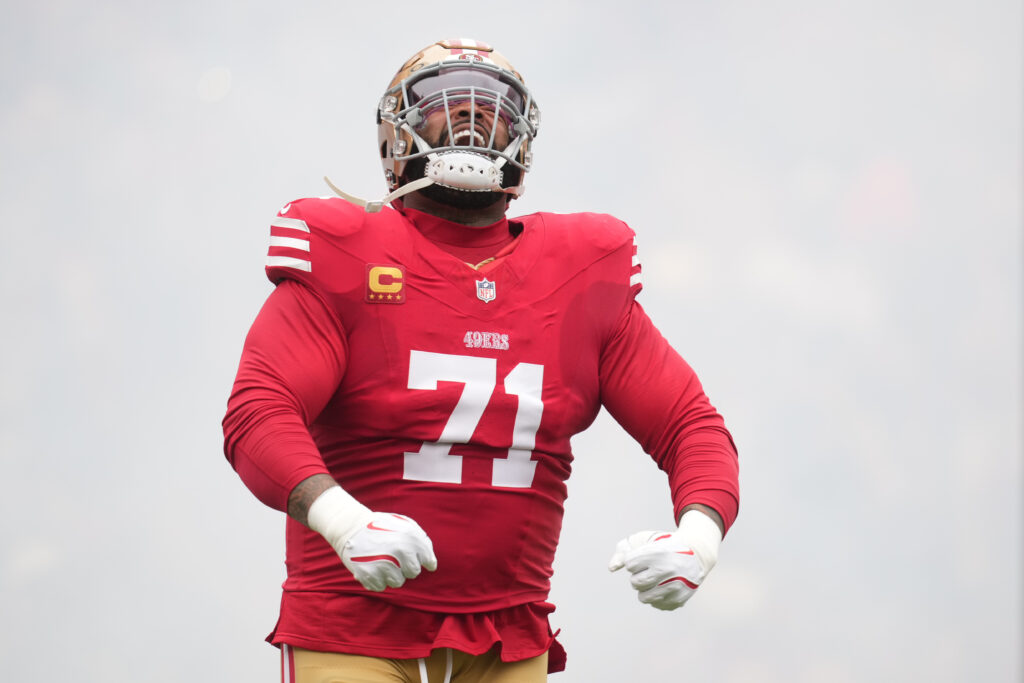
Trent Williams inked a two-year, $50 million extension with San Francisco this offseason that he expects will conclude his career, per ESPN's Nick Wagoner. The 37-year-old—who turns 38 next month—enters his 16th NFL season with 12 Pro Bowl appearances and five All-Pro selections. Williams' latest deal appears structured as a final chapter: a reasonable runway for the 49ers to identify and develop his replacement before the franchise tackles the quarterback succession plan in earnest once Brock Purdy's window opens.
Williams has sustained elite-level play through his mid-30s, earning Pro Bowl or All-Pro honors in his last four healthy seasons. That durability matters because the 49ers cannot afford instability on Purdy's blind side. The organization paid $265 million to keep Purdy in place and build around him; left tackle turnover at that investment level is organizational cancer. San Francisco's last seamless transition at the position came when they traded for Williams himself in 2020 after Joe Staley retired—a move predicated on finding an established veteran rather than betting on a draft prospect. The blueprint exists, but executing it again requires timing and capital.
The next two seasons carry hidden stakes. Williams faces at minimum four matchups against reigning Defensive Player of the Year Myles Garrett, who just arrived in the NFC West via the Rams' blockbuster trade with Cleveland. These contests become a de facto audition: if Williams can consistently neutralize Garrett without help, he may extend his career beyond 2027. If the physical decline accelerates, the 49ers' urgency to address the position in the 2027 draft escalates. Either outcome shapes San Francisco's roster construction and offensive line continuity.
For bettors tracking 49ers offensive efficiency, the linchpin is whether Williams' performance holds Purdy's protection level steady. Any marked deterioration in Williams' snap-to-snap execution would manifest as increased pressure on the quarterback, translating to shorter play development, fewer deep-range completions, and elevated interception risk. Conversely, if Williams maintains his current standard through the next two seasons, Purdy's passing yards and touchdown totals should remain insulated from front-five deterioration. The edge lives in monitoring Williams' performance against elite pass rushers—particularly Garrett—as a real-time proxy for whether the 49ers' quarterback protection is genuinely degrading or merely entering a planned transition window. Teams don't broadcast left tackle decline until it's catastrophic; Garrett's matchups will tell you first.