NBA · transaction
Coby White's Charlotte Extension Reshapes Hornets Guard Market—and Backcourt Prop Leverage
White's $74M three-year deal locks in a proven secondary scorer just as the Hornets pivot their entire roster identity around his reliability.
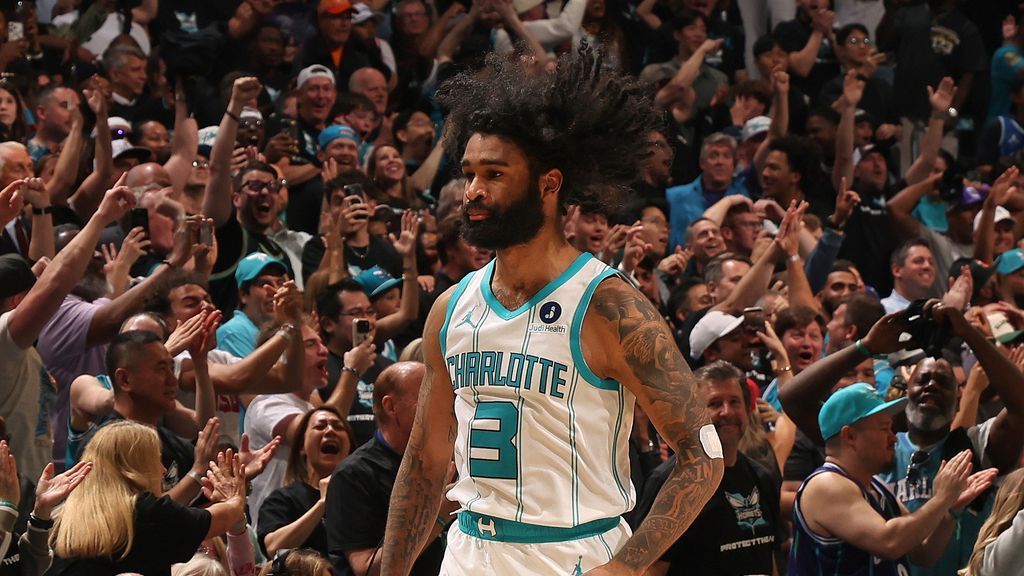
Coby White is staying in Charlotte. The 26-year-old guard agreed to a three-year, $74 million deal with the Hornets on Thursday, sources told ESPN, cementing his role as a foundational piece in a backcourt that no longer includes LaMelo Ball. The move comes days after Charlotte shipped Ball to Minnesota in a trade that fundamentally reoriented the franchise's construction—and it's the Hornets' response that clarifies what they believe this roster actually is.
White's path to this moment traces back to mid-season urgency. Acquired from Chicago at the February deadline for the playoff push, the 6-foot-4 wing appeared in 21 games for Charlotte and averaged 15.6 points on 39% three-point shooting—exactly the kind of high-volume, efficient perimeter scoring a second-fiddle roster lacks. He showed up in the moments that mattered: 19 points and the game-tying three with 10.8 seconds left in regulation during Charlotte's play-in win over Miami. The Hornets saw something that moved them to lock him in immediately upon free agency. Peterson, the team's president of basketball operations, framed it as cultural fit—White is a North Carolina native and UNC alumnus—but the dollar commitment ($24.7M average annually) is a market vote of confidence that transcends nostalgia.
What the Hornets are actually signaling is that White will carry offensive load in the absence of Ball's creation. That's a material shift in usage. In 21 games last season, White operated largely as a catch-and-shoot option and secondary handler; next season, he'll likely see 30+ minutes as a primary initiator in pick-and-roll and isolation. Charlotte's offense becomes more reliant on three-point volume from a guard who just shot 39% from distance. The downside: isolation-heavy offenses with moderate playmaking (White averaged 3.8 assists per game in Charlotte) often generate fewer total possessions and invite defensive focus. The upside: White's efficiency profile from deep suggests that efficiency should hold even under increased usage.
For prop bettors, the mechanism is straightforward. White's three-point make rate of 39% over a small sample (21 games) in a bench role projects differently under a starting role with 32+ minutes. If Charlotte plays him in the 32-35 minute range—likely, given the Ball trade and the backcourt void—and maintains his per-36-minute three-point volume (around 6 attempts per 36), White should land in the 4.5–5.5 threes-made range on a nightly basis. Market will likely price his season-long 3PM prop at 3.5–4.0 makes, leaving an edge in the over. The catch: the 39% figure is small-sample noise from a high-efficiency bench spell. If that regresses to 36% (closer to his career 35.8% mark), the over loses juice quickly. The edge exists only if you believe the March-April stretch represented true talent rather than variance—a position that survives if White's role mirrors the early sample, but fades if Charlotte's system depresses his shooting volume or he sees bench minutes as the season unfolds.