Mitchell Robinson's Broken Pinky Becomes a Free-Throw Liability in the Finals
By Justin Erickson ·
The Knicks center enters the championship series shooting 30% from the line with a brace on his shooting hand, creating a massive exploitable weakness that opposing defenses will hunt relentlessly.
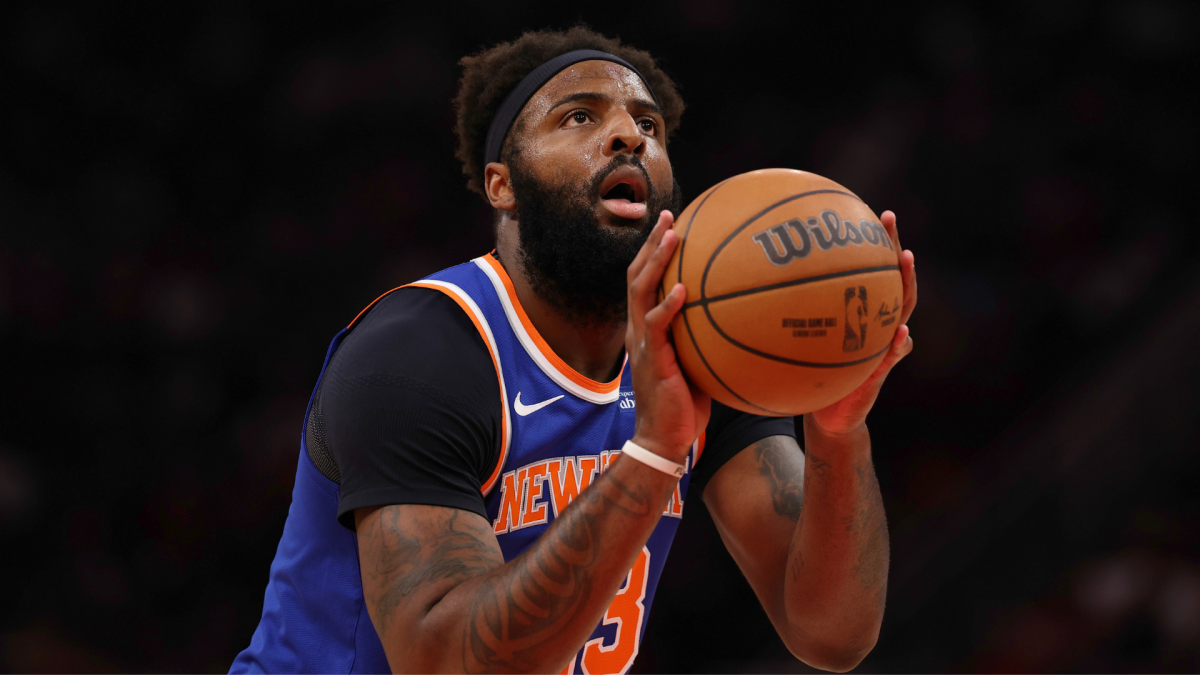
Mitchell Robinson broke his right pinky finger in an off-court incident the Knicks refuse to detail, then underwent surgery and will suit up for the NBA Finals wearing a protective brace. The timing is catastrophic. Robinson enters the series already shooting 30.2% from the free-throw line this postseason (13-for-43), a figure so poor it borders on disqualifying for a 7-foot center in playoff basketball. Now add a broken digit on his shooting hand and the structural compromise a brace creates, and you have a liability that opposing coaches will weaponize immediately.
Rick Barry, the Hall of Famer who converted 89.3% of his free throws over 14 seasons using an underhand release, called Robinson before the Finals began to pitch a radical fix: switch to granny-style shooting. Barry's logic is sound—the underhand approach requires less finger control and more wrist and forearm mechanics, meaning a damaged pinky becomes irrelevant. The problem is obvious: Robinson doesn't have three days to retrain muscle memory on one of the most stigmatized shots in basketball. Even if he were willing to absorb the peer mockery, the Finals are not the laboratory for a technical overhaul.
What matters for prop bettors is what happens when Robinson's team puts him on the floor. Opposing defenses will foul him relentlessly in the fourth quarter when games tighten. Every time he touches the ball near the rim, defenders will have license to hack without consequence, knowing Robinson will likely miss from the line. This creates two overlapping prop edges: (1) Robinson's personal free-throw attempts will be artificially elevated—he'll draw more fouls than his usage rate alone would suggest because teams will intentionally target him, and (2) his free-throw miss rate will create direct points-left-on-the-table scenarios that swing final margins.
The Knicks' team free-throw attempts and overall offensive efficiency will suffer measurably when Robinson is on the court, particularly in close games. If the opponent is the Thunder or Spurs, both of whom pressure interior defenders aggressively, Robinson becomes a turnstile. His presence in crunch time will paradoxically hurt New York's scoring efficiency despite his presence on offense. This isn't abstract—it's a mechanical flaw that books will initially underprice because the discussion stays at the anecdotal level ("bad shooter") rather than the situational level ("hunted in late-game situations"). The Finals total and Knicks team totals in Games 1 and 2 will reflect Robinson's baseline production, not the marginal damage his injury inflicts when the game is decided by possessions.
The sharper angle surfaces in series moneylines and game spreads, where Robinson's minutes and fourth-quarter deployment become leverage. If the Knicks are favored, that line assumes Robinson contributes at his season average in crunch time. It doesn't account for intentional fouling strategies that render him liability. The injury-adjusted model—Robinson on court in the fourth quarter of a close game = elevated opponent free throws + lower Knicks efficiency—isn't yet baked into live odds. Early numbers in Games 1-2 will carry the highest edge value before books adjust the pinky into the pricing.