Kuminga Lands in Minnesota on Taxpayer MLE: A Recalibration Play for the Wolves' Wing Rotation
By Justin Erickson ·
Jonathan Kuminga signed with the Timberwolves on a two-year, $12.4MM deal one week ago, filling a depth gap and resetting expectations for both player and franchise.
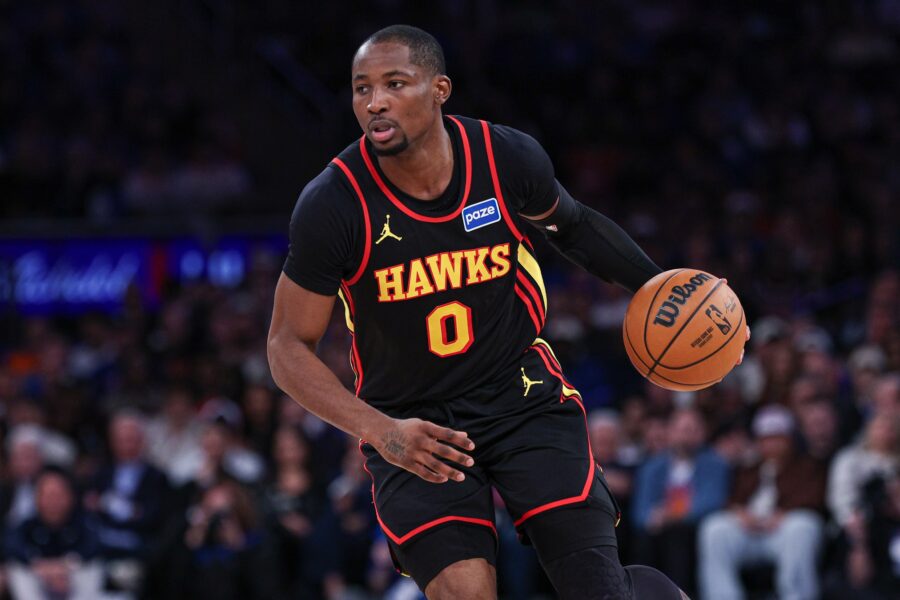
The Timberwolves finalized their acquisition of Jonathan Kuminga on the taxpayer mid-level exception, inking the free agent forward to a two-year deal worth $12.4MM with a player option in year two. The agreement closed on August 26—a week before the 2026-27 season tips—after weeks of negotiation that had positioned Minnesota as Kuminga's preferred landing spot once his Golden State exit became irreversible.
Kuminga's departure from the Warriors marked a rare inflection point in his career trajectory. He'd spent five seasons in Golden State, oscillating between role-player efficiency and untapped scoring potential, never quite settling into a permanent offensive identity under the franchise's system. Minnesota offers something functionally different: playing time clarity and offensive workload. The Wolves operate a more straightforward scoring distribution than the Warriors' ball-movement architecture, with fewer redundant wings competing for touches. In Golden State, Kuminga averaged 16.1 points on 48.2% true shooting last season but saw his usage hover around 22%—solid but constrained. In Minnesota's deeper rotation, he figures to occupy a defined role: secondary wing creator between Anthony Edwards' primary load and the team's ball-handling guards.
The contract structure itself is a tell. At $12.4MM over two years with a player option, Kuminga accepted modest terms relative to his age (24) and scoring profile. That acceptance signals either a calculation error by his representation—unlikely for an agent operating at this level—or a concession that the market had priced him into a correction window. Golden State didn't match or counter. No other contender surfaced an offer sheet above this value. What the Wolves saw was not a reclamation project but a efficiency play: a 24-year-old with a 48%+ true shooting rate and entry-level wing versatility could produce 14–16 points per game on low usage in a secondary scoring role, exactly the profile that compounds value in playoff basketball where touches consolidate toward stars.
For prop purposes, Kuminga's placement in Minnesota's rotation carries immediate implications for both his own scoring volume and the Wolves' team total trajectory. His addition doesn't restructure the offense—Edwards remains the primary engine—but it does compress opportunity cost for lower-tier bench scorers. Players like Austin Rivers, Taurean Prince, or other depth pieces will see fewer possessions available. Kuminga's per-game scoring floor lands somewhere between 12–16 points given Minnesota's recent pace and his shooting efficiency; that's well below the 16.1 average he posted in Golden State, but the consistency of touch matters more than peak volume. The Wolves' projected team total for 2026-27 likely holds steady or rises modestly (they already lean toward high offensive output), but individual player unders on depth wings—guards and forwards outside the Edwards-Brunson-Gobert triumvirate—carry sharper edges now that Kuminga occupies bench minutes with legitimate scoring chops.
The player option in year two is the asymmetric detail. If Kuminga averages 14+ points on 48%+ true shooting and Minnesota stays in contention, he'll either stay put at a discount or enter the market with a tangible film record. If he underperforms—say, 11 points on 44% true shooting—he'll decline and test free agency, creating a sunk-cost situation for the Wolves. For bettors, this means early-season Kuminga scoring props (over/under around 13.5–14.5) trade on placement uncertainty; once the rotation solidifies across the first 15 games, the edge evaporates. The angle lives in the first three weeks before the market reprices his touches.