Edwards' Confidence Masks a Wolves Execution Crisis That Props Won't Ignore
By Erik Schwartz ·
Minnesota's star projects calm down 3-2 to a 62-win Spurs team, but the real story—a 30-point third-quarter collapse and Julius Randle's 36.6% series shooting—tells a different tale about their ability to generate offense in a Game 6 elimination spot.
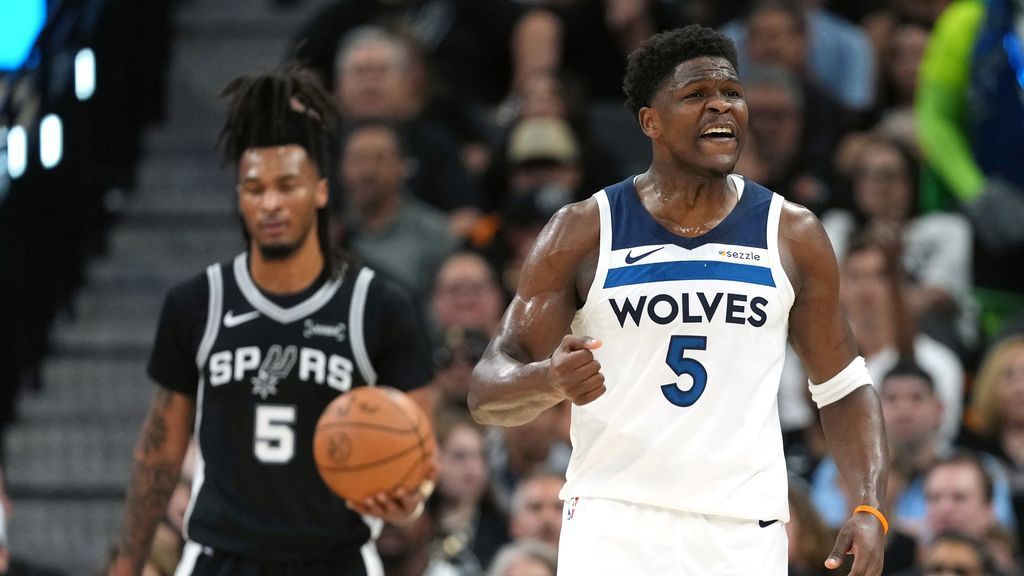
Anthony Edwards walked out of Game 5 firing the right words—no panic, another chance to play—but the Timberwolves' 126-97 evisceration in San Antonio was not a one-game blip. The Spurs, winners of their last two home contests by a combined 67 points, dismantled Minnesota by outscoring them in all four quarters, a complete-roster breakdown rather than a variance swing. Edwards' confidence matters less than what actually happened on the floor: a third-quarter implosion that yielded 30 points in six minutes, a sign that Minnesota's defensive structure collapsed when it mattered most.
Victor Wembanyama entered Game 5 with something to prove. The NBA didn't suspend him for the Game 4 elbow on Naz Reid, determining his second-quarter ejection punishment enough. He responded by dropping 16 points and five rebounds in seven opening minutes, finding layups and threes from angles the Timberwolves had no answer for. Minnesota fought back briefly—McDaniels hit three threes, Edwards added 20, and the Wolves tied the game at 61 with 7:51 left in the third. Then the floor opened up. Coach Chris Finch identified the mechanical failure: his offense abandoned ball movement and gap attack for freelance scoring, and simultaneously, the defense stopped communicating on containment. Thirty points in six minutes isn't fluky; it's structure failing under pressure.
The deeper rot sits in Julius Randle's shoulders. He's now 26-of-71 from the field this series (36.6%), a cliff fall from his 48.1% regular-season clip. That's a 11.5-percentage-point swing on volume—Randle is Minnesota's third scoring option, and he's misfiring at a rate that forces Edwards and Karl-Anthony Towns to shoulder more creation burden than they can sustain against San Antonio's switchable, physical defense. Foul trouble also drained Jaden McDaniels from key sequences, another containment variable working against the Wolves.
For prop bettors, Game 6 becomes a volatility test. If Minnesota's offense is running on fumes—three scorers in Edwards, Towns, and a broken-down Randle—the path to high-output nights narrows. Edwards' points total will be crucial: he's been the only consistent bucket-getter, but asking him to carry the offense while San Antonio can deploy Wembanyama in pick-and-roll coverage will press his usage to unsustainable levels. A Game 6 elimination spot typically inflates shot volume for star players, but it also courts forced shot-taking when defenses tighten. The under on Wolves team total has edge here—not because they'll play timidly (Edwards won't allow that), but because their second and third scoring options are functionally unreliable, and the Spurs' defense has proven it can collapse the Timberwolves' spacing when they deviate from their best plays.
Edwards' defiance is understandable and worth respecting as a locker-room message. But the market should respect the data more: Minnesota's offensive execution has cratered in critical moments, its secondary scorers are underperforming their season baselines by material margins, and the Spurs have shown they can impose their will in every quarter. A team facing elimination often projects confidence. That doesn't mean the props price them like a healthy squad.