Thunder Face Defensive Reckoning in Game 2; OKC's Adjustment Window Narrows Fast
By Justin Erickson ·
Victor Wembanyama's 41-point, 24-rebound Game 1 wasn't a statistical anomaly—it was a blueprint OKC must dismantle or die trying.
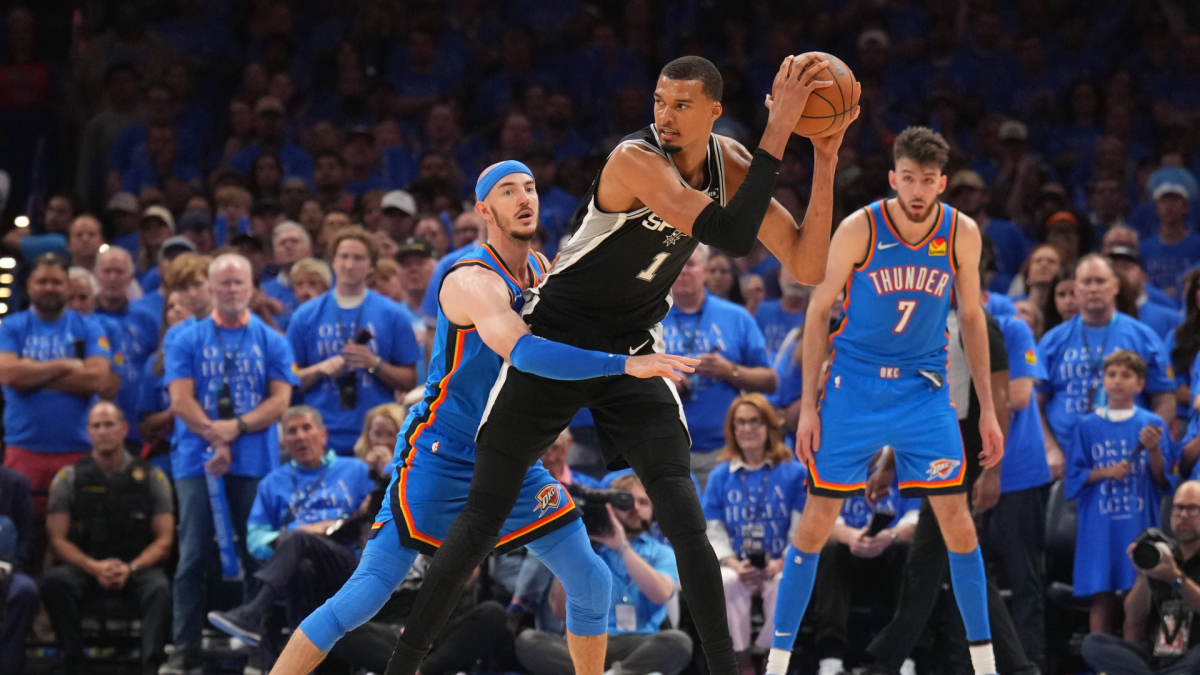
The Thunder lost Game 1 of the Western Conference Finals by allowing Victor Wembanyama to post a 41-point, 24-rebound performance that ranked among the most dominant individual playoff showings in league history. San Antonio, the lower seed, stole the opener at Paycom Center and now returns home with a 1-0 series lead. OKC enters Game 2 as a 6.5-point favorite, but that line reflects panic adjustment more than defensive clarity.
The core problem for Oklahoma City was structural, not circumstantial. Wembanyama didn't get hot—he got open. The Thunder's perimeter defense broke down early, forcing help rotations that left the Spurs' 7'4" generational talent with constant mismatches and space to operate in the mid-range and at the rim. Chet Holmgren, OKC's elite rim protector, recorded just eight points on seven attempts, a sign that the Thunder's entire offensive system contracted around containing Wembanyama rather than flowing through their own advantages. Shai Gilgeous-Alexander shot 7-of-20 from the field in 24 points—unsustainable inefficiency born from defensive chaos.
The Spurs' secondary contributors also benefited from OKC's scrambled coverage. Rookie Dylan Harper erupted for 24 points, an outlier performance that likely reflects how much attention the Thunder devoted to Wembanyama rather than a sustainable pattern. The spread's six-point swing toward Oklahoma City factors in normalization: expect SGA to recenter near 50% true shooting, Holmgren to assert himself offensively, and OKC's primary defenders to tighten their reads. The Thunder have the personnel and coaching to blitz coverages that collapse Wembanyama's scoring opportunities—but doing so requires surrendering something else, and the Spurs proved in Game 1 they can punish secondary options when OKC's focus narrows.
From a prop standpoint, this is a Game 2 overreaction play masquerading as a spread adjustment. The market is pricing OKC's response as near-automatic, but the fundamental mismatch remains: Wembanyama's 41 points came on legitimate offensive advantage (size, mobility, spacing against traditional rim-runners), not variance. If the Thunder pull Holmgren off the roll to chase Wembanyama on the perimeter, they invite easy looks at the rim for Kelvin Johnson and spaced four-outs for San Antonio's guards. Conversely, if OKC commits to rim protection, Wembanyama's mid-range becomes a 15-footer he hits at elite efficiency. The reversion-to-mean narrative (Gilgeous-Alexander will shoot better, Harper won't repeat, Wembanyama can't stay at 41 PPG) is mathematically sound—but it doesn't resolve the defensive design problem. Look for Wembanyama rebounds under 20 as a more reliable target than his total points under 37; OKC will crash the offensive glass and dare San Antonio to beat them from the perimeter, a calculated concession that limits second-chance opportunities.
The 216.5 total reflects a similar overcorrection. Game 1 ran to 220 points total with both teams attempting to push pace and exploit spacing advantages. Game 2 will feature more defensive structure and longer possessions as OKC leans into halfcourt execution. The under holds value as OKC's adjustment tightens the game even if they don't fully solve Wembanyama.