Thunder Trade Isaiah Joe, Signal Aggressive Roster Pruning Ahead of Summer
By Justin Erickson ·
Oklahoma City moves another rotation piece to Detroit for draft capital, suggesting the front office is consolidating assets rather than chasing win-now moves.
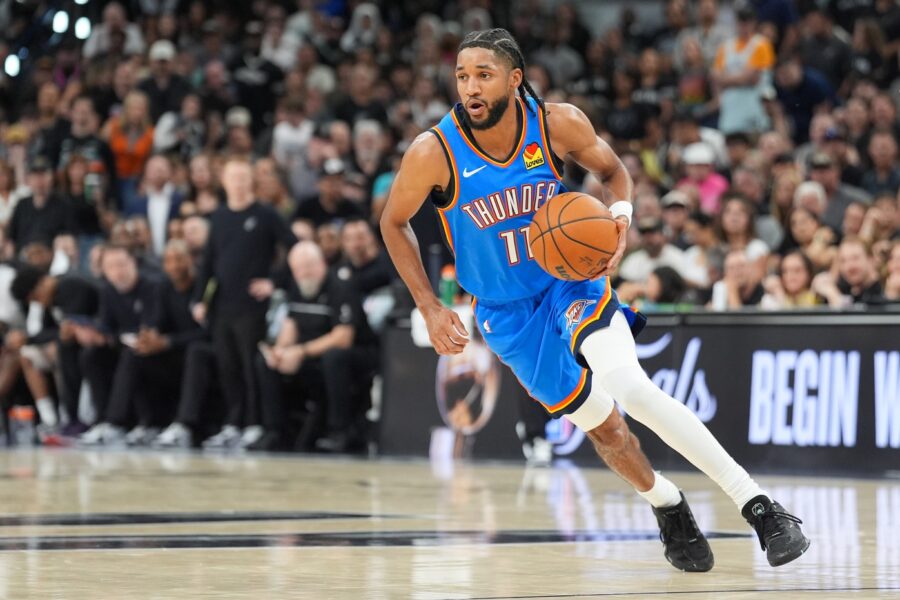
The Thunder and Pistons agreed to a trade on Friday that ships shooting guard Isaiah Joe to Detroit in exchange for two future second-round picks, sources told ESPN. Joe, 26, departs Oklahoma City after four seasons in which he became a reliable perimeter threat off the bench—a net contributor to the Thunder's recent playoff pushes but ultimately expendable in the front office's current calculus.
This deal follows a similar trade earlier in the offseason when the Thunder moved Aaron Wiggins to Atlanta for second-round compensation. The pattern is instructive: Oklahoma City is methodically converting mid-rotation players into draft ammunition. Joe averaged 8.2 points per game last season while shooting 37% from three, solid production for a wing capable of spacing the floor. His departure doesn't crater the Thunder's offensive ceiling—he was a complementary piece, not a cornerstone—but it does signal that the front office views the roster as deep enough that it can afford to trade away proven rotation players for optionality later.
For Detroit, the acquisition is a calculated gamble on a 26-year-old sniper with a defined skill set. The Pistons are in the "buying" phase of their rebuild, and Joe's ability to shoot at volume (he averaged 4.1 three-point attempts per game) addresses a developmental need. At 27 next Thursday, he's old enough to contribute immediately but young enough to remain useful through a potential playoff window. The compensation—two second-rounders—is the asking price teams now expect for mid-tier wing talent, a market rate that has only ticked upward as first-round picks have become more precious.
From a betting perspective, Joe's departure slightly dampens the Thunder's bench depth in per-100 possessions scoring contexts, but the strategic implication matters more. Oklahoma City is no longer constructing a championship roster in one offseason—the front office is building optionality through draft capital, suggesting confidence in the core (Shai Gilgeous-Alexander, Jalen Williams, Chet Holmgren) and patience in assembly. This isn't a win-now trade pattern; it's consolidation. For Thunder backers, expect the organization to maintain steady rather than chase dramatic mid-season acquisitions. The bench scoring elasticity will shift slightly lower, but the ceiling-raising work happens in the draft room now, not at the trade deadline.