Thunder's Bench Depth Overwhelms Spurs; Wembanyama Absence Reveals Series Vulnerability
By Justin Erickson ·
Oklahoma City's reserves outscored San Antonio 76-36 in a 123-108 Game 3 win, exposing how dependent the Spurs are on Victor Wembanyama's presence—a pattern that will define the remainder of this series.
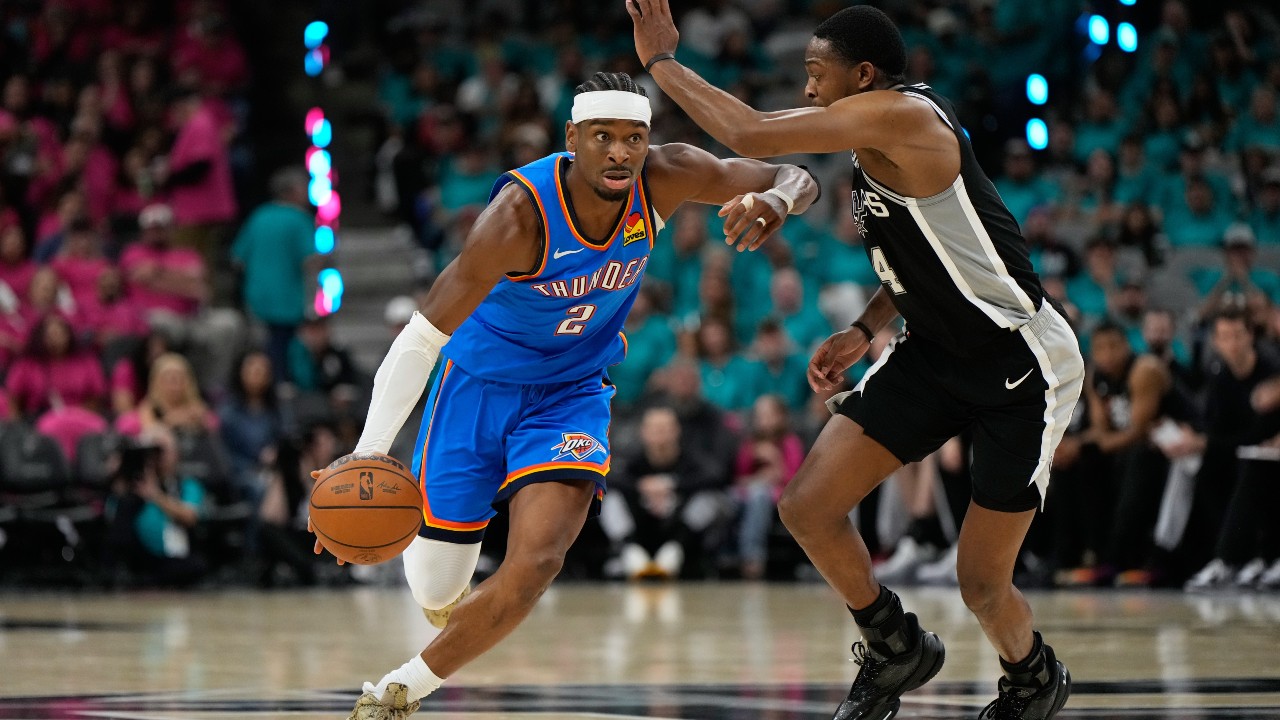
The Oklahoma City Thunder are one step closer to the Finals after dismantling San Antonio 123-108 on Friday, despite surrendering a 15-0 opening run. What looked like a potential Spurs statement—an aggressive early blitz with Wembanyama on court—collapsed the moment the young franchise centerpiece rotated to the bench. From that first-quarter exit onward, the Thunder's second unit dictated the game's entire complexion.
Shai Gilgeous-Alexander orchestrated the comeback with 26 points and 12 assists, but the real narrative emerged in the bench scoring: 76 points, a franchise playoff record, with Alex Caruso, Jared McCain, and Jaylin Williams all hitting double figures. McCain's 24 points on 10-of-21 shooting and Williams' 18 on 5-of-6 from three weren't anomalies—they were systematic. Oklahoma City outscored San Antonio 58-36 from the 15-0 deficit through halftime, then won the four-minute stretches without Wembanyama on the court by a combined 19 points in the first half and 30-11 in the second. That 49-point swing with the French forward sidelined is not variance. It's a structural mismatch.
Popovich's rotation management around Wembanyama—playing him 44 of 48 minutes to compensate—becomes a limiter in a series that now tilts decisively toward Oklahoma City. The Spurs lack a secondary playmaker or scorer capable of running offense independently when their best player rests. Keldon Johnson and Chris Paul can fill gaps, but neither creates pressure that forces the Thunder to adjust. Meanwhile, Oklahoma City's depth bench rotation generates plus-scoring in nearly every pairing, meaning rest windows for Gilgeous-Alexander don't correspond to offensive dropoff. That's championship-tier construction against a team still building toward it.
For prop purposes, the bench scoring explosion raises immediate questions about sustainability. McCain and Williams posted playoff career-highs; the 76-point bench total was franchise-record. Markets will likely overcorrect and price Thunder benches higher for Game 4, but the real edge lies in focusing on what doesn't change: Gilgeous-Alexander's shot volume and free-throw attempts. He went 6-of-17 from the floor but drew 12 free throws in the second half alone—a pattern that repeats whenever the Thunder need to close games against depleted defenses. In Game 4, if San Antonio adjusts by playing Wembanyama heavier minutes without rest, Gilgeous-Alexander's isolation opportunities increase, which drives both his point total and his FTA line upward. The mechanism isn't 'hot shooting'—it's positional mismatch compounding over time.
The series is now functionally over unless San Antonio's supporting cast breaks through. Oklahoma City heads home with a 2-1 lead, needing two more wins, and a bench unit that has proved it can outscore Spurs starters in sustained stretches. That depth advantage will price heavily into all Thunder totals for the remainder of the playoffs.