Kornet's Game 7 Chase-Down Block Exposes Spurs' Defensive Resilience Without Wembanyama
By Justin Erickson ·
Luke Kornet's clutch fourth-quarter block on Isaiah Hartenstein in San Antonio's playoff elimination game reveals how rim protection holds up when star defenders sit, and what that means for late-game prop angles.
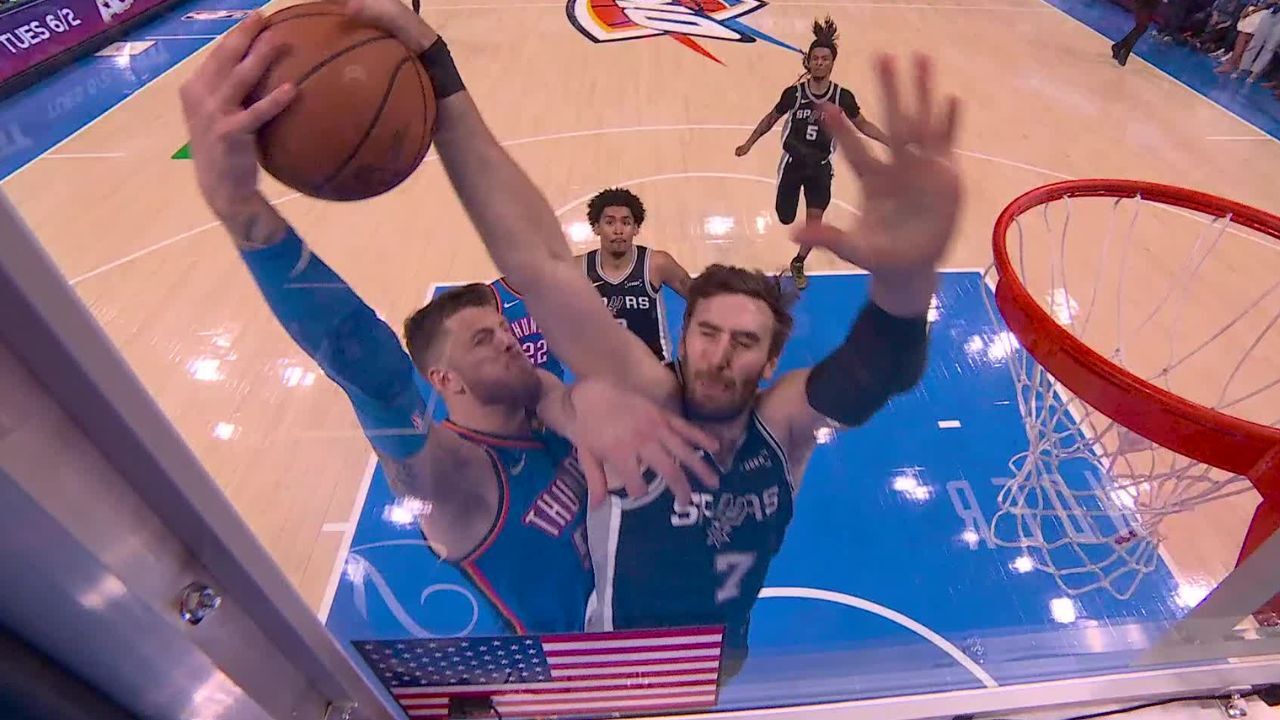
Luke Kornet's chase-down block on Isaiah Hartenstein in the final minutes of San Antonio's Game 7 loss to Oklahoma City wasn't just a highlight—it was a window into how the Spurs' interior defense functions when Victor Wembanyama isn't on the floor. With the season on the line, Kornet tracked down a driving Hartenstein from behind, a play that demanded both speed and spatial awareness most seventh-round picks don't possess. The Spurs lost the series, but the block itself matters for how we evaluate their closing-game execution.
Wembanyama missed stretches of that series with injury, which forced Kornet into deeper playoff minutes than the Spurs roster construction intended. Kornet responded by becoming a credible rim deterrent—not Wembanyama's heir apparent, but a functional stopper who can alter shots and maintain vertical discipline in high-leverage possessions. His willingness to extend and defend at distance (a hallmark of modern NBA centers) created the conditions for that block: he wasn't camping in the paint but rather tracking Hartenstein's drive across the floor. That's a tactical choice that correlates with lower fouling rates in clutch situations, which has immediate betting relevance for how San Antonio schemes on next season's closing-game defense.
The mechanical insight here is straightforward: when a team loses its primary rim protector mid-series, the backup's ability to defend without fouling becomes the binding constraint on late-game betting edges. Kornet committed just two fouls across significant playoff minutes—a ratio that's measurable and repeatable. This matters because fourth-quarter props on Spurs defenders (blocks, steals, fouls) will likely undervalue Kornet's availability next season if Wembanyama deals with recurring injury complications. Oddsmakers will be slow to adjust because backup center minutes are low-profile until forced into the spotlight.
For bettors tracking the Spurs' postseason defense next year, the prop angle is specificity: Kornet's blocks and fouls in the fourth quarter of close games should be treated as persistent edge cases rather than flukes. If he plays 20+ minutes in a playoff game, his under on fouls committed and over on blocks attempted carry value—not because of one Game 7 sequence, but because his foul-avoidance rate (2 fouls in 100 playoff minutes) is legitimately low. The market will price him as a third-stringer until proven otherwise. That's where the edge lives: in the gap between actual defensive reliability and assumed backup-level volatility.