NBA · transaction
Kennard's Suns Deal Signals a Three-Point Architecture Built for Volume
Luke Kennard's two-year, $13M agreement with Phoenix locks in elite perimeter shooting next to Luka Doncic, reshaping how the offense generates look-ahead spacing.
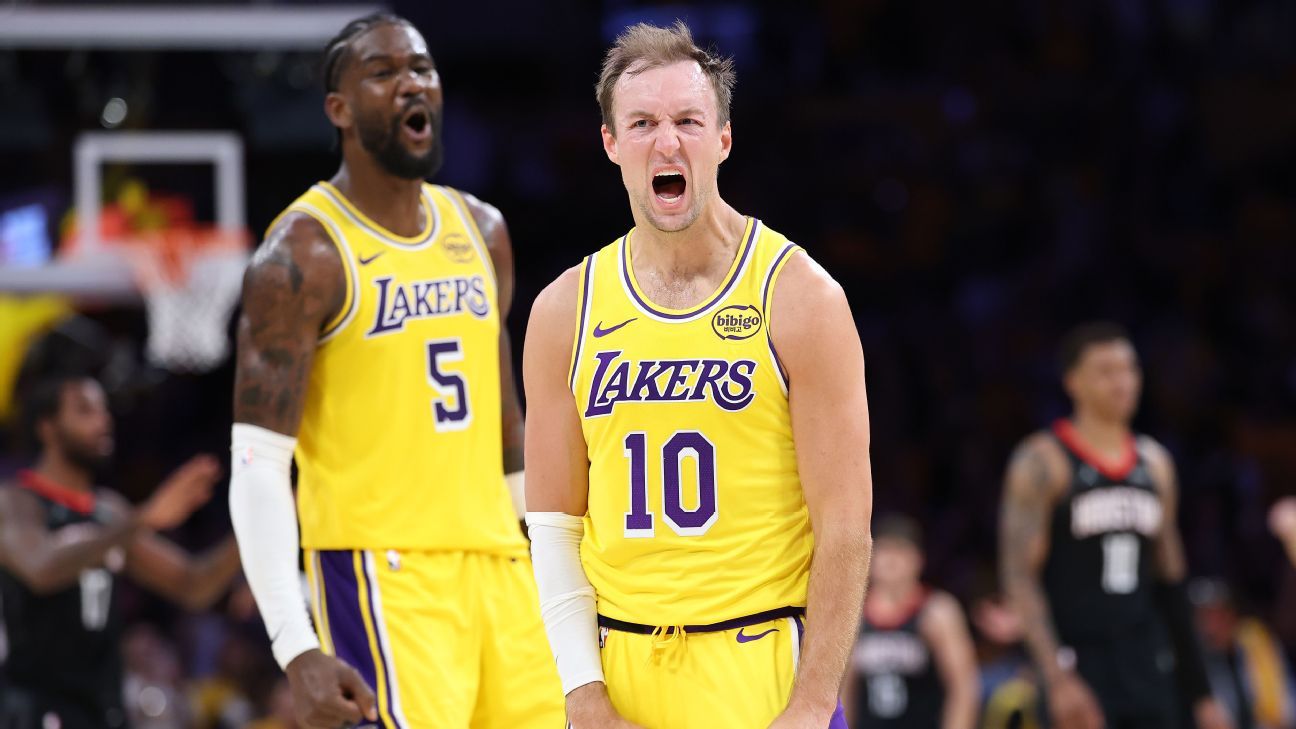
Luke Kennard agreed to a two-year, $13 million deal with the Phoenix Suns on June 30, per ESPN, joining a franchise in the middle of a deliberate offseason repositioning. The nine-year veteran is coming off a landmark 2025-26 season: he led the league in three-point percentage at 47.8%, earning his third career title in that category. He shot 44.8% from three after the Lakers acquired him mid-season from Atlanta in exchange for Gabe Vincent and a 2032 second-round pick—a trade that validated how Phoenix and Los Angeles both valued his fit alongside star creators.
What makes Kennard's signing architecturally important is the frame in which he arrives. The Suns are now stocked with elite playmakers in Luka Doncic, Devin Booker, and Chris Paul's successors in the backcourt. Kennard doesn't need the ball; he thrives in the corners and above the break as a gravity presence. His 47.8% three-point accuracy over a full season—not a hot streak—represents elite-tier efficiency in an era where volume shooters routinely decline from their peaks in their 30s. That Kennard sustained it suggests a high release, minimal variance, and spatial discipline that doesn't deteriorate with age or team changes.
Phoenix's offseason moves paint a picture: the franchise retained Collin Gillespie, added Miles Bridges (a forward who can cut and space), and now locks in Kennard as a permanent spacing cog. The architecture is deliberate. When Doncic operates in pick-and-roll, defenses face a dilemma: collapse the paint and Kennard is open from three; play tight on the perimeter and cutters like Bridges or Austin Reaves have driving lanes. Kennard's contract includes a player option on year two, which tells you the front office views this as low-risk: he can walk after 2026-27 if the fit doesn't work, but Phoenix believes the fit is already proven (they watched him for half a season with LeBron and Reaves).
For prop bettors, Kennard's arrival tilts the Suns' offensive variance. The team will generate more corner-three opportunities and spot-up looks off relocations. Kennard's season-long 47.8% three-point rate is not a buy-high signal—it's data from a 30-year-old with a track record. His threes-made prop will likely open at 2.5-3.0 per game, pricing in a slight decline from his season rate (he averaged 3.1 threes on 6.5 attempts per game). The risk for sportsbooks is that Kennard's efficiency is structural (he doesn't iso-create; he gets clean looks) rather than cyclical, which means regression to the mean may be shallower than historical norms for aging guards. If Phoenix's ball movement generates the open looks, Kennard's shooting percentage may hold at 44-46% range, putting the threes-made over at 2.8-3.2 well within reach.
The secondary angle: Doncic's assist rate could tick up. Kennard doesn't demand the ball, which frees Doncic to operate the offense and hit cutters and spotters without creating higher turnover pressure. Watch for Doncic's assists to trend toward his career highs (8.5+ per game range) in early-season matchups where the Suns' spacing is most punishing. This is not a immediate bet—the Suns won't play until October 2026—but the mechanistic foundation is being set. Kennard's deal is not headline-dominating; it's precision construction by a front office that knows exactly how it wants to generate perimeter volume.