NBA · transaction
Huerter's Return Stabilizes Pistons Floor Spacing; Impact Limited on Cunningham Props
Kevin Huerter re-signs with Detroit on a three-year, $27M deal, cementing the Pistons' spacing architecture around Cade Cunningham—but his modest usage makes him a complementary piece, not a bet-moving anchor.
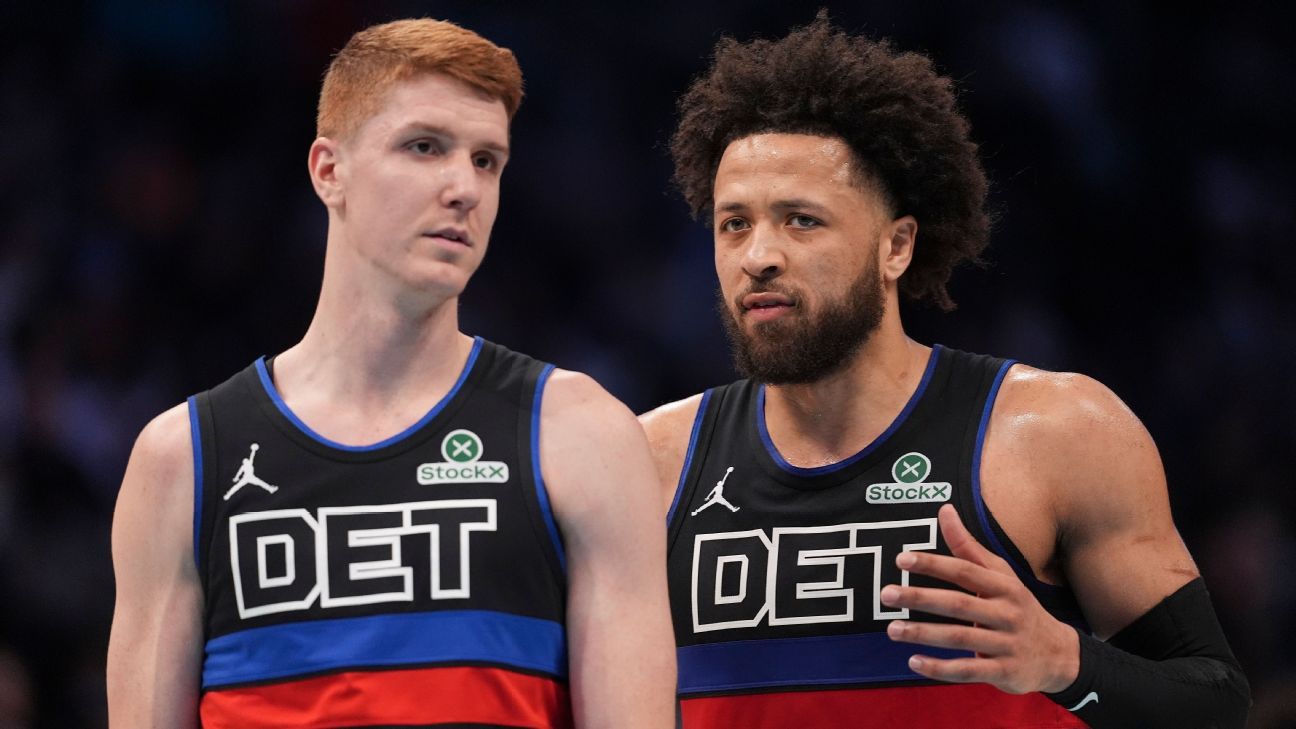
Kevin Huerter will return to the Detroit Pistons on a three-year, $27 million deal, sources told ESPN on Monday. The eight-year veteran played 30 games for Detroit after arriving via trade deadline acquisition last season, averaging 8.6 points on 20.5 minutes of court time. His re-signing resolves one of the franchise's offseason questions and reflects Detroit's commitment to a supporting cast built around Cade Cunningham's perimeter creation.
The context matters. Huerter comes off a down stretch from deep—a reputation earned over recent seasons—but the Pistons value his gravity as a floor spacer. In 20.5 minutes, he's a third option at best, a roster ornament designed to keep defenses honest. His $9M average annual salary sits squarely in the third-string starter or high-usage bench tier, the kind of deal that moves no narrative but signals organizational clarity: Detroit wants its offense to breathe around Cunningham's drives and short-roll orchestration. Spacing matters for that system. When Huerter's defender respects him—even at 35% from three, which is his recent reality—it opens lanes for Cunningham to operate in pick-and-roll against help.
From a prop standpoint, Huerter's return does almost nothing to the Pistons' macro offensive model. His usage is too low, his scoring too incidental. Cunningham's assist line remains anchored to the quality of the ball-handlers around him and the flexibility of the defensive schemes he faces. Huerter's re-signing doesn't move that needle because his role is static: corner shooter, spacing cog, occasional secondary passer. He'll take 3-4 threes per game, hit 1.2 of them, and drift in and out of games. The Pistons offense doesn't flow through him; it flows around him.
What matters more is the confirmation signal. By locking in Huerter at $27M over three years, Detroit telegraphs confidence in the current core and signals that major roster overhaul isn't coming. This leaves Jalen Duren and Tobias Harris as the next dominos to fall. If Duren re-signs or gets extended at a premium, Cunningham's playmaking workload stays high, and his assist totals inherit durability. If Harris leaves, Detroit's spacing actually improves, which could elevate Cunningham's assist upside by reducing congestion in the midrange and short-roll areas where he generates most of his buckets. Huerter's ink-and-dry status removes volatility from the Pistons' perimeter construction; it doesn't create edge.