Robinson's Back Soreness Threatens Pistons' Three-Point Architecture in Game 5
By PropBetEdge Editorial Team ·
Duncan Robinson's sudden collapse from 17 PPG to 4 points in Game 4 signals a structural injury that could reshape Detroit's offensive spacing for the rest of the series.
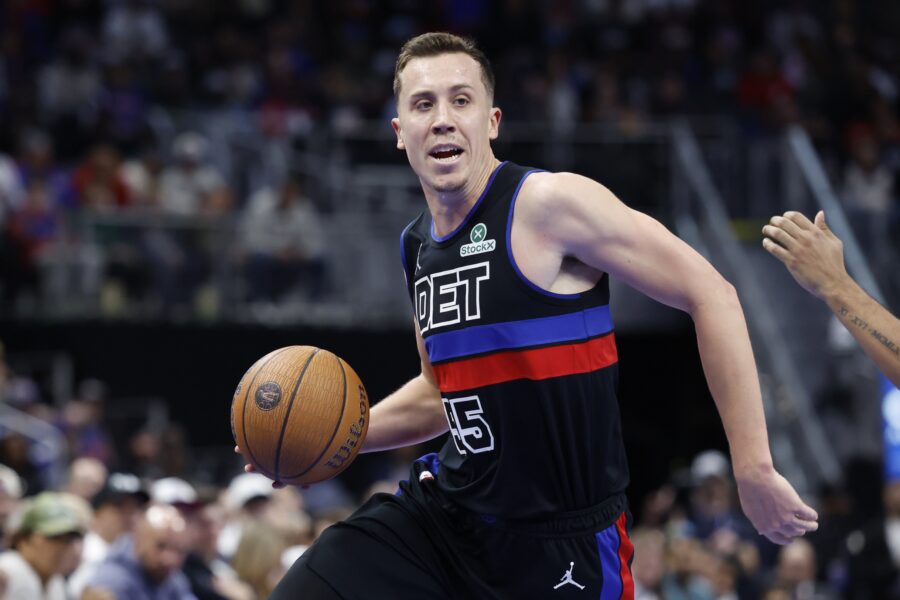
The Pistons listed Duncan Robinson as questionable for Wednesday's Game 5 against Cleveland due to low back soreness, a development that carries far heavier weight than the standard injury report language suggests. Robinson was a non-factor in Monday's Game 4 loss, attempting just two field goals and scoring four points in 29 minutes—a jarring descent from his 17-point average across the series' first three games, where he'd connected on 14 three-pointers. The timing and severity of the production cliff point to pain management rather than rhythm loss.
Back soreness in the playoffs is the basketball equivalent of a structural foundation crack: it compounds over time and forces improvisation everywhere downstream. Robinson isn't a tertiary scorer you can absorb—he's the Pistons' primary gravity from the perimeter, the man tasked with pulling Cleveland's defense out to the three-point line to create driving lanes for the ball-handlers inside. Game 4 exposed what happens when that gravity vanishes. The Cavaliers' paint defense tightened, their interior rotation got more compact, and the Pistons' penetration game withered. Robinson's four points wasn't a fluke performance; it was a byproduct of a body that couldn't load into his mechanics.
Caris LeVert's Game 4 outburst—24 points, his best outing of the season—masked the structural problem rather than solved it. LeVert was also listed as questionable before Game 4 (right heel contusion) and proved his availability, but his offensive load can't sustainably absorb Robinson's absence. If Robinson doesn't play or plays at 70 percent output, the Pistons' three-point volume and conversion rate will crater. Cleveland's defense, which has shown vulnerability to spacing and movement, becomes substantially more compact. The Cavaliers defended Game 4 like a team that knew Robinson couldn't consistently threaten the perimeter.
For prop bettors, Robinson's status creates a two-tier market: if he's ruled out or declared out after shootaround, the Pistons' team total will likely drop 3–5 points, and Detroit's three-point line moves sharply down. Conversely, if he plays but logs under 25 minutes or enters the game late, his personal scoring prop (likely 12.5–14.5 if he plays) becomes a fade—back injuries don't improve mid-series, and teams often list players as playing when they're operating at 60–70 percent capacity. Monitor his minutes in the opening quarter; if he plays fewer than 6 minutes in the first 12, he's pain-limited and unlikely to reach 13 points. The Pistons' offense is no longer a question of how well they execute; it's now a question of whether their primary spacing anchor can step onto the court.
Kevin Huerter's seven-game absence and Caris LeVert's heel contusion are secondary considerations compared to Robinson's structural threat to Detroit's entire offensive design. This isn't a depth issue—it's a foundation issue. If Robinson plays full minutes and healthy, the Game 5 spreads and totals hold their pre-game numbers. If he doesn't, expect significant downward movement.